🧎🏾
The Emoji
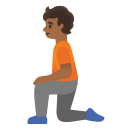
Person Kneeling: Medium-dark Skin Tone
U+1F9CE U+1F3FE · :person_kneeling_mediumdark_skin_tone:
Trend 58
Meaning layers
- interpretation
- Used to show humility, begging, worship of a celebrity or concept, or taking a knee in solidarity. Also used ironically to mock extreme devotion or sycophancy.
- tiktok usage
- Appears in fan edits, celebrity worship content, and 'I would die for this person' commentary. Also used in protest or social justice solidarity posts.
- irony level
- 6 / 10
Platform meanings
- meaning
- Represents extreme fan devotion, protest solidarity (taking a knee), or humble begging in comedic skits.
- trend usage
- Appears in duets with celebrity clips, under 'parasocial king/queen' content, and in protest awareness videos.
- hashtags
- #takingaknee#fangirlmode#kneeling#solidarity#worship
- virality score
- 62 / 100
Cultural meanings
🇺🇸
Western / Gen-Z
Primarily used ironically to express extreme fan devotion or humorously beg for something; also sincerely used in protest and social justice solidarity contexts.
🇵🇰
Pakistan & India
Strongly associated with prayer (namaz/sajda) and respect toward elders or religious figures; less ironic use, more sincere reverence.
🌍
Middle East
Deeply connected to Islamic prayer posture (sujood); carries strong religious connotation and is used sincerely in spiritual and devotional contexts.
🌐
Global Neutral
Broadly understood as submission, prayer, or respect; interpretation varies by context but generally signals humility or devotion.
🇧🇩
Bangladesh
Associated with religious practice (Islamic prayer) and deep respect; used sincerely rather than ironically in digital communication.
🇱🇰
Sri Lanka
Used to represent Buddhist prostration or Hindu prayer gestures; carries strong spiritual significance in local digital culture.
🇨🇳
China
Kneeling carries connotations of deep apology or extreme submission; may be used humorously online to mock self-deprecation or as ironic fan worship.
🇯🇵
Japan
Kneeling (seiza) is a formal respectful posture; used online to signal deep respect or humorous over-apology (dogeza culture reference).
🇰🇷
South Korea
Associated with fan worship culture (fandoms like K-pop stans); heavily used ironically and sincerely to express idol devotion.
🇹🇼
Taiwan
Used similarly to broader East Asian contexts — respect, submission, or exaggerated fan devotion; also tied to religious gesture.
🇭🇰
Hong Kong
Used in protest contexts to reference solidarity movements; also carries fan culture and spiritual meanings.
🇵🇭
Philippines
Strongly associated with Catholic prayer and devotion; also used in fan culture for celebrities and K-pop idols.
🇮🇩
Indonesia
Tied to Islamic prayer postures; used sincerely in religious contexts and occasionally in Gen Z fan content.
🇹🇭
Thailand
Associated with Buddhist worship and paying respects; carries respectful and spiritual connotations in local usage.
🇻🇳
Vietnam
Used to represent deep respect or prayer; in younger digital culture, also adopted for fan worship and ironic submission.
🇲🇾
Malaysia
Dual usage: Islamic prayer reference in serious contexts, and ironic fan devotion in younger online communities.
🇸🇦
Saudi Arabia
Primarily tied to Islamic prayer (sujood); deeply reverent connotation with minimal ironic usage in local culture.
🇦🇪
UAE
Similar to Saudi Arabia — religious reverence is the primary reading; cosmopolitan youth may use it more playfully in fan contexts.
🇪🇬
Egypt
Associated with prayer and submission before God; also used in meme culture to mock sycophancy or express admiration.
🇹🇷
Turkey
Used in religious contexts and increasingly in Gen Z meme culture to signal devotion to a celebrity or idea sarcastically.
🇮🇷
Iran
Primarily carries religious significance (prayer); younger users on platforms like Instagram may use it ironically or in fan contexts.
🇳🇬
Nigeria
Used in church/prayer contexts sincerely; also adopted in youth culture for humorous celebrity worship and 'bow down' expressions.
🇿🇦
South Africa
Connected to protest movements (taking a knee); also used in religious contexts and for fan admiration across cultures.
🇬🇧
UK & Ireland
Used mostly for ironic fan worship, begging humor, and protest solidarity; sometimes used to mock excessive deference.
🇫🇷
France
Less common; used in ironic or protest contexts more than spiritual ones; French digital culture leans toward sarcasm.
🇩🇪
Germany
Mostly literal or ironic use; associated with respect, submission, or protest; rarely used in religious digital contexts.
🇪🇸
Spain & Italy
Used in religious contexts (Catholic reverence) and increasingly in youth meme culture for fan worship.
🇧🇷
Brazil
Popular in fan communities and religious contexts; Brazilian Gen Z uses it humorously for celebrity adoration and dramatic begging.
🇲🇽
Mexico
Strong Catholic resonance alongside ironic youth use for celebrity/influencer worship and 'please' begging contexts.
🌎
Latin America
Broadly used for religious expression and ironic fan devotion; protest connotations are recognized but less dominant than in North America.
🇦🇺
Australia & NZ
Used humorously for fan worship and ironic begging; protest solidarity use also recognized; low religious connotation in digital usage.
How its meaning shifted
- 2010
Emoji did not exist yet; kneeling concepts were represented with prayer hands or text-based expressions.
- 2015
Still pre-release; cultural conversations around kneeling in protest (e.g., Colin Kaepernick era beginning) set the stage for the emoji's future meaning.
- 2020
Released in 2019, the emoji gained massive traction in 2020 during global BLM protests; used for solidarity, prayer, and fan culture simultaneously.
- 2026
Firmly embedded in Gen Z fan culture vocabulary; used fluidly across ironic devotion, social justice, prayer, and meme contexts with high skin tone representation awareness.
See it on every platform
Adjacent emojis
- Often confused with
- folded handsperson bowingperson in lotus position
- Can replace
- folded handsperson bowingraised hands
Share & embed
Frequently asked
01What does the 🧎🏾 Person Kneeling: Medium-dark Skin Tone emoji mean?
A person kneeling on one or both knees, displayed with a medium-dark skin tone. Used to represent kneeling in prayer, submission, proposal, protest, or reverence.
02What does 🧎🏾 mean on TikTok?
Represents extreme fan devotion, protest solidarity (taking a knee), or humble begging in comedic skits.
03What does 🧎🏾 mean on WhatsApp?
Begging someone for a favor or expressing deep respect in casual conversation.
04What does 🧎🏾 mean in Gen-Z slang?
Used to show humility, begging, worship of a celebrity or concept, or taking a knee in solidarity. Also used ironically to mock extreme devotion or sycophancy.
05Is the 🧎🏾 emoji safe to use?
Prayer, reverence, protest solidarity, fan worship, proposal gesture, humility.
06What does 🧎🏾 mean in texting?
Kneeling is a deeply primal gesture of submission or devotion across human cultures. Digitally, it encodes a spectrum from sincere reverence to ironic hyperbole of admiration.
07What is the shortcode for 🧎🏾?
The shortcode for Person Kneeling: Medium-dark Skin Tone is :person_kneeling_mediumdark_skin_tone:
08What does 🧎🏾 mean in dating?
Can signal 'I'm on my knees for you' in a flattering, flirty way — implying the sender is completely smitten or would beg for attention.
Safety & usage
- Safe meaning
- Prayer, reverence, protest solidarity, fan worship, proposal gesture, humility.
- Caution
- Can be used to mock someone for being submissive, a 'simp', or overly deferential; rarely weaponized but possible in bullying contexts.
Generally safe. Context-dependent: in some communities it may be used to demean someone as weak or overly submissive. Religious misuse is uncommon but possible.
How it looks across platforms


Appearance varies by platform and device. Google Noto, Twemoji, and OpenMoji are open-source.