🚶
The Emoji
Person Walking
U+1F6B6 · :person_walking:
Trend 62
Meaning layers
- interpretation
- Used to signal casually leaving a situation, distancing oneself from drama, or unbothered departure — the digital equivalent of walking away without looking back.
- tiktok usage
- Appears at the end of unhinged or relatable captions to signal 'and I'm just walking away from this,' often used after a self-deprecating or absurd confession.
- irony level
- 7 / 10
Platform meanings
- meaning
- Symbolizes unbothered exit, walking away from drama, or the act of leaving a situation without explanation.
- trend usage
- Ends 'POV' captions and 'no thoughts, just walking' mental health content; used in 'girl walk era' and 'that girl' lifestyle trends.
- hashtags
- #walkingaway#unbothered#girlwalkera#walkinginaesthetics#silentleave
- virality score
- 68 / 100
Cultural meanings
🇺🇸
Western / Gen-Z
The quintessential 'I'm done here' emoji — used to signal unbothered exits from drama, bad vibes, or unhinged conversations with a mix of irony and self-awareness.
🇵🇰
Pakistan & India
Commonly used literally to indicate someone is going for a walk (evening walk culture is significant), but younger urban users adopt the dismissive 'walking away' meme meaning.
🌍
Middle East
Used in casual chat to indicate going for a stroll, particularly in cooler evening hours; evening walks are a major social ritual, giving this emoji strong literal cultural weight.
🌐
Global Neutral
Universally understood as movement on foot — functions as a clean, culture-neutral symbol of walking, travel, or physical activity across all global contexts.
🇧🇩
Bangladesh
Primarily literal in usage — indicates going for a walk or arriving somewhere on foot; the ironic meme usage is slowly being adopted by younger, digitally connected Bangladeshis.
🇱🇰
Sri Lanka
Used to indicate physical walking or commuting by foot; in younger digital communities it also carries the 'leaving the conversation' implication adopted from global meme culture.
🇨🇳
China
Represents walking or strolling; in younger WeChat/Weibo communities it's used to exit awkward digital exchanges, though literal usage dominates in older generations.
🇯🇵
Japan
Associated with the deeply cultural practice of 'sanpo' (leisurely walking) — used warmly to indicate a peaceful stroll, often in aesthetically mindful or nature-appreciating contexts.
🇰🇷
South Korea
Popular in contexts of 'healing walks' and café-to-café strolls in urban settings; younger Koreans also use it in the dismissive meme context influenced by global digital culture.
🇹🇼
Taiwan
Used both literally for walking culture and ironically in younger Taiwanese internet communities to signal disengagement, mirroring global Gen Z usage patterns.
🇭🇰
Hong Kong
Has a practical walking culture due to urban density — often used to say 'I'm walking there,' but also adopted in ironic internet contexts among younger users.
🇵🇭
Philippines
Widely used in its literal sense given strong foot-commuting culture; younger Filipinos on TikTok and Twitter also use it for the dismissive 'walking away' meme format.
🇮🇩
Indonesia
Used primarily to indicate walking or light commuting; the 'leaving the conversation' usage is growing rapidly among Indonesian Gen Z on TikTok and Twitter.
🇹🇭
Thailand
Used casually in chats to indicate taking a walk or moving around; in Thai youth internet culture it's also used humorously to exit embarrassing or cringe situations.
🇻🇳
Vietnam
Literal usage dominates — indicates walking somewhere or being on foot; younger Vietnamese TikTok users increasingly adopt the ironic exit interpretation.
🇲🇾
Malaysia
Used in everyday chats to indicate walking; Malaysian youth online culture has adopted the global meme usage of walking away from drama or bad conversations.
🇸🇦
Saudi Arabia
Primarily literal in use — evening walks are culturally significant social activities, making this emoji commonly used in casual check-ins and meetup planning.
🇦🇪
UAE
Used to reference evening corniche walks and mall strolls — a major social ritual in UAE culture; younger expat and local youth also use it ironically online.
🇪🇬
Egypt
The 'evening walk' (mashy) is a beloved cultural tradition — this emoji carries genuine warmth when used in that context, especially in family and friend group chats.
🇹🇷
Turkey
Associated with evening promenade culture ('gezinti') — used warmly in social planning contexts; younger Turks online also use it in meme contexts to signal exit.
🇮🇷
Iran
Used in the context of park walks and outdoor social gatherings which are important social activities; in younger online spaces it also signals a graceful digital exit.
🇳🇬
Nigeria
Used humorously and literally; Nigerians on Twitter (X) heavily adopt the sarcastic dismissal meaning — 'let me walk away from this conversation before I say something' energy.
🇿🇦
South Africa
Used both literally and as a meme exit signal; in South African Twitter culture it often accompanies dismissals of political absurdity or sports disappointment.
🇬🇧
UK & Ireland
Strongly associated with 'going for a walk' as a very British/Irish coping mechanism — used earnestly and ironically; 'I'm going for a walk 🚶' is a cultural meme in itself.
🇫🇷
France
Evokes the cultural tradition of the promenade — used warmly in social contexts to suggest a leisurely walk; younger French internet users also adopt the dismissal meme usage.
🇩🇪
Germany
Used practically to indicate walking or hiking, both beloved German activities; in online discourse it also represents stepping away from heated debates in a composed manner.
🇪🇸
Spain & Italy
Tied to evening stroll ('paseo'/'passeggiata') culture — a deeply beloved social tradition; this emoji carries genuine warmth and social invitation in Mediterranean contexts.
🇧🇷
Brazil
Used casually for walking or outdoor activity; Brazilian Twitter/X culture heavily uses it in the meme format — 'I'm just going to walk away from this topic quietly 🚶.'
🇲🇽
Mexico
Used in everyday chats for literal walking and commuting on foot; younger Mexican users online use it in the dismissive meme context, often in political or entertainment discourse.
🌎
Latin America
Broadly used for literal walking across Latin American cultures; the meme dismissal usage is widely adopted by Gen Z across the region through TikTok and Twitter influence.
🇦🇺
Australia & NZ
Strongly associated with outdoor walking culture and nature hikes; also widely used in the British-influenced 'I need to go for a walk' mental health coping meme tradition.
How its meaning shifted
- 2010
Almost exclusively literal — used to indicate walking, pedestrian activity, or giving directions involving foot travel in early smartphone messaging.
- 2015
Still primarily literal but beginning to appear in fitness and health contexts on platforms like Instagram and early fitness apps tracking step counts.
- 2020
The 'walking away from this conversation' meme usage explodes — heavily used in pandemic-era mental health content as 'touch grass' and 'going for a walk' became coping culture.
- 2026
Fully dual-coded — functions as both a sincere wellness/movement emoji and an ironic dismissal tool; embedded in Gen Z's digital vocabulary as a signature exit signal.
See it on every platform
Emoji combinations
Adjacent emojis
- Often confused with
- person runningperson hikingperson standing
- Can replace
- person runningfootprintssneaker
Share & embed
Frequently asked
01What does the 🚶 Person Walking emoji mean?
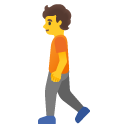
A person walking upright, depicted in a side-profile stride, representing the act of walking or movement on foot.
02What does 🚶 mean on TikTok?
Symbolizes unbothered exit, walking away from drama, or the act of leaving a situation without explanation.
03What does 🚶 mean on WhatsApp?
Sent to indicate someone is literally going for a walk or stepping away from the chat; also used to say 'I'm out of this conversation.'
04What does 🚶 mean in Gen-Z slang?
Used to signal casually leaving a situation, distancing oneself from drama, or unbothered departure — the digital equivalent of walking away without looking back.
05Is the 🚶 emoji safe to use?
Represents walking, physical movement, outdoor activity, mental health breaks, and leaving situations calmly — entirely benign and positive.
06What does 🚶 mean in texting?
Walking symbolizes forward momentum and autonomy — psychologically it conveys agency and mild indifference, often used to communicate emotional withdrawal without hostility.
07What is the shortcode for 🚶?
The shortcode for Person Walking is :person_walking:
08What does 🚶 mean in dating?
Rarely flirtatious; sometimes used in 'want to go for a walk?' contexts to suggest a casual, low-stakes date or outing.
Safety & usage
- Safe meaning
- Represents walking, physical movement, outdoor activity, mental health breaks, and leaving situations calmly — entirely benign and positive.
- Caution
- Can occasionally be used as a dismissive tool to shut down conversations or ghost someone in digital communication, though this is low-level at most.
No significant safety concerns. Rarely if ever used in harmful contexts. The ironic dismissal usage is playful rather than aggressive.
How it looks across platforms


Appearance varies by platform and device. Google Noto, Twemoji, and OpenMoji are open-source.