🚶🏻
The Emoji
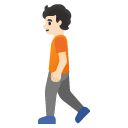
Person Walking: Light Skin Tone
U+1F6B6 U+1F3FB · :person_walking_light_skin_tone:
Trend 58
Meaning layers
- interpretation
- Used to signal someone leaving a situation, walking away from drama, or unbothered energy. Often expresses a quiet, dignified exit without explanation — the emoji equivalent of 'I'm done here.'
- tiktok usage
- Paired with captions like 'me walking away from that conversation' or used at the end of a clip to signal a mic-drop departure. Also used in 'walking so X can run' trend formats.
- irony level
- 6 / 10
Platform meanings
- meaning
- Signifies unbothered exit energy, walking away from toxic situations, or literal 'main character walking' aesthetics in lifestyle content.
- trend usage
- Used in 'walking so [X] can run' templates, morning walk aesthetic videos, and 'POV: you're walking away' transition trends.
- hashtags
- #walkingaway#maincharacter#unbothered#walkinggirl#morningwalk
- virality score
- 62 / 100
Cultural meanings
🇺🇸
Western / Gen-Z
Iconic 'unbothered exit' emoji — used to signal walking away from drama, toxic people, or bad situations with quiet confidence. Extremely common in ironic and self-aware humor.
🇵🇰
Pakistan & India
Used literally to indicate going for a walk, morning strolls, or being out and about. Also picked up urban meaning of 'moving on' especially among younger social media users.
🌍
Middle East
Primarily used literally for walking or commuting. Among younger users on Instagram and TikTok, it carries the global 'walking away' unbothered meaning.
🌐
Global Neutral
Universally understood as representing the act of walking. Serves as a simple, clean indicator of pedestrian movement or physical activity across all demographics.
🇧🇩
Bangladesh
Used in casual chats to indicate going for a walk or being on the move. Younger users familiar with global meme culture use it in the 'walking away' ironic context.
🇱🇰
Sri Lanka
Commonly used to represent walking as exercise or daily commuting. The skin tone modifier is noted but the core walking meaning remains primary.
🇨🇳
China
Walking emoji is used on WeChat and Weibo to indicate exercise walks, commuting, or being outdoors. The 'leaving' subtext resonates with younger Douyin (TikTok) users.
🇯🇵
Japan
Used to represent walking as a daily habit or commute. In Japanese digital culture, it can also signal quietly excusing oneself from a conversation — aligning with indirect communication styles.
🇰🇷
South Korea
Popular in the context of health and wellness walks. Among younger Koreans on Instagram and TikTok, used with 'walking away' aesthetics tied to solo life and independence.
🇹🇼
Taiwan
Used casually for walking activities and commuting. Younger Taiwanese users on Instagram adopt the global 'unbothered exit' meaning influenced by Western social media trends.
🇭🇰
Hong Kong
Common in messaging apps to indicate being in transit or walking somewhere. The expressive 'walking away' meaning is understood by social media savvy users.
🇵🇭
Philippines
Frequently used in casual conversations to mean going somewhere on foot. Filipino TikTok users actively use it in 'walking away from drama' content formats.
🇮🇩
Indonesia
Used on WhatsApp and Instagram to indicate walking or being on the go. The unbothered meaning has caught on among Indonesian Gen Z influencer culture.
🇹🇭
Thailand
Used literally in contexts of exercise, commuting, or street walking. Among younger Thai users on TikTok, the dramatic exit connotation is increasingly recognized.
🇻🇳
Vietnam
Primarily represents physical walking in daily communication. Younger Vietnamese users on social platforms use it to express moving on or leaving stressful situations.
🇲🇾
Malaysia
Used in casual chats to mean walking somewhere or being outdoors. On social media, Malaysian Gen Z users adopt the Western ironic usage with local humor.
🇸🇦
Saudi Arabia
Used to indicate walking or going somewhere. Among younger Saudi social media users, the 'walking away unbothered' meaning resonates especially on Snapchat and TikTok.
🇦🇪
UAE
Common in cosmopolitan Dubai/Abu Dhabi digital culture. Used literally but also in the global ironic 'exit' context — heavily influenced by international social media.
🇪🇬
Egypt
Used in Egyptian WhatsApp culture to indicate movement or being out. Among younger Egyptians the 'walking away' meme context is growing through TikTok influence.
🇹🇷
Turkey
Frequently used in Turkish social media to represent walking for health or commuting. The dramatic 'walking away' usage has been adopted by Turkish Gen Z on Instagram.
🇮🇷
Iran
Used to indicate walking or being in motion in messaging apps. Younger Iranians on Instagram use it in the context of moving on from difficult situations.
🇳🇬
Nigeria
Used casually to mean leaving or being on the move. In Nigerian Twitter/X culture, it pairs with 'abeg' humor and exiting from chaotic situations or arguments.
🇿🇦
South Africa
Used across South African social media to indicate walking or going somewhere. The unbothered exit meaning resonates strongly in local meme culture on Twitter/X.
🇬🇧
UK & Ireland
Adopted with dry British humor — used to signal leaving a bad situation or conversation with supreme indifference. Also used literally for walking culture references.
🇫🇷
France
Used in French digital culture for walking or strolling — resonating with the cultural value of the 'promenade'. Also used sarcastically to exit online arguments.
🇩🇪
Germany
Used literally and in fitness contexts. Germans use it straightforwardly to indicate walking activity, and occasionally ironically to signal leaving a conversation.
🇪🇸
Spain & Italy
Associated with leisurely walking culture — the 'passeggiata' vibe. Used in social media for stroll aesthetics and casually to indicate being out and about.
🇧🇷
Brazil
Used in Brazilian social media humor and casual conversation. On TikTok and Instagram, Brazilians use it in the dramatic exit context combined with local meme formats.
🇲🇽
Mexico
Common in Mexican WhatsApp and Instagram culture to indicate movement. Used humorously in the 'walking away from problems' context — often paired with Mexican slang.
🌎
Latin America
Broadly used across Latin America to represent walking or going somewhere. The ironic 'unbothered' walking away meaning has diffused through TikTok across the region.
🇦🇺
Australia & NZ
Used casually for walking culture — hiking, beach walks, and exercise strolls. Also used with dry Aussie humor to exit boring conversations online.
How its meaning shifted
- 2010
Emoji barely existed in mainstream use. Walking figures were not yet part of standard emoji sets and skin tone modifiers did not exist yet.
- 2015
Skin tone modifiers introduced in Unicode 8.0 (2015) made 🚶🏻 possible. Used almost entirely literally to indicate walking, commuting, or being on foot.
- 2020
Began gaining ironic and expressive usage, particularly in the context of 'walking away' from situations. Pandemic-era messaging made walking outdoors symbolically significant as a safe activity.
- 2026
Firmly established as a dual-meaning emoji — literal walking AND the 'unbothered exit' cultural shorthand. Deeply embedded in Gen Z digital vocabulary and cross-platform meme culture.
See it on every platform
Adjacent emojis
- Often confused with
- person runningperson hikingperson standing
- Can replace
- person runningfootprintswoman walking
Share & embed
Frequently asked
01What does the 🚶🏻 Person Walking: Light Skin Tone emoji mean?
A person walking, depicted in profile view moving to the left, with light skin tone modifier applied. Represents the act of walking, pedestrian movement, or physical locomotion on foot.
02What does 🚶🏻 mean on TikTok?
Signifies unbothered exit energy, walking away from toxic situations, or literal 'main character walking' aesthetics in lifestyle content.
03What does 🚶🏻 mean on WhatsApp?
Literally means going for a walk or being on the move. Also used casually to say 'I'm out' or ending a conversation.
04What does 🚶🏻 mean in Gen-Z slang?
Used to signal someone leaving a situation, walking away from drama, or unbothered energy. Often expresses a quiet, dignified exit without explanation — the emoji equivalent of 'I'm done here.'
05Is the 🚶🏻 emoji safe to use?
A neutral, benign emoji representing walking or movement. Entirely safe for all audiences and contexts.
06What does 🚶🏻 mean in texting?
Walking as a symbol represents forward momentum and autonomy. Psychologically it evokes agency — the choice to move, leave, or progress — making it a subtle but powerful signal of emotional boundaries or self-sufficiency.
07What is the shortcode for 🚶🏻?
The shortcode for Person Walking: Light Skin Tone is :person_walking_light_skin_tone:
08What does 🚶🏻 mean in dating?
Rarely used flirtatiously on its own; sometimes paired with a destination emoji to imply 'walking over to see you' in a playful, low-key way.
Safety & usage
- Safe meaning
- A neutral, benign emoji representing walking or movement. Entirely safe for all audiences and contexts.
- Caution
- In rare cases used to signal ghosting someone or dismissively walking away mid-conversation, which can feel cold or passive-aggressive.
No significant safety concerns. The light skin tone modifier occasionally draws attention in discussions about emoji skin tone representation and diversity, but the emoji itself is not harmful.
How it looks across platforms


Appearance varies by platform and device. Google Noto, Twemoji, and OpenMoji are open-source.