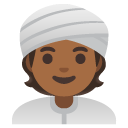
👳🏾
The Emoji
Person Wearing Turban: Medium-dark Skin Tone
U+1F473 U+1F3FE · :person_wearing_turban_mediumdark_skin_tone:
Trend 38
Meaning layers
- interpretation
- Used to represent South Asian or Middle Eastern identity, cultural pride, or to signal awareness of diverse religious/cultural backgrounds. Sometimes used in diaspora communities to express heritage pride.
- tiktok usage
- Appears in videos celebrating South Asian culture, Desi identity content, or cultural education posts. Used in comment sections to represent Sikh or Muslim creators.
- irony level
- 2 / 10
Platform meanings
- meaning
- Symbol of South Asian or Sikh identity, used in cultural content, dance videos, and heritage storytelling.
- trend usage
- Featured in Desi TikTok trends, Sikh awareness content, and South Asian creator communities. Paired with Punjabi music clips.
- hashtags
- #DesiTikTok#SikhPride#SouthAsianCreator#TurbanTikTok#DesiVibes
- virality score
- 42 / 100
Cultural meanings
🇺🇸
Western / Gen-Z
Often used by diaspora youth to reclaim and celebrate South Asian identity online, particularly in Desi TikTok and Instagram communities where cultural pride is openly expressed.
🇵🇰
Pakistan & India
Carries significant cultural and religious weight, commonly used to represent Sikh identity (Punjab region), and is a deeply respected symbol of faith and heritage.
🌍
Middle East
Recognized as a symbol of religious devotion and cultural dignity; used in contexts related to Muslim turban-wearing traditions in countries like Saudi Arabia and Egypt.
🌐
Global Neutral
Generally understood as a representation of South Asian or Middle Eastern cultural identity, used respectfully in diversity and inclusion contexts worldwide.
🇧🇩
Bangladesh
Less commonly used in everyday digital communication but recognized as representing Sikh or Hindu turban-wearing traditions; used occasionally during cultural or religious discussions.
🇱🇰
Sri Lanka
Recognized primarily in the context of Tamil Hindu communities and broader South Asian cultural identity, used in festival or religious celebration contexts.
🇨🇳
China
Used to represent South Asian or Middle Eastern foreigners in general terms; associated with exotic cultural imagery rather than specific religious significance.
🇯🇵
Japan
Perceived as a symbol of exotic foreign culture, occasionally used in travel content or discussions about global diversity and South Asian culture.
🇰🇷
South Korea
Used in contexts of global cultural awareness or K-content featuring South Asian characters; increasingly recognized due to growing interest in South Asian culture.
🇹🇼
Taiwan
Recognized as a symbol of South Asian or Middle Eastern cultural identity in multicultural content; used in diversity discussions and travel-related contexts.
🇭🇰
Hong Kong
Used within diverse communities to represent South Asian identity, particularly among the significant South Asian diaspora communities in Hong Kong.
🇵🇭
Philippines
Associated with South Asian or Muslim identity; used respectfully in interfaith contexts and multicultural content, including references to Filipino Muslims (Moros).
🇮🇩
Indonesia
Recognized in Muslim communities as a representation of certain South Asian Muslim traditions; occasionally used in Islamic cultural content and discussions.
🇹🇭
Thailand
Associated with South Asian cultural identity or Sikh tourists; used in travel content and multicultural awareness posts.
🇻🇳
Vietnam
Generally understood as representing South Asian or Middle Eastern cultural identity; used in global diversity content with limited specific cultural nuance.
🇲🇾
Malaysia
Used in multicultural Malaysian contexts to represent the Sikh minority community or South Asian Muslims; carries respectful religious connotations.
🇸🇦
Saudi Arabia
Recognized as a symbol of Islamic or South Asian piety; resonates with traditional headwear culture common in Arabian Peninsula contexts.
🇦🇪
UAE
Highly relevant in the UAE's multicultural context, representing the large South Asian diaspora (particularly Sikhs and Muslims) who form a significant part of the population.
🇪🇬
Egypt
Associated with Islamic piety and South Asian cultural identity; used in religious contexts and discussions about diverse Muslim communities globally.
🇹🇷
Turkey
Recognized as a symbol of Eastern religious or cultural identity; used in discussions about Islamic diversity and South Asian communities.
🇮🇷
Iran
Associated with traditional Islamic headwear or South Asian cultural identity; used in religious and cultural discussion contexts.
🇳🇬
Nigeria
Used to represent South Asian or Middle Eastern cultural identity in global diversity content; recognized in Northern Nigerian Muslim communities for its religious associations.
🇿🇦
South Africa
Significant representation for South Africa's large Indian-origin community (including Sikh communities in KwaZulu-Natal); used in cultural celebration and heritage content.
🇬🇧
UK & Ireland
Highly relevant for the large British Sikh and South Asian Muslim communities; used frequently in cultural celebration content, Vaisakhi events, and diversity discussions.
🇫🇷
France
Used carefully in the context of France's strict laïcité laws, representing debates around religious symbols in public spaces; carries political nuance around turban bans in schools.
🇩🇪
Germany
Used to represent South Asian or Muslim cultural identity within Germany's growing South Asian diaspora; appears in multicultural and integration-related content.
🇪🇸
Spain & Italy
Associated with South Asian immigrant communities and used in multicultural content; less culturally specific than in UK or German contexts.
🇧🇷
Brazil
Used in global diversity content; less culturally specific but recognized as representing South Asian or Middle Eastern cultural identity.
🇲🇽
Mexico
Recognized as representing exotic South Asian or Middle Eastern cultural identity in global diversity content; used in travel and multicultural discussions.
🌎
Latin America
Generally used in global diversity and multicultural awareness content; represents South Asian or Middle Eastern cultural identity with limited region-specific nuance.
🇦🇺
Australia & NZ
Commonly used within Australia and New Zealand's significant South Asian diaspora communities, particularly Sikh communities; appears in cultural celebration and multicultural content.
How its meaning shifted
- 2010
Rarely used; emoji was not yet widely available and cultural representation emojis were limited. Turban emoji in basic form was used primarily to literally describe someone wearing a turban.
- 2015
Gained usage after Unicode expanded emoji diversity efforts; primarily used in South Asian and Middle Eastern communities to represent cultural identity. Skin tone variants were introduced around this period.
- 2020
Increased usage driven by global conversations about racial justice, representation, and diversity. Desi TikTok and South Asian creator communities adopted it widely as a cultural identity marker.
- 2026
Established as a key cultural identity emoji for South Asian and Sikh communities online; used across platforms for heritage celebration, diaspora identity expression, and multicultural representation content.
See it on every platform
Adjacent emojis
Share & embed
Frequently asked
01What does the 👳🏾 Person Wearing Turban: Medium-dark Skin Tone emoji mean?
A person wearing a turban with a medium-dark skin tone modifier, representing individuals who wear turbans as part of their cultural, religious, or personal identity.
02What does 👳🏾 mean on TikTok?
Symbol of South Asian or Sikh identity, used in cultural content, dance videos, and heritage storytelling.
03What does 👳🏾 mean on WhatsApp?
Used to refer to a person wearing a turban, often to describe someone in conversation or represent cultural identity.
04What does 👳🏾 mean in Gen-Z slang?
Used to represent South Asian or Middle Eastern identity, cultural pride, or to signal awareness of diverse religious/cultural backgrounds. Sometimes used in diaspora communities to express heritage pride.
05Is the 👳🏾 emoji safe to use?
A respectful representation of cultural and religious identity, used to celebrate South Asian, Sikh, Muslim, and related communities.
06What does 👳🏾 mean in texting?
Carries strong identity-signaling weight for diaspora communities; evokes a sense of pride and visibility for underrepresented groups. Can also trigger complex feelings around racial representation in digital spaces.
07What is the shortcode for 👳🏾?
The shortcode for Person Wearing Turban: Medium-dark Skin Tone is :person_wearing_turban_mediumdark_skin_tone:
08What does 👳🏾 mean in dating?
Rarely used in a flirtatious context; more commonly used to signal cultural background or describe someone's appearance neutrally.
Safety & usage
- Safe meaning
- A respectful representation of cultural and religious identity, used to celebrate South Asian, Sikh, Muslim, and related communities.
- Caution
- Can be misused in racist mockery, stereotyping of South Asian or Middle Eastern people, or to demean individuals based on their religious appearance.
Should be used with cultural sensitivity and awareness. Non-community members should avoid using it in ways that reduce complex cultures to a single symbol. In France, usage may invoke politically sensitive debates around religious symbols.
How it looks across platforms


Appearance varies by platform and device. Google Noto, Twemoji, and OpenMoji are open-source.