👳🏽
The Emoji
Person Wearing Turban: Medium Skin Tone
U+1F473 U+1F3FD · :person_wearing_turban_medium_skin_tone:
Trend 48
Meaning layers
- interpretation
- Used to represent South Asian or Middle Eastern identity, cultural pride, or to acknowledge someone from those backgrounds. Sometimes used in self-identification by Sikh or South Asian users expressing heritage.
- tiktok usage
- Appears in desi (South Asian) content, cultural storytelling, and heritage celebration videos. Used by creators representing Sikh, Pakistani, Indian, or Middle Eastern backgrounds.
- irony level
- 2 / 10
Platform meanings
- meaning
- Used in cultural identity videos, Sikh awareness content, and South Asian storytelling. Signals heritage pride.
- trend usage
- Paired with desi music, traditional outfit reveals, and religious celebration videos like Vaisakhi or Eid.
- hashtags
- #DesiTikTok#SikhPride#SouthAsian#Turban#DesiCulture
- virality score
- 55 / 100
Cultural meanings
🇺🇸
Western / Gen-Z
Recognized as a symbol of South Asian or Sikh identity; Gen Z in Western countries use it to celebrate multicultural heritage or acknowledge diaspora friends. Some awareness that it represents religious significance for Sikhs.
🇵🇰
Pakistan & India
Carries deep cultural resonance as turbans are traditional headwear across Punjab and other regions; used to represent elders, religious figures, or cultural pride in everyday digital communication.
🌍
Middle East
Familiar symbol associated with traditional headwear across the region; used to represent cultural identity and tradition, though distinct from the regional keffiyeh or ghutra.
🌐
Global Neutral
Universally recognized as representing a person from South Asian or Middle Eastern cultural background; used in multicultural contexts to represent diversity and global identity.
🇧🇩
Bangladesh
Less central to Bangladeshi cultural identity but recognized as representing South Asian heritage; used to acknowledge shared regional traditions and cultural solidarity.
🇱🇰
Sri Lanka
Associated with South Asian cultural identity broadly; occasionally used to represent Tamil community members or regional cultural ties to mainland South Asia.
🇨🇳
China
Used to represent South Asian or Middle Eastern identity in multicultural discussions; Chinese users may associate it with Muslim minority communities or foreign cultural representation.
🇯🇵
Japan
Primarily understood as representing a person from South Asia or the Middle East; used in discussions of global diversity and international culture, often without deep specific cultural context.
🇰🇷
South Korea
Recognized as a culturally specific emoji representing South Asian or Middle Eastern heritage; used in discussions of multiculturalism and global identity awareness.
🇹🇼
Taiwan
Used to represent South Asian or Middle Eastern cultural backgrounds; appears in international cultural discussions and diversity awareness content.
🇭🇰
Hong Kong
Associated with South Asian identity, particularly relevant given Hong Kong's South Asian communities; used to represent Sikh, Indian, or Pakistani community members.
🇵🇭
Philippines
Recognized as representing South Asian or Middle Eastern cultures; used in multicultural content and discussions about global diversity and OFW (overseas worker) communities.
🇮🇩
Indonesia
Carries some association with Muslim identity given turban-like headwear in Islamic tradition; used to represent South Asian or Middle Eastern heritage in cultural content.
🇹🇭
Thailand
Associated with South Asian identity and seen as representing diverse global cultures; used in tourism, multicultural content, and discussions of regional neighbors.
🇻🇳
Vietnam
Recognized as representing South Asian or Middle Eastern cultural identity; appears in international cultural content and discussions of global diversity.
🇲🇾
Malaysia
Resonant in Malaysia's multicultural context where Sikh and Indian communities are significant; used to represent South Asian community members, especially during Vaisakhi or Deepavali.
🇸🇦
Saudi Arabia
Recognizable as representing South Asian workers and communities who form a large part of Saudi Arabia's population; used respectfully in cultural and community contexts.
🇦🇪
UAE
Highly relevant given the UAE's large South Asian diaspora; used to represent the significant Indian and Pakistani communities and is understood with cultural nuance.
🇪🇬
Egypt
Associated with South Asian or broader Eastern cultural identity; occasionally linked to Sufi or traditional Islamic headwear aesthetics in cultural discussions.
🇹🇷
Turkey
Recognized as representing South Asian cultural identity; Turkish users may also associate it with traditional Ottoman or Central Asian headwear traditions in historical contexts.
🇮🇷
Iran
Associated with South Asian identity, though turbans also carry specific religious significance in Iranian Shia tradition for descendants of the Prophet; context-dependent interpretation.
🇳🇬
Nigeria
Recognized as representing South Asian or Middle Eastern cultural identity; used in discussions of global multiculturalism and in Nigerian communities with South Asian business connections.
🇿🇦
South Africa
Particularly meaningful given South Africa's large Indian and Sikh communities; used to represent the Cape Malay, Indian, or broader South Asian heritage communities.
🇬🇧
UK & Ireland
Highly recognized given large British Sikh and South Asian communities; used to celebrate Sikh heritage, represent South Asian diaspora, and feature in discussions of British multiculturalism.
🇫🇷
France
Controversial due to French laïcité debates; the emoji may appear in discussions about religious symbol bans in schools and the tension between secularism and Sikh identity expression.
🇩🇪
Germany
Used to represent South Asian or Sikh identity in Germany's growing multicultural community; appears in diversity and integration discussions.
🇪🇸
Spain & Italy
Recognized as representing South Asian cultural identity; used in multicultural content and discussions of immigration and cultural diversity in Southern Europe.
🇧🇷
Brazil
Associated with South Asian or Middle Eastern heritage in general multicultural discussions; Brazil's diverse population includes small but notable South Asian communities.
🇲🇽
Mexico
Recognized as representing South Asian or Middle Eastern cultural identity; used in international cultural content and discussions of global diversity.
🌎
Latin America
Used broadly to represent South Asian or Middle Eastern heritage in Latin American digital culture; appears in discussions of global diversity and multicultural solidarity.
🇦🇺
Australia & NZ
Well recognized given significant South Asian and Sikh communities in Australia; used to celebrate Sikh heritage, represent South Asian diaspora, and feature in multicultural community content.
How its meaning shifted
- 2010
Limited usage primarily as a literal representation of a person wearing a turban; minimal emoji diversity existed and skin tone modifiers were not yet available.
- 2015
Gained more visibility with the introduction of skin tone modifiers in Unicode 8.0; began to be adopted by South Asian and Sikh communities as a cultural identity marker.
- 2020
Increased usage amid global diversity and inclusion conversations; became a meaningful symbol of cultural representation for Sikh, South Asian, and diaspora communities on social media.
- 2026
Widely used as a cultural pride symbol in South Asian digital communities; embedded in desi social media culture, Sikh advocacy, and multicultural representation discussions across all major platforms.
See it on every platform
Adjacent emojis
- Opposite
- person no hatcrowngraduation cap
- Often confused with
- person with headscarfman in tuxedodetective
Share & embed
Frequently asked
01What does the 👳🏽 Person Wearing Turban: Medium Skin Tone emoji mean?
A person wearing a turban with medium skin tone, depicted as a gender-neutral figure with a wrapped head covering traditionally worn across South Asian, Middle Eastern, Sikh, and various other cultural and religious traditions.
02What does 👳🏽 mean on TikTok?
Used in cultural identity videos, Sikh awareness content, and South Asian storytelling. Signals heritage pride.
03What does 👳🏽 mean on WhatsApp?
Used to refer to someone wearing a turban or to represent a South Asian or Sikh family member in conversation.
04What does 👳🏽 mean in Gen-Z slang?
Used to represent South Asian or Middle Eastern identity, cultural pride, or to acknowledge someone from those backgrounds. Sometimes used in self-identification by Sikh or South Asian users expressing heritage.
05Is the 👳🏽 emoji safe to use?
Cultural and religious identity representation; symbol of Sikh, South Asian, and Middle Eastern heritage and pride.
06What does 👳🏽 mean in texting?
For many users this emoji carries deep emotional resonance tied to religious and ancestral identity. It can evoke pride, community solidarity, and a sense of visibility for underrepresented groups.
07What is the shortcode for 👳🏽?
The shortcode for Person Wearing Turban: Medium Skin Tone is :person_wearing_turban_medium_skin_tone:
08What does 👳🏽 mean in dating?
Rarely used flirtatiously; more commonly used as identity signaling in bios or introductions within South Asian or Muslim dating communities.
Safety & usage
- Safe meaning
- Cultural and religious identity representation; symbol of Sikh, South Asian, and Middle Eastern heritage and pride.
- Caution
- Can be weaponized in xenophobic or Islamophobic contexts to stereotype or mock South Asian and Middle Eastern people.
Should be used with cultural awareness and respect. Avoid using as a costume or joke emoji, especially by those outside the represented cultures. Misuse can trivialize religious significance and contribute to stereotyping.
How it looks across platforms
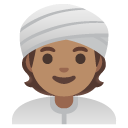


Appearance varies by platform and device. Google Noto, Twemoji, and OpenMoji are open-source.