😾
The Emoji
Pouting Cat
U+1F63E · :pouting_cat:
Trend 55
Meaning layers
- interpretation
- Used to express petty irritation, sulking, or mock-outrage — often in a self-aware, humorous way. Gen Z uses it to signal that they are annoyed but not seriously upset.
- tiktok usage
- Appears in comment sections when someone is playfully jealous or upset about something trivial, or reacting to relatable 'this is so unfair' content.
- irony level
- 7 / 10
Platform meanings
- meaning
- Expresses playful sulking, jealousy, or petty annoyance in comment sections and video captions.
- trend usage
- Used in 'POV: you're being ignored' and 'they didn't invite me' content; also appears in cat-themed reaction videos.
- hashtags
- #poutingcat#catmood#jealouscat#cattitude#moodcat
- virality score
- 52 / 100
Cultural meanings
🇺🇸
Western / Gen-Z
Gen Z in North America and Western Europe uses 😾 as a cute, self-aware signal of petty annoyance or mock-jealousy, fully aware of its ironic potential.
🇵🇰
Pakistan & India
Used in younger, online-savvy circles to express frustration or sulking in WhatsApp and Instagram chats; cat emojis are less culturally loaded and understood through global meme culture.
🌍
Middle East
Younger Arabic-speaking users adopt it from global internet culture to express displeasure cutely; less common among older users who may not recognize its nuance.
🌐
Global Neutral
Universally readable as an angry or displeased cat face; works across cultures as a soft expression of displeasure without requiring deep cultural context.
🇧🇩
Bangladesh
Used primarily by younger, internet-connected users in Dhaka and online communities to express sulking or mild frustration, often mirroring Indian meme culture usage.
🇱🇰
Sri Lanka
Appears in youth digital culture to signal annoyance or jealousy in a non-confrontational, playful manner, particularly on WhatsApp and Instagram.
🇨🇳
China
Less common than cat emojis native to Chinese platforms (like those on WeChat), but understood by younger users familiar with global meme culture as a grumpy cat reaction.
🇯🇵
Japan
Japan has a rich cat emoji culture; 😾 is understood but may be less preferred over native kaomoji or LINE sticker equivalents that convey similar sulking expressions.
🇰🇷
South Korea
Used by younger KakaoTalk and Instagram users to express petty frustration; the cute-angry aesthetic aligns well with Korean internet culture's love of expressive characters.
🇹🇼
Taiwan
Used similarly to South Korea — younger users appreciate the cute-angry duality; often seen in LINE chats and Instagram stories to convey lighthearted sulking.
🇭🇰
Hong Kong
Used across WhatsApp and Instagram by younger users; the cat emoji carries a playful tone that fits Hong Kong's internet-savvy youth meme culture.
🇵🇭
Philippines
Very popular in Filipino social media culture where dramatic yet humorous expressions are valued; 😾 fits perfectly into the Filipino 'OA but cute' communication style.
🇮🇩
Indonesia
Used by younger Indonesian users on Instagram and WhatsApp to express gemas (a mix of jealousy and cuteness-triggered frustration), fitting local emotional expression patterns.
🇹🇭
Thailand
Cat imagery is widely beloved in Thailand; 😾 is used to express sulking or mild anger with a kawaii-adjacent softness popular in Thai social media.
🇻🇳
Vietnam
Younger Vietnamese users on Facebook and Zalo use it to signal sulking or jealousy in chats, often in the context of friend group banter.
🇲🇾
Malaysia
Used in WhatsApp and Instagram by younger Malaysians to express petty annoyance; fits well into Malaysian internet culture's blend of humor and emotional expression.
🇸🇦
Saudi Arabia
Younger, internet-active Saudis use it in private chats to signal sulking or displeasure; context remains informal and tied to global meme literacy.
🇦🇪
UAE
Used by the young, cosmopolitan UAE internet population to express mock-anger or sulking, particularly among expatriate communities and local youth on Instagram.
🇪🇬
Egypt
Younger Egyptian users on Facebook and WhatsApp use it to express frustration in a cute way, often in friend group chats and comment sections.
🇹🇷
Turkey
Turkish youth on Twitter/X and Instagram use 😾 to signal petty anger or jealousy; aligns with a broader Turkish internet culture that embraces expressive, emotive communication.
🇮🇷
Iran
Used by younger Iranians on Instagram (the most popular platform) to signal sulking or mild frustration in a soft, humor-adjacent way.
🇳🇬
Nigeria
Used by Nigerian youth on Twitter/X, Instagram, and WhatsApp to express petty annoyance; fits into Nigerian internet culture's love of dramatic yet humorous reactions.
🇿🇦
South Africa
Used similarly to Western contexts by English-speaking South African youth; the grumpy cat aesthetic resonates with local meme culture on Twitter/X and Instagram.
🇬🇧
UK & Ireland
British and Irish users lean into the passive-aggressive quality of 😾, using it in a deadpan, understated way to signal displeasure — very on-brand for UK communication styles.
🇫🇷
France
Used by younger French users to express sulking or mild protest; the cute-but-angry duality appeals to French internet aesthetics valuing wit and irony.
🇩🇪
Germany
Germans may use it more literally to signal genuine displeasure, though younger users in meme-literate circles understand its ironic softening effect.
🇪🇸
Spain & Italy
Used expressively by younger Spanish and Italian users to signal dramatic but ultimately harmless sulking; fits Mediterranean emotional expressiveness with a digital twist.
🇧🇷
Brazil
Brazilian users love expressive, dramatic emojis; 😾 is used in TikTok comments, Twitter/X, and WhatsApp to signal petty jealousy or mock-outrage with characteristic Brazilian flair.
🇲🇽
Mexico
Used by younger Mexicans on Instagram and TikTok to express sulking or mock-anger, often in a playful context that fits Mexico's humor-forward digital culture.
🌎
Latin America
Across Latin America, 😾 is used to signal cute-but-real frustration; works especially well in group chats and comment sections where dramatic reactions are appreciated.
🇦🇺
Australia & NZ
Aussie and Kiwi users deploy it with dry humor to signal mild annoyance or sulking; fits well into Australian internet culture's ironic understatement.
How its meaning shifted
- 2010
Barely in use; emoji keyboards were limited and cat emoji variants were niche. When used, it was taken at face value as an angry cat face.
- 2015
Gained mild traction with the explosion of cat meme culture (Grumpy Cat era); used to represent a grumpy or unhappy mood, mostly literally.
- 2020
Became part of the Gen Z emoji vocabulary as a softer, cuter alternative to angry human emojis; ironic and self-aware usage began to emerge on TikTok and Twitter.
- 2026
Firmly established as a 'petty but cute' emotional signal across all major platforms; used in meme formats, ironic sulking, and as a personality marker for cat-loving or moody-aesthetic online identities.
See it on every platform
Adjacent emojis
Share & embed
Frequently asked
01What does the 😾 Pouting Cat emoji mean?
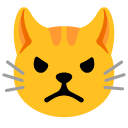
A cartoon cat face with furrowed brows, a downturned mouth, and a visible frown, expressing anger or displeasure.
02What does 😾 mean on TikTok?
Expresses playful sulking, jealousy, or petty annoyance in comment sections and video captions.
03What does 😾 mean on WhatsApp?
Signals that the sender is mildly upset, sulking, or feeling left out — but in a soft, non-confrontational way.
04What does 😾 mean in Gen-Z slang?
Used to express petty irritation, sulking, or mock-outrage — often in a self-aware, humorous way. Gen Z uses it to signal that they are annoyed but not seriously upset.
05Is the 😾 emoji safe to use?
A harmless expression of mild anger, sulking, or petty frustration, commonly used in humorous and ironic contexts.
06What does 😾 mean in texting?
The cat framing softens the emotional weight, allowing users to express genuine low-level frustration while maintaining plausible deniability through cuteness — a form of emotional buffering.
07What is the shortcode for 😾?
The shortcode for Pouting Cat is :pouting_cat:
08What does 😾 mean in dating?
Used in flirty arguments or playful spats — 'you didn't text me back 😾' signals jealousy in a cute, non-threatening way.
Safety & usage
- Safe meaning
- A harmless expression of mild anger, sulking, or petty frustration, commonly used in humorous and ironic contexts.
- Caution
- Could be used in passive-aggressive harassment or to signal ongoing silent treatment in toxic relationship dynamics, though this is rare.
Generally safe; no known associations with hate groups, explicit content, or coded harmful meanings. Context is key — serial use toward one person could indicate passive-aggressive behavior.
How it looks across platforms


Appearance varies by platform and device. Google Noto, Twemoji, and OpenMoji are open-source.