🤰🏻
The Emoji
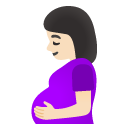
Pregnant Woman: Light Skin Tone
U+1F930 U+1F3FB · :pregnant_woman_light_skin_tone:
Trend 68
Meaning layers
- interpretation
- Used both literally to announce or reference pregnancy and ironically to express feeling bloated, overstuffed after eating, or 'carrying' a heavy burden (emotional or physical).
- tiktok usage
- Frequently appears in 'food baby' videos after large meals, pregnancy announcement skits, and relatable bloating humor content.
- irony level
- 6 / 10
Platform meanings
- meaning
- Used in pregnancy announcements, food baby jokes, bloating humor, and maternity lifestyle content.
- trend usage
- Appears in trending sounds for pregnancy reveals, 'what I ate today' videos, and postpartum body positivity content.
- hashtags
- #pregnant#foodbaby#pregnancyannouncement#momtok#bumpdate
- virality score
- 72 / 100
Cultural meanings
🇺🇸
Western / Gen-Z
Widely used both literally for pregnancy announcements and ironically for food baby humor; the ironic usage is dominant in casual digital communication among younger users.
🇵🇰
Pakistan & India
Used primarily to announce or discuss pregnancy in family group chats; carries celebratory and respectful connotations, though less commonly used publicly on open social media due to cultural norms around privacy.
🌍
Middle East
Used modestly within family and close friend groups to share pregnancy news; public use on open platforms is less common given cultural expectations around privacy regarding pregnancy.
🌐
Global Neutral
Universally recognized as representing pregnancy; the food baby ironic usage is understood in digitally connected global communities but remains secondary to the literal meaning.
🇧🇩
Bangladesh
Used in family and close friend WhatsApp groups to announce pregnancies; carries a celebratory, family-oriented meaning with strong emotional warmth.
🇱🇰
Sri Lanka
Used among family members to share pregnancy milestones; the emoji is taken literally and carries positive, life-affirming connotations.
🇨🇳
China
Used to represent pregnancy, especially in contexts celebrating new life; on platforms like WeChat it appears in family group announcements, though skin tone variants are less commonly differentiated.
🇯🇵
Japan
Used carefully and often privately to share pregnancy news; Japanese digital culture tends toward understatement, so this emoji appears more in close-knit chats than public posts.
🇰🇷
South Korea
Used in mommy communities (맘카페) and family group chats; also appears humorously in food culture contexts on platforms like KakaoTalk after large meals.
🇹🇼
Taiwan
Used primarily in family and friend chats for pregnancy announcements; the food baby usage has also been adopted by younger Taiwanese social media users.
🇭🇰
Hong Kong
Used both literally for pregnancy announcements and humorously in food contexts; bilingual digital culture means it appears across both Chinese and English language posts.
🇵🇭
Philippines
Used enthusiastically in family group chats and social media to announce and celebrate pregnancies; the strong family culture makes this emoji emotionally significant.
🇮🇩
Indonesia
Used in family and community WhatsApp groups for pregnancy news; given the cultural importance of family, this emoji carries deep celebratory and communal meaning.
🇹🇭
Thailand
Used to share pregnancy news in close social circles; also appears humorously on Thai food-related social media content among younger generations.
🇻🇳
Vietnam
Used in family messaging apps to announce pregnancies; carries warmth and communal celebration in a culture that places high value on family and new life.
🇲🇾
Malaysia
Used across multicultural Malaysian communities to announce pregnancy; appears in WhatsApp and Instagram for both literal and humorous food-bloat contexts.
🇸🇦
Saudi Arabia
Shared privately in women-only groups and family chats to announce pregnancies; public display on mixed social media is less culturally typical.
🇦🇪
UAE
Used in cosmopolitan UAE social media by expats and locals alike; pregnancy announcements with this emoji are common on Instagram among lifestyle influencers.
🇪🇬
Egypt
Used in family group chats and close friend circles to share pregnancy news; public social media usage is moderate and primarily celebratory.
🇹🇷
Turkey
Used both in family announcement contexts and humorously among younger users; Turkish food culture lends itself to food baby jokes on social media.
🇮🇷
Iran
Used privately within trusted family and friend groups for pregnancy news; public digital use is more restrained due to social norms.
🇳🇬
Nigeria
Used enthusiastically in WhatsApp family groups and Instagram to announce pregnancies; new life is celebrated loudly and communally, making this emoji highly positive.
🇿🇦
South Africa
Used across diverse South African communities for pregnancy announcements; the emoji appears in both formal-ish family communications and casual social media humor.
🇬🇧
UK & Ireland
Used literally for pregnancy announcements and extensively in ironic, self-deprecating humor about overeating; British humor culture makes the food baby usage very popular.
🇫🇷
France
Used primarily for genuine pregnancy announcements; the French tend to be more private about family news, so public use is moderate but the emoji is well understood.
🇩🇪
Germany
Used straightforwardly for pregnancy announcements; less ironic usage compared to Anglo-American digital culture, though younger Germans are adopting the food baby humor.
🇪🇸
Spain & Italy
Used warmly and expressively for pregnancy celebrations given strong family culture; also appears in food-related humor posts given the vibrant food cultures of both countries.
🇧🇷
Brazil
Used with great enthusiasm for pregnancy announcements on Instagram and WhatsApp; Brazilians' expressive digital culture means this emoji appears frequently and joyfully.
🇲🇽
Mexico
Used in family-oriented announcements and celebrations; the strong familismo cultural value makes pregnancy news something shared widely and with great emoji enthusiasm.
🌎
Latin America
Across Latin America, used celebratorily for pregnancy announcements in family and community groups; also adopted by younger users for food humor on TikTok and Instagram.
🇦🇺
Australia & NZ
Used both literally for pregnancy news and humorously in food contexts; Australian/NZ digital humor culture embraces the food baby joke, making ironic usage quite common.
How its meaning shifted
- 2010
Emoji did not yet exist in this form; pregnancy was represented with text or basic face emojis — the concept of a dedicated pregnancy emoji was not yet in Unicode.
- 2015
The base pregnant woman emoji (without skin tone) was introduced in Unicode 4.0 (2016), so in 2015 it was not yet available; pregnancy communication relied on text and stork emojis.
- 2020
Widely used for genuine pregnancy announcements on all major platforms; the ironic food baby usage had emerged and was gaining traction on TikTok and Twitter.
- 2026
Dual usage fully established — literal pregnancy announcements and ironic food baby humor coexist; increasingly used in body positivity discourse and inclusive parenting conversations.
See it on every platform
Adjacent emojis
- Often confused with
- pregnant manperson shruggingwoman in lotus position
- Can replace
- babyhatching chicksparkles
Share & embed
Frequently asked
01What does the 🤰🏻 Pregnant Woman: Light Skin Tone emoji mean?
A person with a light skin tone displaying a visibly pregnant belly, used to represent pregnancy, expectant mothers, and the experience of being with child.
02What does 🤰🏻 mean on TikTok?
Used in pregnancy announcements, food baby jokes, bloating humor, and maternity lifestyle content.
03What does 🤰🏻 mean on WhatsApp?
Directly used to announce or discuss pregnancy in family and friend chats; sometimes used humorously after meals.
04What does 🤰🏻 mean in Gen-Z slang?
Used both literally to announce or reference pregnancy and ironically to express feeling bloated, overstuffed after eating, or 'carrying' a heavy burden (emotional or physical).
05Is the 🤰🏻 emoji safe to use?
Representation of pregnancy and expectant motherhood; used for announcements, support communities, and humor about overeating.
06What does 🤰🏻 mean in texting?
This emoji carries deep emotional weight — it symbolizes new life, bodily autonomy, and the complex psychological journey of parenthood. It can evoke warmth, anxiety, excitement, or discomfort depending on personal context.
07What is the shortcode for 🤰🏻?
The shortcode for Pregnant Woman: Light Skin Tone is :pregnant_woman_light_skin_tone:
08What does 🤰🏻 mean in dating?
Rarely used in flirting; if sent in a dating context it typically signals a real-life situation, a joke about 'moving fast,' or a playful exaggeration of attachment.
Safety & usage
- Safe meaning
- Representation of pregnancy and expectant motherhood; used for announcements, support communities, and humor about overeating.
- Caution
- Can be used in body-shaming contexts to mock someone's stomach size; occasionally weaponized in misogynistic comments about women's bodies.
While generally safe, this emoji can be used to shame or mock individuals; it should be used sensitively given the emotional weight pregnancy carries, including for those experiencing infertility or loss.
How it looks across platforms


Appearance varies by platform and device. Google Noto, Twemoji, and OpenMoji are open-source.