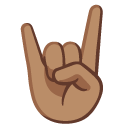
🤘🏽
The Emoji
Sign Of The Horns: Medium Skin Tone
U+1F918 U+1F3FD · :sign_of_the_horns_medium_skin_tone:
Trend 71
Meaning layers
- interpretation
- Used to signal hype, excitement, rock energy, or a carefree rebellious attitude. Also widely used as a casual 'hell yeah' or 'this slaps' reaction.
- tiktok usage
- Dropped in comments on hype videos, live performances, extreme sports clips, or any 'that was fire' moment. Often paired with flame emojis.
- irony level
- 3 / 10
Platform meanings
- meaning
- Hype, rockstar energy, extreme approval of content
- trend usage
- Used in comment sections of concerts, skate videos, gym transformations, and chaotic viral moments. Creators use it in text overlays to signal peak energy.
- hashtags
- #RockOn#MetalTikTok#HypeVibes#ConcertLife#RockAndRoll
- virality score
- 74 / 100
Cultural meanings
🇺🇸
Western / Gen-Z
Universally understood as a rock/hype symbol; used casually and ironically across all digital contexts to signal excitement or rebellious energy.
🇵🇰
Pakistan & India
Primarily known through Western music and Bollywood rock influences; used by urban youth in music and entertainment contexts, though less embedded in mainstream casual use.
🌍
Middle East
Understood mainly by youth exposed to Western media and rock culture; may be unfamiliar or misread by older generations but is growing in usage among urban youth.
🌐
Global Neutral
Broadly recognized internationally as a rock music symbol; safe to use in music and entertainment contexts across most global audiences.
🇧🇩
Bangladesh
Used among youth and music-loving communities familiar with Western pop culture; not widely mainstream but growing through social media influence.
🇱🇰
Sri Lanka
Known within urban youth circles exposed to Western music; used at concerts and in music-related digital contexts by younger demographics.
🇨🇳
China
Recognized mainly through Western pop culture imports; usage is niche among rock and alternative music fans but not deeply embedded in mainstream digital culture.
🇯🇵
Japan
Well-recognized due to Japan's strong rock and visual kei culture; used sincerely by music fans and broadly understood as a rock symbol.
🇰🇷
South Korea
Common in K-rock and metal fan communities; also used ironically in K-pop fan culture to signal intense hype or fandom energy.
🇹🇼
Taiwan
Understood as a rock/music symbol among youth; used in concert culture and social media by fans of Western and Taiwanese rock music.
🇭🇰
Hong Kong
Recognized through both Western and local rock music scenes; used in entertainment and nightlife digital contexts.
🇵🇭
Philippines
Widely understood due to strong OPM rock tradition; used enthusiastically in concert posts, band pages, and music fan communities.
🇮🇩
Indonesia
Used in rock and metal fan communities which are significant in Indonesia; also adopted in general hype contexts by youth on TikTok and Instagram.
🇹🇭
Thailand
Known among Thai youth through Western media and local rock scenes; used in music and festival contexts with growing casual adoption.
🇻🇳
Vietnam
Growing in usage among urban youth and music fans; primarily associated with Western rock culture and concert experiences.
🇲🇾
Malaysia
Used in multicultural urban youth circles exposed to Western music; appears in concert posts and music fan communities.
🇸🇦
Saudi Arabia
Used mainly by youth exposed to Western culture through streaming platforms; rock culture is niche but present in urban youth spaces.
🇦🇪
UAE
More widely used due to cosmopolitan demographic; common among expat and urban Emirati youth in entertainment and music contexts.
🇪🇬
Egypt
Recognized primarily through Western media; used by younger, urban music fans but not deeply integrated into mainstream Egyptian digital culture.
🇹🇷
Turkey
Turkey has a strong rock culture, making this emoji genuinely popular and well-understood among a broad youth demographic in music and social contexts.
🇮🇷
Iran
Circulates among youth through restricted but active underground music and social media culture; carries an additional layer of rebellious significance given cultural restrictions.
🇳🇬
Nigeria
Increasingly used by urban Nigerian youth influenced by Afrobeats crossover with Western genres; more common in entertainment and lifestyle digital spaces.
🇿🇦
South Africa
Well-understood due to South Africa's active rock and festival culture; used sincerely in music communities and casually by urban youth.
🇬🇧
UK & Ireland
Strongly associated with Britain's deep rock and metal heritage; used enthusiastically and often ironically across generations in music and social contexts.
🇫🇷
France
Recognized through Western rock culture; used in music communities and by urban youth, sometimes with an ironic or humorous edge.
🇩🇪
Germany
Germany's strong metal and rock scene means this emoji is used sincerely and frequently in music communities and festival culture.
🇪🇸
Spain & Italy
Understood through Western rock influence; used in concert culture and by youth, with Italy and Spain both having active rock fan communities.
🇧🇷
Brazil
Brazil has a passionate rock and metal fan base; this emoji is used widely and sincerely in music communities and casual hype contexts.
🇲🇽
Mexico
Mexico's thriving rock en español scene makes this widely understood and used; popular in concert posts and youth culture broadly.
🌎
Latin America
Broadly understood across Latin America through shared Western media and local rock traditions; used in entertainment and music digital spaces.
🇦🇺
Australia & NZ
Widely used and well-understood; Australia and New Zealand have strong rock and festival cultures that make this a natural fit for enthusiastic expression.
How its meaning shifted
- 2010
Primarily used sincerely by rock and metal fans on early social platforms like MySpace and Facebook to signal music identity and community membership.
- 2015
Expanded beyond music into general expressions of excitement and enthusiasm; skin tone modifiers introduced in 2015 increased personal representation and adoption.
- 2020
Mainstream adoption on TikTok and Instagram normalized its use beyond music culture; began appearing in ironic and meme contexts alongside sincere usage.
- 2026
Fully integrated into everyday digital vocabulary as a versatile hype and excitement symbol; used across generations and cultures with both sincere and ironic registers, including frequent appearance in AI-generated content and brand communications.
See it on every platform
Adjacent emojis
- Often confused with
- ok handsign of the hornsraised hand with fingers splayed
- Can replace
- fireraising handsflexed biceps
Share & embed
Frequently asked
01What does the 🤘🏽 Sign Of The Horns: Medium Skin Tone emoji mean?
The Sign of the Horns gesture with a medium skin tone modifier, depicting the index finger and pinky raised while the middle and ring fingers are held down by the thumb.
02What does 🤘🏽 mean on TikTok?
Hype, rockstar energy, extreme approval of content
03What does 🤘🏽 mean on WhatsApp?
Enthusiasm or agreement, often sent after hearing good news or plans for a fun night out.
04What does 🤘🏽 mean in Gen-Z slang?
Used to signal hype, excitement, rock energy, or a carefree rebellious attitude. Also widely used as a casual 'hell yeah' or 'this slaps' reaction.
05Is the 🤘🏽 emoji safe to use?
Rock on, hype, excitement, music appreciation, enthusiasm, celebration of boldness
06What does 🤘🏽 mean in texting?
This gesture triggers associations with freedom, group belonging, and countercultural identity. It signals high-arousal positive emotions and tribal solidarity within music or youth subcultures.
07What is the shortcode for 🤘🏽?
The shortcode for Sign Of The Horns: Medium Skin Tone is :sign_of_the_horns_medium_skin_tone:
08What does 🤘🏽 mean in dating?
Can signal a fun, laid-back, adventurous personality. Used to show shared taste in music or nightlife culture when flirting.
Safety & usage
- Safe meaning
- Rock on, hype, excitement, music appreciation, enthusiasm, celebration of boldness
- Caution
- In some older or religious interpretations, the horns gesture has been associated with occult or satanic symbolism, though this reading is rare in modern digital contexts.
Be aware that in certain conservative religious communities this gesture may carry negative occult connotations. In Mediterranean cultures like Italy and Spain, a similar-looking gesture (mano cornuta) can mean infidelity or a curse, though the emoji is generally not interpreted this way digitally.
How it looks across platforms


Appearance varies by platform and device. Google Noto, Twemoji, and OpenMoji are open-source.