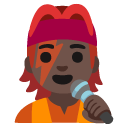
🧑🏿🎤
The Emoji
Singer: Dark Skin Tone
U+1F9D1 U+1F3FF U+200D U+1F3A4 · :singer_dark_skin_tone:
Trend 68
Meaning layers
- interpretation
- Used to flex musical talent, stan a favorite artist, or signal that someone is in their performer era. Also used ironically to hype up even minor achievements as if they were a headline concert.
- tiktok usage
- Appears in 'main character' energy videos, karaoke challenges, and lip-sync content where the creator wants to emphasize their dark-skinned artist representation or musical identity.
- irony level
- 4 / 10
Platform meanings
- meaning
- Represents singer culture, performer energy, and Black artistic representation in music content.
- trend usage
- Used in duet videos, vocal showcase trends, and 'POV: you're a famous singer' scenarios. Also appears in Black excellence and music appreciation content.
- hashtags
- #singercheck#blackartist#musicvibes#performerera#vocalcoach
- virality score
- 72 / 100
Cultural meanings
🇺🇸
Western / Gen-Z
Strongly associated with celebrating Black musical talent and representation; widely used as a pride and hype emoji in music spaces.
🇵🇰
Pakistan & India
Used to celebrate Bollywood or Punjabi music performers; skin tone specificity is less emphasized but the singer role is universally understood.
🌍
Middle East
Represents musicians and performers in the region; appreciated in contexts celebrating Arab or African music artists.
🌐
Global Neutral
Universally understood as representing a singer or music performer; the dark skin tone adds a layer of diversity and representation.
🇧🇩
Bangladesh
Used mainly to denote singers or music performers; the dark skin tone detail is often overlooked in favor of the professional role.
🇱🇰
Sri Lanka
Associated with local pop or classical music performers; used when discussing or celebrating music artists in casual contexts.
🇨🇳
China
Generally interpreted as a foreign or international musician; the skin tone is noted but the primary meaning is the performer role.
🇯🇵
Japan
Used in music contexts and idol culture discussions; represents a singer, though the dark skin detail may not carry specific cultural resonance.
🇰🇷
South Korea
Often appears in K-pop fan discussions when referencing African or African-American music influences; also used by fans of non-Korean Black artists.
🇹🇼
Taiwan
Used in music-related conversations; the performer symbolism is primary and the skin tone serves as a diversity marker.
🇭🇰
Hong Kong
Recognized as a music performer emoji; used in entertainment and pop culture discussions, especially referencing Western or African music.
🇵🇭
Philippines
Actively used to represent OPM (Original Pilipino Music) artists or to celebrate Black international stars popular in the country like Beyoncé.
🇮🇩
Indonesia
Used to celebrate both local and international music performers; skin tone diversity is increasingly recognized in younger digital communities.
🇹🇭
Thailand
Associated with performers and musicians in general; used in K-pop and international music fan communities alongside other artist emojis.
🇻🇳
Vietnam
Primarily seen as a music performer emoji; used in youth music culture to celebrate international artists.
🇲🇾
Malaysia
Used across diverse communities to represent music performers; the dark skin tone resonates with Malay, Indian-Malaysian, and African-appreciating communities.
🇸🇦
Saudi Arabia
Used to reference international music performers; cultural sensitivity around music means it is used more in private or younger online spaces.
🇦🇪
UAE
Widely used in the UAE's diverse, cosmopolitan digital culture; represents the broad multicultural music scene including African and Western artists.
🇪🇬
Egypt
Used to celebrate Arabic music performers and international Black artists who are popular in Egypt; associated with musical excellence.
🇹🇷
Turkey
Used in music discussions and pop culture contexts; fans of international music use it to represent beloved dark-skinned global artists.
🇮🇷
Iran
Used in underground digital music communities to discuss and celebrate international artists; the performer role is the primary reading.
🇳🇬
Nigeria
Extremely resonant and widely used; strongly associated with Afrobeats, Nollywood, and Nigerian musical pride and identity.
🇿🇦
South Africa
Used to celebrate local and continental African music talent; associated with pride in Black artistry, especially in genres like Amapiano and Kwaito.
🇬🇧
UK & Ireland
Used to represent grime, UK garage, R&B, and afroswing artists; strongly tied to Black British music culture and celebration.
🇫🇷
France
Used in Francophone African music contexts and also to celebrate Black French artists in rap and R&B; associated with cultural diversity in music.
🇩🇪
Germany
Used in music communities to represent diverse artists; increasingly adopted in conversations about representation in the German music industry.
🇪🇸
Spain & Italy
Used to reference international music performers; appreciation for reggaeton and Latin-African fusion music gives this emoji a positive association.
🇧🇷
Brazil
Strongly associated with celebrating Black Brazilian musical talent in samba, pagode, funk, and afrobeats; a marker of Afro-Brazilian cultural pride.
🇲🇽
Mexico
Used to celebrate music performers broadly; also resonates in discussions of Afro-Mexican identity and Black Latin music artists.
🌎
Latin America
Broadly used across Latin America to celebrate Black Latin musical artists and the African roots of many regional music genres.
🇦🇺
Australia & NZ
Used to celebrate diverse music performers; increasingly linked to Aboriginal and Pacific Islander music talent and representation conversations.
How its meaning shifted
- 2010
Emoji with skin tone modifiers did not exist yet; generic performer or music emojis were used without racial representation.
- 2015
Skin tone modifiers were introduced in Unicode 8.0; early adoption was slow and this specific combination was rarely used.
- 2020
Significant surge in usage during the Black Lives Matter movement and increased discourse around diversity in media and music; became a symbol of Black artistic representation.
- 2026
Normalized as a standard part of inclusive emoji usage; regularly used by creators, fans, and brands to authentically represent dark-skinned music performers.
See it on every platform
Adjacent emojis
- Often confused with
- dancer dark skin toneperson in tuxedo dark skin toneperforming arts
- Can replace
- microphonemusical notestar
Share & embed
Frequently asked
01What does the 🧑🏿🎤 Singer: Dark Skin Tone emoji mean?
A person with dark skin tone depicted as a singer or rock star, typically shown with a microphone and stylized hair or costume.
02What does 🧑🏿🎤 mean on TikTok?
Represents singer culture, performer energy, and Black artistic representation in music content.
03What does 🧑🏿🎤 mean on WhatsApp?
Signals that someone is singing, performing, or in a musical mood.
04What does 🧑🏿🎤 mean in Gen-Z slang?
Used to flex musical talent, stan a favorite artist, or signal that someone is in their performer era. Also used ironically to hype up even minor achievements as if they were a headline concert.
05Is the 🧑🏿🎤 emoji safe to use?
Represents a dark-skinned singer or music performer; used to celebrate Black artistry, musical talent, and diverse representation.
06What does 🧑🏿🎤 mean in texting?
Carries significant emotional weight for dark-skinned individuals who see themselves represented in artistic roles, reinforcing positive identity and belonging in creative spaces.
07What is the shortcode for 🧑🏿🎤?
The shortcode for Singer: Dark Skin Tone is :singer_dark_skin_tone:
08What does 🧑🏿🎤 mean in dating?
Can be used to say 'I have a passionate, expressive personality' or to hint that someone is romantically drawn to musicians or artistic types.
Safety & usage
- Safe meaning
- Represents a dark-skinned singer or music performer; used to celebrate Black artistry, musical talent, and diverse representation.
- Caution
- Rarely used in toxic contexts; in extreme cases could be misused in racially coded harassment, but this is not a common pattern.
Generally safe to use; ensure context is celebratory and respectful rather than stereotyping or tokenizing Black musical identity.
How it looks across platforms


Appearance varies by platform and device. Google Noto, Twemoji, and OpenMoji are open-source.