🧑🏽🎤
The Emoji
Singer: Medium Skin Tone
U+1F9D1 U+1F3FD U+200D U+1F3A4 · :singer_medium_skin_tone:
Trend 65
Meaning layers
- interpretation
- Used to express main character energy, dramatic flair, or that someone is 'eating' a moment — performing life at full volume. Also used when hyping up a friend who just said something iconic.
- tiktok usage
- Appears in duets, reaction videos, and 'slay' comment sections to signal that someone is performing/thriving. Frequently dropped in comment sections of bold lip sync or singing videos.
- irony level
- 4 / 10
Platform meanings
- meaning
- Signals that someone is performing, thriving, or living their rockstar era. Dropped in comments on bold, confident, or artistic videos.
- trend usage
- Used in 'my villain era,' 'main character energy,' and transformation/glow-up trends. Appears heavily in music-related duets and lip sync content.
- hashtags
- #rockstarera#maincharacter#slayallday#singervibes#performancemode
- virality score
- 68 / 100
Cultural meanings
🇺🇸
Western / Gen-Z
Widely used as a hype emoji signaling someone is in their 'era' — performing life boldly. Frequently used to celebrate friends, self-hype, or ironically comment on dramatic behavior.
🇵🇰
Pakistan & India
Used to celebrate musical talent, Bollywood performances, and local singers. Also appears in youth culture contexts to hype up bold or showy behavior among peers.
🌍
Middle East
Associated with entertainment and pop culture appreciation. Used carefully in more conservative contexts but freely among younger, urban populations to celebrate performers.
🌐
Global Neutral
Universally recognized as representing a singer or musical performer. Used across contexts to signal music, performance, artistry, and confident self-expression.
🇧🇩
Bangladesh
Used in pop culture and music fan communities, particularly around Bangladeshi pop and folk fusion artists. Younger users adopt it to signal coolness and artistic identity.
🇱🇰
Sri Lanka
Appears in contexts celebrating local musical culture and Baila/pop performances. Youth use it to express admiration for bold, expressive personalities.
🇨🇳
China
Used among younger, digitally active users to celebrate idol culture, K-pop influences, and C-pop stars. Less common in older demographics who may not associate the emoji style with Chinese aesthetics.
🇯🇵
Japan
Frequently used in J-pop and idol fan communities. Appreciated for the expressive, performative aesthetic that aligns with Japanese entertainment culture's love of theatrical performance.
🇰🇷
South Korea
Heavily used in K-pop fan culture to celebrate idols and performers. Appears constantly in fan accounts, comment sections, and reactions to music show performances.
🇹🇼
Taiwan
Used in music and entertainment fan contexts, particularly around Mandopop and idol culture. Younger Taiwanese users adopt it as a general hype and bold energy signifier.
🇭🇰
Hong Kong
Associated with Cantopop culture and bold performance aesthetics. Used by younger generations to express admiration for performers and signal their own expressive confidence.
🇵🇭
Philippines
Very popular in OPM (Original Pilipino Music) fan communities and among K-pop stan groups. Used liberally to hype up singers, performers, and confident personalities.
🇮🇩
Indonesia
Used in music fan communities and youth culture to celebrate bold performers. Appears in pop and indie music conversations, as well as general hype contexts.
🇹🇭
Thailand
Common in Thai pop and idol fan communities. Used to express admiration for performers and signal confidence or dramatic flair in everyday conversation.
🇻🇳
Vietnam
Appears in V-pop fan contexts and among youth who follow K-pop and international music. Used to celebrate bold, expressive personalities both in entertainment and daily life.
🇲🇾
Malaysia
Used across multicultural youth communities to hype up performers and bold personalities. Common in local music scenes and fan communities for both local and international artists.
🇸🇦
Saudi Arabia
Used primarily among younger, digitally connected users to celebrate musicians and performers. More common in private or youth-oriented chats given cultural sensitivities around performance.
🇦🇪
UAE
Widely used among the cosmopolitan, youth demographic to celebrate performers and bold self-expression. Reflects the UAE's growing entertainment and music scene.
🇪🇬
Egypt
Associated with celebrating Egyptian pop stars and musical icons. Used by younger generations to hype bold personalities and express admiration for expressive, artistic figures.
🇹🇷
Turkey
Common in Turkish pop and music fan communities. Used to celebrate bold performers and signal confidence or performative flair in everyday digital communication.
🇮🇷
Iran
Used primarily in private digital spaces among youth to celebrate musicians and bold personalities, navigating cultural restrictions around public entertainment expression.
🇳🇬
Nigeria
Heavily used in Afrobeats and music culture contexts to celebrate artists and performers. Appears in Afro-pop fan communities and general hype culture across social media.
🇿🇦
South Africa
Used in music communities celebrating local artists across genres including Amapiano, Afropop, and kwaito. Signals bold, performative energy and artistic celebration.
🇬🇧
UK & Ireland
Used to hype bold personalities, celebrate musicians, and signal confidence. Frequently appears in British pop culture conversations, music fan accounts, and ironic hype contexts.
🇫🇷
France
Associated with artistic expression and performer culture. French users employ it to celebrate musicians and bold self-presentation, with a particular appreciation for theatrical flair.
🇩🇪
Germany
Used in music fan communities and among younger users to celebrate performers. Also appears in ironic contexts, as German digital culture appreciates dry, understated humor.
🇪🇸
Spain & Italy
Enthusiastically used to celebrate bold, expressive performers in line with the culturally valued traditions of theatrical self-expression and musical heritage.
🇧🇷
Brazil
Widely used in Brazilian pop, funk, and pagode fan communities. Signals celebration of bold, expressive performers and is frequently used as general hype across social media.
🇲🇽
Mexico
Common in regional music and pop culture conversations. Used to celebrate both traditional performers and contemporary artists, signaling bold, expressive identity.
🌎
Latin America
Broadly used across Latin American youth culture to hype performers, celebrate bold personalities, and signal confidence. Frequently appears in reggaeton and Latin pop fan spaces.
🇦🇺
Australia & NZ
Used casually to hype performers and bold personalities. Appears in indie music scenes, casual hype conversations, and ironic contexts where someone is being dramatically confident.
How its meaning shifted
- 2010
Emoji did not exist in this form. Skin tone modifiers and profession-based emojis were not yet part of Unicode standard.
- 2015
Base singer/performer emoji concepts began emerging in Unicode proposals. Limited digital use as the emoji ecosystem was still developing profession-specific characters.
- 2020
Widely adopted following Unicode's push for skin tone diversity. Used primarily to represent singers, musicians, and performers in literal and expressive digital communication contexts.
- 2026
Evolved into a multifaceted hype emoji representing confidence, boldness, and 'era' culture. Deeply embedded in Gen Z vocabulary as a signifier of performative self-expression and main character energy.
See it on every platform
Adjacent emojis
- Often confused with
- person dancingclapping handsstar struck
- Can replace
- microphonemusical notesstar
Share & embed
Frequently asked
01What does the 🧑🏽🎤 Singer: Medium Skin Tone emoji mean?
A person with medium skin tone depicted as a rock star or pop singer, wearing a stylized outfit and striking a performance pose, often shown with a microphone or musical accessories.
02What does 🧑🏽🎤 mean on TikTok?
Signals that someone is performing, thriving, or living their rockstar era. Dropped in comments on bold, confident, or artistic videos.
03What does 🧑🏽🎤 mean on WhatsApp?
Typically used to hype up a friend who said or did something bold and confident. 'You just walked in like 🧑🏽🎤'
04What does 🧑🏽🎤 mean in Gen-Z slang?
Used to express main character energy, dramatic flair, or that someone is 'eating' a moment — performing life at full volume. Also used when hyping up a friend who just said something iconic.
05Is the 🧑🏽🎤 emoji safe to use?
Celebrates musical performance, artistic expression, and bold self-confidence. Universally positive in entertainment and creative contexts.
06What does 🧑🏽🎤 mean in texting?
Evokes feelings of self-expression, artistic identity, and the desire to be seen and celebrated. Tapping into performer archetypes triggers a sense of liberation and boldness in the sender.
07What is the shortcode for 🧑🏽🎤?
The shortcode for Singer: Medium Skin Tone is :singer_medium_skin_tone:
08What does 🧑🏽🎤 mean in dating?
Sent after someone says something smooth or charismatic — implying 'you really just performed for me right there.' Can be flirtatiously used to call someone charming.
Safety & usage
- Safe meaning
- Celebrates musical performance, artistic expression, and bold self-confidence. Universally positive in entertainment and creative contexts.
- Caution
- Occasionally weaponized sarcastically to belittle someone for being overly dramatic, attention-seeking, or performing emotions inauthentically.
Minimal risk emoji. Sarcastic use can sometimes feel dismissive, but the emoji carries no inherently harmful connotations. Context determines tone.
How it looks across platforms
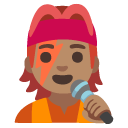


Appearance varies by platform and device. Google Noto, Twemoji, and OpenMoji are open-source.