🎇
The Emoji
Sparkler
U+1F387 · :sparkler:
Trend 68
Meaning layers
- interpretation
- Used to signal something is 'fire', extra exciting, or aesthetically glowing — often attached to hype moments, New Year countdowns, or 'hot girl' energy posts.
- tiktok usage
- Frequently placed at the end of captions for aesthetic videos, party clips, or New Year transitions. Also used ironically when something is mediocre but you're trying to hype it up.
- irony level
- 3 / 10
Platform meanings
- meaning
- Signals celebration, hot-girl energy, or the aesthetic peak of a moment. Frequently used in New Year, party, and glow-up content.
- trend usage
- Appears in caption transitions for 'before and after' glow-up videos, New Year countdowns, and hype reels for events.
- hashtags
- #sparkler#newyear#celebrate#glowup#fyp
- virality score
- 72 / 100
Cultural meanings
🇺🇸
Western / Gen-Z
Used liberally for New Year, birthdays, and 'slay' moments — carries a festive-cool vibe and is sometimes used ironically to hype small wins.
🇵🇰
Pakistan & India
Strongly associated with Diwali, weddings, and festive celebrations — universally positive and widely used across all age groups during festive seasons.
🌍
Middle East
Used during Eid celebrations, National Day festivities, and weddings — represents communal joy and public celebration.
🌐
Global Neutral
Broadly understood as a celebration or firework symbol — safely used across cultures to signal festivity and excitement.
🇧🇩
Bangladesh
Associated with Eid, New Year (Pohela Boishakh), and wedding celebrations — used enthusiastically in festive social media posts.
🇱🇰
Sri Lanka
Used during Sinhala and Tamil New Year, Vesak, and wedding contexts — signals communal joy and cultural festivity.
🇨🇳
China
Linked to Spring Festival, National Day Golden Week, and major celebrations — carries strong positive connotations of prosperity and festivity.
🇯🇵
Japan
Associated with summer fireworks festivals (hanabi) and New Year — evokes nostalgia, beauty, and seasonal celebration.
🇰🇷
South Korea
Used around New Year, Chuseok, and K-pop comeback celebrations — popular in fan communities to celebrate artist milestones.
🇹🇼
Taiwan
Connected to Lantern Festival, fireworks traditions, and national celebrations — symbolizes brightness and communal festivity.
🇭🇰
Hong Kong
Used during New Year countdowns and major public events — carries a cosmopolitan celebratory energy.
🇵🇭
Philippines
Strongly tied to New Year (one of the world's most firework-heavy celebrations) — used prolifically to express excitement and festivity.
🇮🇩
Indonesia
Used for New Year, Lebaran, and Independence Day (August 17) — signals national pride and communal celebration.
🇹🇭
Thailand
Associated with Loy Krathong, New Year, and Songkran festival content — represents light, joy, and cultural festivity.
🇻🇳
Vietnam
Linked to Tet (Lunar New Year) celebrations and fireworks displays — symbolizes luck, brightness, and new beginnings.
🇲🇾
Malaysia
Used during Merdeka Day, New Year, Hari Raya, and Deepavali — embraced across multi-cultural celebration contexts.
🇸🇦
Saudi Arabia
Appears in National Day celebration posts (September 23) and Eid content — represents patriotic festivity and communal joy.
🇦🇪
UAE
Heavily used during UAE National Day, New Year (massive fireworks events), and global celebrations — associated with world-class spectacle.
🇪🇬
Egypt
Used during national holidays, Eid, and New Year — signals collective celebration and social excitement.
🇹🇷
Turkey
Associated with Republic Day, New Year's Eve, and wedding celebrations — used to signal festive national or personal milestones.
🇮🇷
Iran
Linked to Nowruz (Persian New Year) — one of the most appropriate emojis for spring celebration and new beginnings.
🇳🇬
Nigeria
Used during Independence Day, New Year, weddings, and music release celebrations — signals high energy and party culture.
🇿🇦
South Africa
Associated with New Year's Eve celebrations, major sports wins, and public holidays — used to express collective excitement.
🇬🇧
UK & Ireland
Tied to Bonfire Night (Guy Fawkes), New Year at Edinburgh and London, and wedding send-offs — very commonly used in celebration contexts.
🇫🇷
France
Used for Bastille Day (July 14), New Year, and general celebration — conveys festive elegance and public spectacle.
🇩🇪
Germany
Associated with Silvester (New Year's Eve) — one of Europe's most firework-intensive celebrations, making this emoji especially resonant.
🇪🇸
Spain & Italy
Used during Feria, La Tomatina, Carnival, and New Year — signals festive passion and communal celebration energy.
🇧🇷
Brazil
Linked to Carnival, Réveillon (New Year at Copacabana), and festa junina — carries enormous celebratory energy.
🇲🇽
Mexico
Associated with Fiestas Patrias, Día de los Muertos celebrations, and New Year — signals festivity and cultural pride.
🌎
Latin America
Broadly used across Latin American cultures for national holidays, carnival-style events, and New Year countdowns.
🇦🇺
Australia & NZ
Strongly tied to Sydney and Auckland New Year's Eve fireworks (among the world's first and most famous) — carries major celebratory resonance.
How its meaning shifted
- 2010
Primarily used literally to represent sparklers or fireworks in holiday messages — straightforward festive usage with minimal layers.
- 2015
Expanded to general celebration use across platforms; began appearing in New Year posts, graduation announcements, and birthday content.
- 2020
Adopted into aesthetic Instagram and TikTok culture — used for glow-up content, NYE countdowns, and 'sparkling personality' expressions.
- 2026
Multi-layered usage spanning genuine celebration, ironic hype, aesthetic decoration, and genz identity expression — particularly prominent in short-form video captions and New Year content.
See it on every platform
Compare with
Emoji combinations
Adjacent emojis
- Opposite
- broken heartskullstorm cloud
- Often confused with
- glowing starshooting starcollision
- Can replace
- party popperfiredizzy
Share & embed
Frequently asked
01What does the 🎇 Sparkler emoji mean?
A sparkler — a handheld firework that emits bright sparks and light, commonly used at celebrations like New Year's Eve, weddings, and Independence Day.
02What does 🎇 mean on TikTok?
Signals celebration, hot-girl energy, or the aesthetic peak of a moment. Frequently used in New Year, party, and glow-up content.
03What does 🎇 mean on WhatsApp?
Signals excitement about an upcoming event or celebration, often used in group chats planning parties or New Year gatherings.
04What does 🎇 mean in Gen-Z slang?
Used to signal something is 'fire', extra exciting, or aesthetically glowing — often attached to hype moments, New Year countdowns, or 'hot girl' energy posts.
05Is the 🎇 emoji safe to use?
A universally recognized symbol of celebration, festivity, and excitement — appropriate for all ages and contexts.
06What does 🎇 mean in texting?
Sparklers are deeply tied to childhood nostalgia and communal celebration, triggering dopamine-linked memories of festive environments and shared joy.
07What is the shortcode for 🎇?
The shortcode for Sparkler is :sparkler:
08What does 🎇 mean in dating?
Sent to indicate someone is 'dazzling' or to add sparkle to a flirty compliment — e.g., 'You light up my world 🎇'.
Safety & usage
- Safe meaning
- A universally recognized symbol of celebration, festivity, and excitement — appropriate for all ages and contexts.
- Caution
- Extremely rare toxic usage; could theoretically be used sarcastically to mock someone's failure disguised as celebration.
No significant toxic or NSFW associations. Minimal risk of misinterpretation across cultures.
How it looks across platforms
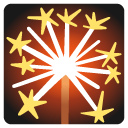


Appearance varies by platform and device. Google Noto, Twemoji, and OpenMoji are open-source.