🖲️
The Emoji
Trackball
U+1F5B2 U+FE0F · :trackball:
Trend 4
Meaning layers
- interpretation
- Rarely used organically; when it appears, it's often ironic or hyper-niche, signaling a deep tech nostalgia or 'I'm so obscure it hurts' energy. Sometimes used to represent rolling, spinning, or 'ball' metaphors.
- tiktok usage
- Appears in 'vintage tech' aesthetic videos or ironically in 'things only 90s kids remember' content. Very low organic usage.
- irony level
- 7 / 10
Platform meanings
- meaning
- Represents retro tech, nostalgia content, or is used ironically in 'gen z discovers old technology' trends.
- trend usage
- Appears in vintage tech aesthetic videos, retro setup tours, and ironic 'innovation' commentary.
- hashtags
- #retrotech#vintagecomputer#90stech#technostalgia#oldschooltech
- virality score
- 8 / 100
Cultural meanings
🇺🇸
Western / Gen-Z
Largely unknown or used ironically as a 'vintage tech' signifier; most Gen Z in Western countries have never used a physical trackball and treat it as a curiosity.
🇵🇰
Pakistan & India
Extremely niche; associated with older institutional computers and government office hardware; occasionally referenced in tech nostalgia content online.
🌍
Middle East
Minimal usage; occasionally appears in tech nostalgia content or among older tech professionals who used trackball devices in the 1990s–2000s.
🌐
Global Neutral
Universally understood as a retro computing device; carries no strong cultural connotation and is used primarily in tech-specific conversations globally.
🇧🇩
Bangladesh
Very rarely used; associated with older computer lab equipment in schools or government offices; not part of mainstream emoji vocabulary.
🇱🇰
Sri Lanka
Minimal cultural resonance; occasionally referenced by tech enthusiasts familiar with older imported computing hardware.
🇨🇳
China
Seldom used; older tech devices carry little nostalgia value in China's fast-paced tech culture; may appear in vintage tech collector communities.
🇯🇵
Japan
In Japan, trackballs have a dedicated enthusiast community (especially for ergonomic computing); this emoji holds more genuine meaning among tech hobbyists.
🇰🇷
South Korea
Rarely used in mainstream digital communication; might appear in retro tech or gaming nostalgia communities referencing classic arcade-era hardware.
🇹🇼
Taiwan
Has some resonance among Taiwan's active hardware and tech manufacturing culture; occasionally used in discussions about peripheral device history.
🇭🇰
Hong Kong
Minimal usage; associated with older office technology and may appear in retro tech or nostalgia-themed posts.
🇵🇭
Philippines
Very low usage; may appear in tech enthusiast groups or ironically when referencing outdated office equipment.
🇮🇩
Indonesia
Rarely used; occasionally surfaces in tech history content or among older users reminiscing about early computing experiences.
🇹🇭
Thailand
Minimal cultural resonance; might appear in tech hobbyist communities or gaming cafes that reference classic arcade hardware.
🇻🇳
Vietnam
Low usage overall; associated with older imported technology; occasionally referenced in tech nostalgia content.
🇲🇾
Malaysia
Rare in everyday communication; may appear in tech discussions or retro computing communities with a small but dedicated following.
🇸🇦
Saudi Arabia
Minimal usage; may surface in posts about tech history or among professionals who worked with legacy computing systems.
🇦🇪
UAE
Very low usage; occasionally appears in tech-forward discussions about the evolution of input devices given the UAE's rapid tech adoption history.
🇪🇬
Egypt
Rarely used; associated with older institutional computer hardware; minimal presence in mainstream digital communication.
🇹🇷
Turkey
Low usage; might appear in retro tech or gaming communities; occasionally referenced in conversations about vintage computing hardware.
🇮🇷
Iran
Very minimal usage; associated with older computing equipment; seldom appears outside niche tech enthusiast circles.
🇳🇬
Nigeria
Rarely used; may appear in tech communities discussing the history of imported computing hardware or among older tech professionals.
🇿🇦
South Africa
Low usage; occasionally referenced in tech nostalgia content or by older professionals familiar with legacy office computing systems.
🇬🇧
UK & Ireland
Used in niche retro tech and vintage computing communities; occasionally referenced ironically in tech commentary or 'remember when' social media posts.
🇫🇷
France
Minimal mainstream usage; appears in discussions among tech historians or retro computing enthusiasts; France has a small but active vintage computing scene.
🇩🇪
Germany
Slightly more resonance than other European countries due to Germany's strong engineering and hardware culture; used in precision computing and CAD discussions.
🇪🇸
Spain & Italy
Very low usage; occasionally referenced in retro gaming or vintage computing communities; no strong cultural association.
🇧🇷
Brazil
Rare in everyday usage; may appear in retro gaming content or tech nostalgia posts; Brazil's gaming culture occasionally references classic arcade hardware.
🇲🇽
Mexico
Minimal usage; appears in retro tech or gaming content; occasionally referenced ironically when discussing outdated technology.
🌎
Latin America
Very low usage across Latin America; primarily appears in tech hobbyist communities or retro gaming discussions referencing classic arcade history.
🇦🇺
Australia & NZ
Low but slightly higher usage than global average due to active retro computing communities; occasionally used ironically in tech commentary.
How its meaning shifted
- 2010
Largely unused as an emoji concept; trackballs were already becoming rare hardware, mainly used by CAD professionals and loyal enthusiasts; no emoji existed yet.
- 2015
Added to Unicode/emoji sets but saw minimal adoption; used mostly in tech-specific conversations or by early emoji power users exploring obscure symbols.
- 2020
Remained a niche emoji; gained slight ironic usage as retro tech nostalgia grew on platforms like Twitter and Reddit; retro gaming content increased its occasional appearance.
- 2026
Exists primarily as an ironic, nostalgic, or hyper-niche emoji; used in retro tech communities, sarcastic tech commentary, and vintage computing aesthetics; minimal mainstream adoption.
See it on every platform
Adjacent emojis
- Often confused with
- crystal ballbilliardsbowling
- Can replace
- computer mousedesktop computerjoystick
Share & embed
Frequently asked
01What does the 🖲️ Trackball emoji mean?
A trackball input device, represented as a ball mounted in a socket used to control a computer cursor, commonly associated with older computing hardware and specialized workstations.
02What does 🖲️ mean on TikTok?
Represents retro tech, nostalgia content, or is used ironically in 'gen z discovers old technology' trends.
03What does 🖲️ mean on WhatsApp?
Rarely used; if sent, it typically signals tech talk, a reference to something rolling or spinning, or a quirky conversation filler.
04What does 🖲️ mean in Gen-Z slang?
Rarely used organically; when it appears, it's often ironic or hyper-niche, signaling a deep tech nostalgia or 'I'm so obscure it hurts' energy. Sometimes used to represent rolling, spinning, or 'ball' metaphors.
05Is the 🖲️ emoji safe to use?
A completely safe, benign emoji representing a retro computer peripheral device with no harmful connotations.
06What does 🖲️ mean in texting?
Evokes a mild sense of nostalgia for early computing eras; rarely triggers strong emotion but resonates with those who grew up with pre-optical-mouse technology.
07What is the shortcode for 🖲️?
The shortcode for Trackball is :trackball:
08What does 🖲️ mean in dating?
Not typically used in flirting; if used, it likely signals the sender is a massive tech nerd or is being intentionally ironic/quirky.
Safety & usage
- Safe meaning
- A completely safe, benign emoji representing a retro computer peripheral device with no harmful connotations.
- Caution
- No known toxic or harmful usage patterns associated with this emoji.
No warnings necessary; this emoji carries no NSFW, hateful, or coded harmful meanings in any known community.
How it looks across platforms
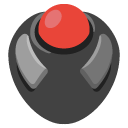


Appearance varies by platform and device. Google Noto, Twemoji, and OpenMoji are open-source.