🏳️⚧️
The Emoji
Transgender Flag
U+1F3F3 U+FE0F U+200D U+26A7 U+FE0F · :transgender_flag:
Trend 80
Meaning layers
- interpretation
- Used by Gen Z as a symbol of trans identity, allyship, and community solidarity. Often placed in bios, captions, and comments to signal support or self-identification. Also used defiantly in response to anti-trans discourse online.
- tiktok usage
- Appears in coming-out videos, transition timelines, trans joy content, and solidarity stitches. Frequently paired with 🏳️🌈 and pronouns in creator bios.
- irony level
- 1 / 10
Platform meanings
- meaning
- Symbol of trans identity, pride, and community. Used in bios and captions of trans creators and allies.
- trend usage
- Appears in transition timelines, coming-out videos, trans joy trends, duets supporting trans rights, and Pride Month challenges.
- hashtags
- #TransRights#TransJoy#TransVisibility#TransPride#TransTikTok
- virality score
- 82 / 100
Cultural meanings
🇺🇸
Western / Gen-Z
Widely recognized and actively used as a symbol of trans pride, solidarity, and allyship, especially online. Mainstream visibility in Western Gen Z spaces is high.
🇵🇰
Pakistan & India
Rarely used in mainstream digital spaces due to social stigma, though trans communities (hijra communities in South Asia) and urban LGBTQ+ activists use it in private or activist circles.
🌍
Middle East
Extremely rare in public digital use due to legal and social prohibitions on LGBTQ+ expression in most Middle Eastern countries. Used only in anonymous or diaspora contexts.
🌐
Global Neutral
Recognized internationally as a trans pride symbol, though acceptance and visibility vary greatly depending on regional legal and cultural contexts.
🇧🇩
Bangladesh
Seldom used publicly; Bangladesh has a recognized 'hijra' third gender legally but widespread social stigma means this emoji is largely confined to underground LGBTQ+ networks.
🇱🇰
Sri Lanka
Minimal public use due to legal restrictions on same-sex relationships and general social conservatism, though niche LGBTQ+ online communities may use it.
🇨🇳
China
Very limited use due to government censorship of LGBTQ+ content and social pressure. WeChat and Weibo often restrict visibility of pride-related symbols.
🇯🇵
Japan
Used within Japanese LGBTQ+ communities and ally networks, particularly in Tokyo-based Pride circles. Japan's growing trans visibility movement has increased recognition.
🇰🇷
South Korea
Gaining visibility in progressive urban LGBTQ+ communities, particularly among younger Koreans. Opposition from conservative groups makes public use politically charged.
🇹🇼
Taiwan
Widely recognized and positively used, as Taiwan is the most LGBTQ+-progressive country in Asia with strong trans rights advocacy communities online.
🇭🇰
Hong Kong
Used within LGBTQ+ activist communities, though increasing political restrictions post-2020 have pushed more expression to private digital spaces.
🇵🇭
Philippines
Recognized in urban LGBTQ+ communities; the Philippines has cultural visibility of transgender women ('bakla' culture) but formal trans rights remain limited.
🇮🇩
Indonesia
Rarely used publicly due to strong religious and social conservatism; LGBTQ+ content is largely suppressed, though underground communities exist.
🇹🇭
Thailand
Used within LGBTQ+ communities; Thailand has high visibility of transgender individuals ('kathoey' culture) but formal legal recognition and protections are limited.
🇻🇳
Vietnam
Limited public use; Vietnam removed homosexuality from its list of social evils in 2012 but legal trans recognition is still developing, keeping community expression largely private.
🇲🇾
Malaysia
Very limited public use due to strict Islamic laws criminalizing same-sex acts; LGBTQ+ expression is largely confined to anonymous or diaspora digital spaces.
🇸🇦
Saudi Arabia
Essentially absent from public digital spaces due to strict Islamic law and criminalization of LGBTQ+ expression. Any use occurs anonymously or in diaspora communities.
🇦🇪
UAE
Not used publicly due to legal prohibitions on LGBTQ+ expression; rare use in expatriate or diaspora communities operating under anonymity.
🇪🇬
Egypt
Extremely rare in public use due to social stigma and legal persecution of LGBTQ+ individuals. Used only in private or diaspora networks.
🇹🇷
Turkey
Use has declined publicly as political climate has grown more hostile toward LGBTQ+ rights; Istanbul Pride bans have pushed community expression more underground.
🇮🇷
Iran
Ironically, Iran officially permits gender-reassignment surgery but criminalizes homosexuality, creating a complex context where trans identity exists but online expression remains restricted.
🇳🇬
Nigeria
Extremely rare in public digital spaces due to strict anti-LGBTQ+ laws (Same-Sex Marriage Prohibition Act). Limited to underground or diaspora LGBTQ+ communities.
🇿🇦
South Africa
South Africa has the most progressive LGBTQ+ rights on the African continent; this emoji is used in urban LGBTQ+ spaces and activism, though rural acceptance lags.
🇬🇧
UK & Ireland
Widely recognized and actively used in LGBTQ+ communities, activism, and mainstream media. UK trans rights debates have increased both positive and contentious uses of this emoji.
🇫🇷
France
Used in LGBTQ+ activist and community contexts; France has legal gender recognition but ongoing debates about trans rights have kept the emoji politically charged.
🇩🇪
Germany
Actively used in trans communities and ally spaces; Germany passed significant trans rights legislation reforms in 2024, boosting the emoji's positive visibility.
🇪🇸
Spain & Italy
Used in LGBTQ+ communities across both countries; Spain has strong trans rights protections, while Italy has a more conservative political climate creating mixed reception.
🇧🇷
Brazil
Widely used in Brazil's large and vibrant LGBTQ+ community, one of the world's largest. Contrasts with political opposition, making the emoji both celebratory and defiant.
🇲🇽
Mexico
Used in LGBTQ+ activist and community spaces; Mexico City has strong trans rights protections, though acceptance varies significantly by region.
🌎
Latin America
Usage varies widely across Latin America — stronger in urban LGBTQ+ communities in Argentina, Chile, and Colombia, more restricted in Central American and Caribbean contexts.
🇦🇺
Australia & NZ
Widely recognized and positively used in both countries' progressive LGBTQ+ communities. Australia's Yes vote for marriage equality and NZ's trans-inclusive policies support mainstream visibility.
How its meaning shifted
- 2010
The transgender flag existed physically but had no emoji representation. Online trans communities used text symbols and rainbow flag variants to express identity.
- 2015
Still no official emoji; trans visibility was growing online with hashtags like #GirlsLikeUs. Communities advocated for dedicated emoji representation.
- 2020
The 🏳️⚧️ emoji was added to Unicode 13.0 in 2020, quickly becoming a ubiquitous symbol in LGBTQ+ digital spaces, bios, and activism during a politically charged year for trans rights.
- 2026
Firmly established as a universal symbol of trans identity and allyship across all major platforms. Used daily by millions globally in both celebratory and activist contexts amid ongoing trans rights battles.
See it on every platform
Compare with
Emoji combinations
Adjacent emojis
- Opposite
- no entryprohibitedangry face
- Often confused with
- white flagchequered flagtriangular flag
- Can replace
- rainbow flagpurple heartsparkles
Share & embed
Frequently asked
01What does the 🏳️⚧️ Transgender Flag emoji mean?
The Transgender Flag emoji represents the transgender pride flag, featuring blue, pink, and white horizontal stripes. It symbolizes transgender identity, pride, visibility, and the broader transgender community.
02What does 🏳️⚧️ mean on TikTok?
Symbol of trans identity, pride, and community. Used in bios and captions of trans creators and allies.
03What does 🏳️⚧️ mean on WhatsApp?
Signals trans identity or allyship in personal conversations. Used to show support during coming-out moments or trans-related discussions.
04What does 🏳️⚧️ mean in Gen-Z slang?
Used by Gen Z as a symbol of trans identity, allyship, and community solidarity. Often placed in bios, captions, and comments to signal support or self-identification. Also used defiantly in response to anti-trans discourse online.
05Is the 🏳️⚧️ emoji safe to use?
A symbol of trans pride, identity, visibility, and solidarity. Used positively by trans individuals and allies to celebrate identity and advocate for trans rights.
06What does 🏳️⚧️ mean in texting?
For trans individuals, this emoji carries deep personal significance — it can represent identity affirmation, community belonging, and resilience against discrimination. Its use can evoke both pride and emotional weight depending on social context.
07What is the shortcode for 🏳️⚧️?
The shortcode for Transgender Flag is :transgender_flag:
08What does 🏳️⚧️ mean in dating?
Used in dating app bios to signal trans identity or trans-inclusive attraction. Sometimes paired with pronouns to communicate gender identity upfront.
Safety & usage
- Safe meaning
- A symbol of trans pride, identity, visibility, and solidarity. Used positively by trans individuals and allies to celebrate identity and advocate for trans rights.
- Caution
- Occasionally weaponized by bad actors in anti-trans harassment campaigns, hate raids on trans streamers, or used mockingly in transphobic contexts to demean trans identities.
In highly conservative or legally restrictive regions, displaying this emoji publicly can expose individuals to social harm or legal risk. Platforms should monitor its use in harassment contexts while protecting legitimate identity expression.
How it looks across platforms
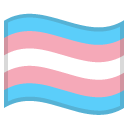
Appearance varies by platform and device. Google Noto, Twemoji, and OpenMoji are open-source.