📳
The Emoji
Vibration Mode
U+1F4F3 · :vibration_mode:
Trend 28
Meaning layers
- interpretation
- Used to signal being 'on vibrate' metaphorically — either too busy to respond, intentionally ignoring someone, or hyped/buzzing with energy. Also used ironically to say 'I'm literally vibrating with anxiety/excitement.'
- tiktok usage
- Appears in videos about phone anxiety, ghosting culture, or being so hyped you're 'vibrating.' Often paired with chaotic energy content.
- irony level
- 6 / 10
Platform meanings
- meaning
- Signals being unreachable, overstimulated, or 'vibrating at a different frequency' — used in anxiety-humor and chaotic energy videos.
- trend usage
- Appears in POV videos about ignoring texts, being overwhelmed, or 'living on vibrate mode' as a lifestyle statement.
- hashtags
- #vibratemode#phoneanxiety#dontcallme#silentmode#vibrating
- virality score
- 38 / 100
Cultural meanings
🇺🇸
Western / Gen-Z
Used ironically to signal being intentionally unreachable or living in 'vibrate mode' as a lifestyle — deeply tied to phone anxiety humor and boundary-setting culture.
🇵🇰
Pakistan & India
Used practically to signal being in a meeting, class, or prayer time where phones must be silent — also increasingly used by younger users to indicate they are ignoring unwanted calls.
🌍
Middle East
Commonly used to indicate phone is on silent during prayer times (Salah) or family gatherings — carries a respectful, culturally appropriate connotation of mindful phone use.
🌐
Global Neutral
Universally understood as 'phone on vibrate/silent' — straightforward tech communication across all linguistic backgrounds.
🇧🇩
Bangladesh
Used in academic and professional contexts to signal being in class or at work — younger users also use it to dodge unwanted family calls humorously.
🇱🇰
Sri Lanka
Practical usage dominates — sent in group chats before religious events, ceremonies, or office meetings as a reminder to silence phones.
🇨🇳
China
Used on WeChat and Weibo to indicate silent mode, especially during work hours or the Chinese New Year period when people are too busy to respond immediately.
🇯🇵
Japan
Highly relevant culturally — Japan has strict phone etiquette norms in public transport and offices, making this emoji a genuine and respected signal of courtesy.
🇰🇷
South Korea
Used by students and office workers to signal focus mode — also appears in KakaoTalk chats as a polite way to say 'I'll reply later.'
🇹🇼
Taiwan
Used similarly to Japan and South Korea — strong phone etiquette culture means this emoji is used sincerely to signal respectful silence in public spaces.
🇭🇰
Hong Kong
Practical and direct usage — sent in professional and social chats to indicate unavailability without the need for further explanation.
🇵🇭
Philippines
Used in group chats to humorously signal ignoring toxic group conversations or family chats, while also being used practically during church or work.
🇮🇩
Indonesia
Commonly used before Friday prayers (Sholat Jumat) or during Ramadan to signal phone silence — also appears in student group chats during exams.
🇹🇭
Thailand
Used to signal phone is on silent during Buddhist temple visits or school — younger Thais also use it in a lighthearted way to avoid unwanted calls.
🇻🇳
Vietnam
Practical usage in workplace and school contexts — also used humorously on Zalo by younger users to dodge spam calls or family check-ins.
🇲🇾
Malaysia
Used in both Malay and English-language chats to signal silence during prayers, meetings, or when avoiding someone politely.
🇸🇦
Saudi Arabia
Strongly associated with prayer time etiquette — used to signal phone on silent during Salah or in mosques, with genuine cultural respect.
🇦🇪
UAE
Used in multicultural professional settings to signal DND during meetings — also appears in casual chats as a polite unavailability signal across expat and local communities.
🇪🇬
Egypt
Used during Friday prayers and family gatherings — younger Egyptians also use it sarcastically when ignoring annoying group notifications.
🇹🇷
Turkey
Appears in WhatsApp groups before formal meetings or school exams — also used with light humor when someone wants to avoid responding to group messages.
🇮🇷
Iran
Used on Telegram to signal going quiet in busy group chats — also appears during religious observances as a mark of respectful phone silence.
🇳🇬
Nigeria
Used humorously in WhatsApp group chats to signal ignoring drama or noise — also used practically in church or corporate meeting contexts.
🇿🇦
South Africa
Used across English and multilingual chats to signal being in a quiet zone or meeting — also appears in informal chats to dodge unwanted calls with humor.
🇬🇧
UK & Ireland
Used with dry, understated humor to signal being too British to answer the phone — also genuinely used to indicate phone is on silent in professional or social settings.
🇫🇷
France
Practical and occasional ironic use — appears in work chats to signal DND, with French users occasionally using it to humorously dodge social obligations.
🇩🇪
Germany
Predominantly practical — used in professional contexts to signal strict focus or meeting time, reflecting German values of punctuality and work discipline.
🇪🇸
Spain & Italy
Used lightheartedly to signal being 'in the zone' or at a loud social event where the phone can't be heard — occasionally ironic in contexts of avoiding calls.
🇧🇷
Brazil
Used on WhatsApp with humor — signals being too busy with life (or avoiding drama) to respond, often accompanied by laughing emojis in informal chats.
🇲🇽
Mexico
Sent in group chats before work meetings or quinceañera-style family events to remind people to keep phones quiet — also used humorously to dodge telemarketers.
🌎
Latin America
Broadly used across Latin America to signal phone silence during events, family gatherings, or work — with a cultural undertone of 'I'm living life, not staring at my phone.'
🇦🇺
Australia & NZ
Used casually and with dry humor — signals being outdoors, busy, or deliberately offline in the relaxed Australian/NZ communication style.
How its meaning shifted
- 2010
Used almost exclusively in its literal sense — informing contacts that one's phone was set to vibrate mode, common in early smartphone etiquette messaging.
- 2015
Still largely literal but beginning to appear in 'do not disturb' contexts on social media bios and status updates as smartphone culture matured.
- 2020
Gained metaphorical traction during the pandemic — used to signal intentional disconnection, digital detox, and phone anxiety humor as remote work blurred work-life boundaries.
- 2026
Primarily used ironically or metaphorically by Gen Z and younger millennials — signals intentional unavailability, phone anxiety culture, and 'living on vibrate' as an aesthetic identity, with literal usage declining among younger demographics.
See it on every platform
Adjacent emojis
- Often confused with
- mobile phone offno bellpager
- Can replace
- bell with slashzzzsleeping symbol
Share & embed
Frequently asked
01What does the 📳 Vibration Mode emoji mean?
Represents a mobile phone set to vibration mode, where the device vibrates instead of playing an audible ringtone.
02What does 📳 mean on TikTok?
Signals being unreachable, overstimulated, or 'vibrating at a different frequency' — used in anxiety-humor and chaotic energy videos.
03What does 📳 mean on WhatsApp?
Signals the sender is on silent/vibrate and may not reply immediately — a polite heads-up about delayed responses.
04What does 📳 mean in Gen-Z slang?
Used to signal being 'on vibrate' metaphorically — either too busy to respond, intentionally ignoring someone, or hyped/buzzing with energy. Also used ironically to say 'I'm literally vibrating with anxiety/excitement.'
05Is the 📳 emoji safe to use?
Phone on vibrate/silent mode — a completely benign tech-related emoji used for communication etiquette.
06What does 📳 mean in texting?
Psychologically linked to boundary-setting and phone anxiety — using this emoji can signal a desire for reduced social obligation or a need for quiet personal space.
07What is the shortcode for 📳?
The shortcode for Vibration Mode is :vibration_mode:
08What does 📳 mean in dating?
Rarely used flirtatiously, but can imply 'I make your phone buzz (i.e., you can't stop texting me)' in a playful context.
Safety & usage
- Safe meaning
- Phone on vibrate/silent mode — a completely benign tech-related emoji used for communication etiquette.
- Caution
- Can be used passive-aggressively to call out someone for ignoring messages or to signal deliberate ghosting.
Extremely low risk emoji — no known harmful or coded uses. Passive-aggressive use is mild and context-dependent.
How it looks across platforms
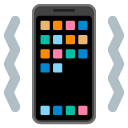

Appearance varies by platform and device. Google Noto, Twemoji, and OpenMoji are open-source.