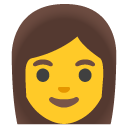
👩
The Emoji
Woman
U+1F469 · :woman:
Trend 58
Meaning layers
- interpretation
- Used to represent any woman, signal female identity, or as a standalone marker of womanhood in captions and bios. Also deployed ironically to comment on 'woman behavior' or relatable female experiences.
- tiktok usage
- Appears in captions like 'she is just a woman 👩' to describe chaotic or relatable feminine behavior; used in POVs and storytelling as a character marker.
- irony level
- 4 / 10
Platform meanings
- meaning
- Character marker in storytelling, identity signal, and ironic commentary on womanhood
- trend usage
- Used in POV videos, 'day in my life' content, and feminist empowerment trends; part of the 'she is just a woman' audio trend
- hashtags
- #woman#girlboss#womanhood#sheisawoman#femaleexperience
- virality score
- 62 / 100
Cultural meanings
🇺🇸
Western / Gen-Z
Used as a casual identity marker and in meme formats about relatable womanhood; carries feminist undertones in empowerment content.
🇵🇰
Pakistan & India
Used to represent women in family and social contexts; commonly appears in WhatsApp family groups to denote female relatives or in posts celebrating women's achievements.
🌍
Middle East
Used carefully in public-facing content; represents women in professional or inspirational contexts while personal usage varies by platform privacy settings.
🌐
Global Neutral
Universally recognized as a representation of an adult woman; used cross-culturally as a simple gender identifier in digital communication.
🇧🇩
Bangladesh
Used to represent women in educational, family, and social empowerment contexts; frequently appears in posts celebrating female students or professionals.
🇱🇰
Sri Lanka
Used in family communication and social media to denote female members; appears in posts about women's cultural roles and achievements.
🇨🇳
China
Used on platforms like WeChat and Weibo to represent women; carries associations with modern, independent womanhood in younger digital culture.
🇯🇵
Japan
Used alongside kawaii aesthetic content to represent women; appears in everyday messaging as a gender identifier without strong political connotations.
🇰🇷
South Korea
Common in K-beauty and lifestyle content to signal a female perspective; used in online communities centered around women's fashion, culture, and empowerment.
🇹🇼
Taiwan
Used as a straightforward gender identifier in social media bios and messaging; appears in feminist discourse and women's advocacy content.
🇭🇰
Hong Kong
Used in both Cantonese social media and professional contexts to represent women; appears in posts about gender equality and women's rights.
🇵🇭
Philippines
Widely used to represent Filipina women in family, social, and professional settings; common in OFW communities to represent female workers abroad.
🇮🇩
Indonesia
Used to represent women across social and professional contexts; appears in Muslim women's communities alongside hijab or cultural emojis.
🇹🇭
Thailand
Used casually to represent women; also appears in gender-diverse communities where it serves as a traditional female gender marker.
🇻🇳
Vietnam
Used in family and professional messaging to denote female family members or colleagues; appears in women's empowerment and educational content.
🇲🇾
Malaysia
Used across multicultural communities to represent women; common in women's professional groups and lifestyle content on social media.
🇸🇦
Saudi Arabia
Used in private messaging to represent women; in public content it often appears alongside empowerment themes following Vision 2030 social changes.
🇦🇪
UAE
Used in professional and lifestyle content to represent modern Emirati and expatriate women; appears in empowerment campaigns and women-in-business posts.
🇪🇬
Egypt
Represents women in family and social contexts; used in posts celebrating Egyptian women's achievements in culture, sports, and public life.
🇹🇷
Turkey
Used as a gender marker in everyday messaging; appears in feminist online communities and in posts about women's rights and cultural identity.
🇮🇷
Iran
Used in digital spaces to represent Iranian women; frequently appears in diaspora communities and women's rights advocacy content online.
🇳🇬
Nigeria
Represents Naija women in family, business, and entertainment contexts; commonly used in posts celebrating female achievements and entrepreneurship.
🇿🇦
South Africa
Used across diverse cultural groups to represent women; appears in content celebrating South African women in politics, sport, and culture.
🇬🇧
UK & Ireland
Used casually as a gender identifier; appears in feminist discourse, everyday banter, and celebratory posts about women's achievements.
🇫🇷
France
Used as a straightforward gender marker; appears in feminist and equality discourse on social media, reflecting France's gender equality conversations.
🇩🇪
Germany
Used as a professional and casual gender identifier; common in gender equality and women-in-STEM discussions in German digital spaces.
🇪🇸
Spain & Italy
Used in expressive, social contexts to represent women; appears in family messaging and celebrations of strong female figures in Latin-Mediterranean culture.
🇧🇷
Brazil
Used widely to represent Brazilian women in everyday messaging and social media; paired with empowerment content and carnaval or cultural celebration posts.
🇲🇽
Mexico
Represents women in family, social, and feminist contexts; frequently appears in posts about Mexican women's strength and cultural identity.
🌎
Latin America
Used broadly across Latin American cultures to represent women with pride; appears in feminist movements like #NiUnaMenos and everyday social content.
🇦🇺
Australia & NZ
Used casually as a gender identifier; appears in women's sports content, empowerment campaigns, and everyday social media banter.
How its meaning shifted
- 2010
Primarily used as a literal representation of a woman in early emoji adoption; limited expressive use, mostly functional in SMS and early smartphone messaging.
- 2015
Became more widely used as emoji spread to mainstream social media; used in Women's Day posts and basic gender representation in digital communication.
- 2020
Gained feminist and empowerment connotations; widely used in BLM-adjacent women's movements, during International Women's Day surges, and as a general identity marker on all platforms.
- 2026
Used fluidly as an identity marker, ironic meme component, and empowerment symbol; part of the 'she is just a woman' meme format and integrated into Gen Z storytelling vocabulary on TikTok and Threads.
See it on every platform
Emoji combinations
Adjacent emojis
- Often confused with
- personwoman and man holding handsbust in silhouette
- Can replace
- persongirlwoman gesturing ok
Share & embed
Frequently asked
01What does the 👩 Woman emoji mean?
A woman emoji depicting an adult female human figure, typically shown with medium-length hair and gender-neutral clothing. Skin tone variants available.
02What does 👩 mean on TikTok?
Character marker in storytelling, identity signal, and ironic commentary on womanhood
03What does 👩 mean on WhatsApp?
Represents a woman or the sender's female identity in casual conversation
04What does 👩 mean in Gen-Z slang?
Used to represent any woman, signal female identity, or as a standalone marker of womanhood in captions and bios. Also deployed ironically to comment on 'woman behavior' or relatable female experiences.
05Is the 👩 emoji safe to use?
Represents a woman or female identity in digital communication; used for gender representation, empowerment, and identity expression.
06What does 👩 mean in texting?
Carries a sense of identity affirmation and representation; can evoke pride, solidarity, or neutrality depending on context. Often functions as a low-stakes identity marker rather than an emotionally charged symbol.
07What is the shortcode for 👩?
The shortcode for Woman is :woman:
08What does 👩 mean in dating?
Rarely used for flirting directly; sometimes used to say 'I'm a woman' in a playful self-introduction or to describe a crush or partner as 'she's a woman 👩'.
Safety & usage
- Safe meaning
- Represents a woman or female identity in digital communication; used for gender representation, empowerment, and identity expression.
- Caution
- Rarely weaponized; occasionally used dismissively in misogynistic contexts like 'women 👩' as a reductive stereotype comment.
Generally safe and benign; minimal risk of misuse. Context should be monitored in communities with a history of sexist discourse where the emoji may be used dismissively.
How it looks across platforms


Appearance varies by platform and device. Google Noto, Twemoji, and OpenMoji are open-source.