👩🏽🎨
The Emoji
Woman Artist: Medium Skin Tone
U+1F469 U+1F3FD U+200D U+1F3A8 · :woman_artist_medium_skin_tone:
Trend 58
Meaning layers
- interpretation
- Used to signal creative energy, artistic identity, or a 'main character' aesthetic. Often deployed when someone is feeling inspired, doing something artsy, or identifying as a creative person.
- tiktok usage
- Appears in art transformation videos, 'day in my life as an artist' content, aesthetic mood boards, and self-expression reels.
- irony level
- 3 / 10
Platform meanings
- meaning
- Symbol of creative identity, artsy aesthetic, and DIY/art transformation content.
- trend usage
- Used in art challenge videos, speed-painting TikToks, aesthetic room makeover content, and 'artist life' vlogs.
- hashtags
- #ArtistLife#CreativeVibes#ArtTok#WomenInArt#PaletteGoals
- virality score
- 62 / 100
Cultural meanings
🇺🇸
Western / Gen-Z
A strong self-identity marker used by young women in creative fields; frequently paired with aesthetic content and signals artistic confidence and individuality.
🇵🇰
Pakistan & India
Used by aspiring and professional artists, especially in urban and online communities; represents women breaking into creative careers traditionally dominated by men.
🌍
Middle East
Gaining popularity among young women in art school and creative industries; signals modern professional identity and creative empowerment.
🌐
Global Neutral
Universally understood as representing a woman artist or creative professional; used cross-culturally to denote artistic work or identity.
🇧🇩
Bangladesh
Emerging usage among urban youth and arts students; associated with fine arts, fashion design, and craft-based entrepreneurship.
🇱🇰
Sri Lanka
Used by women in the arts and crafts sector; appreciated in batik, traditional art, and modern design communities.
🇨🇳
China
Popular among female art students and designers on Weibo and Bilibili; associated with aesthetic lifestyle content and creative professionalism.
🇯🇵
Japan
Used in contexts related to manga/anime illustration, traditional crafts, and graphic design; appreciated for its cute aesthetic and professional nuance.
🇰🇷
South Korea
Common in K-beauty, fashion design, and webtoon creator communities; signals a trendy creative woman with strong aesthetic sensibility.
🇹🇼
Taiwan
Used by illustrators, indie designers, and art students; represents the growing creative economy among Taiwanese women.
🇭🇰
Hong Kong
Associated with graphic designers, illustrators, and creative professionals in the vibrant local arts scene.
🇵🇭
Philippines
Used by visual artists, illustrators, and content creators; part of the growing 'artpreneur' culture among Filipino women.
🇮🇩
Indonesia
Popular among female creators in batik design, digital art, and social media content creation communities.
🇹🇭
Thailand
Embraced by women in street art, design, and fashion; used in social media to signal creative profession or hobby.
🇻🇳
Vietnam
Used by female art students and designers; associated with both traditional lacquer art contexts and modern digital creativity.
🇲🇾
Malaysia
Common among women in creative industries, fashion design, and digital art communities; signals creative identity.
🇸🇦
Saudi Arabia
Increasingly used by young Saudi women exploring art and design as career paths; represents creative empowerment in a changing cultural landscape.
🇦🇪
UAE
Popular in Dubai's thriving arts scene; used by professional female artists, designers, and creative entrepreneurs.
🇪🇬
Egypt
Used by female artists and art students; associated with both traditional Egyptian artistry and modern design movements.
🇹🇷
Turkey
Common among women in design, fashion, and visual arts; Turkish Instagram artists frequently use it in their bios.
🇮🇷
Iran
Used subtly by creative women sharing art online; represents artistic expression in a context where art serves as personal freedom.
🇳🇬
Nigeria
Used by Afrocentric artists, fashion designers, and creative entrepreneurs; part of the booming Nollywood and Afroart aesthetic culture.
🇿🇦
South Africa
Embraced by women in the vibrant Cape Town and Joburg art scenes; signals creative profession and cultural pride.
🇬🇧
UK & Ireland
Used by fine art students, illustrators, and creative professionals; appears in portfolio bios and creative community posts.
🇫🇷
France
Associated with the strong French tradition of visual arts; used by painters, designers, and art school students on social media.
🇩🇪
Germany
Practical usage in design and arts communities; Bauhaus-influenced creatives use it to signal professional artistic identity.
🇪🇸
Spain & Italy
Strongly tied to the rich visual arts heritage of both countries; used by female artists and designers with pride.
🇧🇷
Brazil
Popular among female street artists, illustrators, and fashion designers; part of the vibrant Brazilian creative culture on Instagram.
🇲🇽
Mexico
Heavily associated with the legacy of Frida Kahlo and Mexican folk art; used by women artists as a powerful identity statement.
🌎
Latin America
Broadly used across Latin America by creative women; signals artistic passion and often ties into cultural art forms like muralism and textile arts.
🇦🇺
Australia & NZ
Common in creative industries, indie art scenes, and Aboriginal/Māori art communities; used to represent women in diverse artistic traditions.
How its meaning shifted
- 2010
This emoji did not exist in 2010; skin tone modifiers and profession emojis were not yet part of Unicode.
- 2015
Artist profession emojis were introduced around this period; early usage was mostly literal to indicate someone worked as an artist.
- 2020
Became widely used by female creators on TikTok and Instagram during the pandemic creative boom; identity-driven usage surged.
- 2026
A staple emoji for creative identity, used across professional and casual contexts; medium skin tone variant normalized as part of inclusive representation.
See it on every platform
Compare with
Adjacent emojis
Share & embed
Frequently asked
01What does the 👩🏽🎨 Woman Artist: Medium Skin Tone emoji mean?
A woman with medium skin tone depicted as an artist, typically shown holding a palette and paintbrush, representing creativity, visual arts, and artistic professions.
02What does 👩🏽🎨 mean on TikTok?
Symbol of creative identity, artsy aesthetic, and DIY/art transformation content.
03What does 👩🏽🎨 mean on WhatsApp?
Tells someone you're being creative, working on an art project, or feeling in your artistic zone.
04What does 👩🏽🎨 mean in Gen-Z slang?
Used to signal creative energy, artistic identity, or a 'main character' aesthetic. Often deployed when someone is feeling inspired, doing something artsy, or identifying as a creative person.
05Is the 👩🏽🎨 emoji safe to use?
Represents a woman artist or creative professional; used to express artistic identity, creativity, and passion for visual arts.
06What does 👩🏽🎨 mean in texting?
Signals a strong sense of identity tied to creative work; often used to assert artistic confidence or communicate a desire for self-expression and individuality.
07What is the shortcode for 👩🏽🎨?
The shortcode for Woman Artist: Medium Skin Tone is :woman_artist_medium_skin_tone:
08What does 👩🏽🎨 mean in dating?
Subtle flirt — used to suggest a creative, passionate, or romantically expressive personality; 'I'll paint your portrait' energy.
Safety & usage
- Safe meaning
- Represents a woman artist or creative professional; used to express artistic identity, creativity, and passion for visual arts.
- Caution
- No widely known toxic usage; very rarely used sarcastically to mock someone's 'dramatic' behavior.
Generally safe across all contexts. In rare cases may be used condescendingly to dismiss someone's ideas as impractical or 'just artsy'. No NSFW or hate-based usage documented.
How it looks across platforms
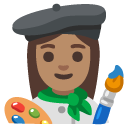


Appearance varies by platform and device. Google Noto, Twemoji, and OpenMoji are open-source.