🧘🏿♀️
The Emoji
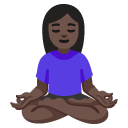
Woman In Lotus Position: Dark Skin Tone
U+1F9D8 U+1F3FF U+200D U+2640 U+FE0F · :woman_in_lotus_position_dark_skin_tone:
Trend 68
Meaning layers
- interpretation
- Used to signal a 'that girl' era, self-care routines, mental health days, or ironically when someone is pretending to have their life together. Also used to flex a wellness aesthetic or spiritual journey.
- tiktok usage
- Appears in 'that girl' morning routine videos, soft life content, mental reset vlogs, and wellness transformation journeys. Often paired with journaling and matcha content.
- irony level
- 4 / 10
Platform meanings
- meaning
- Signals wellness, spiritual glow-up, mindfulness routines, or aspirational calm amid chaos.
- trend usage
- Core emoji in 'that girl' era content, 5AM routine videos, mental health reset vlogs, and dark-skin wellness creator spaces celebrating melanated wellness culture.
- hashtags
- #ThatGirlEra#MelaninWellness#MindfulnessRoutine#SoftLifeSzn#HealingJourney
- virality score
- 72 / 100
Cultural meanings
🇺🇸
Western / Gen-Z
Heavily associated with the 'that girl' wellness aesthetic and soft life movement; widely used by Black Gen Z women to represent self-empowerment, mental health, and mindful living.
🇵🇰
Pakistan & India
Connected to indigenous yoga and meditation traditions, though the dark skin tone modifier may be less commonly selected. Represents spiritual practice, especially yoga which originates from the subcontinent.
🌍
Middle East
Generally interpreted as yoga or meditation practice; wellness culture is growing rapidly in the Gulf region. The dark skin tone may carry racial identity significance for diaspora communities.
🌐
Global Neutral
Universally understood as meditation, yoga, or mindfulness. The dark skin tone modifier adds representation value recognized globally as part of inclusive emoji diversity efforts.
🇧🇩
Bangladesh
Yoga and meditation are gaining popularity especially among urban youth; this emoji is used in wellness and fitness contexts, though the dark skin tone is notably affirming for South Asian representation.
🇱🇰
Sri Lanka
Associated with yoga and meditation which have deep cultural and Buddhist roots on the island; the emoji resonates with local mindfulness and spiritual traditions.
🇨🇳
China
Meditation and mindfulness content is popular; the emoji is used in wellness contexts though skin tone representation discourse is less prominent. Associated with calm and inner peace.
🇯🇵
Japan
Japan has a growing yoga and mindfulness culture; the emoji is used in wellness contexts. The skin tone diversity aspect is noted but not centrally culturally significant in most Japanese online spaces.
🇰🇷
South Korea
Used in K-wellness, yoga influencer content, and mental health awareness spaces. The 'healing' aesthetic ('힐링') culture in Korea resonates strongly with this emoji's meaning.
🇹🇼
Taiwan
Associated with yoga, mindfulness apps, and modern wellness culture among urban Taiwanese youth. Skin tone diversity in emoji is becoming more recognized and appreciated.
🇭🇰
Hong Kong
Used in fitness and wellness content; resonates with the growing mental health and mindfulness movement in Hong Kong especially post-2019 social movements and COVID stress.
🇵🇭
Philippines
Linked to yoga trends, wellness influencer culture, and mental health advocacy which has grown significantly among Filipino millennials and Gen Z online.
🇮🇩
Indonesia
Used in wellness and yoga communities; intersects with Islamic mindfulness practices (tafakkur). Skin tone representation resonates positively with the diverse Indonesian population.
🇹🇭
Thailand
Thailand has deep meditation traditions rooted in Theravada Buddhism; this emoji resonates strongly with local spiritual practices and the country's wellness tourism identity.
🇻🇳
Vietnam
Growing yoga and meditation community uses this emoji; younger Vietnamese generations in wellness spaces relate to the mindfulness messaging.
🇲🇾
Malaysia
Used in wellness and yoga circles; the multicultural Malaysian context means the dark skin tone can resonate across Indian Malaysian and other communities.
🇸🇦
Saudi Arabia
Yoga has seen growing popularity despite historical restrictions; used in private wellness content and women's empowerment spaces, particularly meaningful for Saudi women's self-care discourse.
🇦🇪
UAE
The UAE's cosmopolitan wellness culture embraces this emoji widely; resonates with the diverse expat population and growing local wellness industry.
🇪🇬
Egypt
Used in modern urban wellness content; resonates with Egyptian women's growing interest in yoga and mental health advocacy in digital spaces.
🇹🇷
Turkey
Associated with yoga studios and wellness culture that has grown significantly in Turkish urban centers; used in mindfulness and self-care content by Turkish women creators.
🇮🇷
Iran
Used in women's wellness communities, often in private or semi-private digital spaces; represents feminine empowerment and self-care in a context where public wellness expression can be restricted.
🇳🇬
Nigeria
Strongly resonant in the growing Nigerian wellness and self-care movement; particularly meaningful as it centers dark-skinned Black women in a wellness context traditionally dominated by lighter or non-Black imagery.
🇿🇦
South Africa
Deeply meaningful in Black South African wellness spaces; represents the reclamation of holistic health practices by Black women and resonates with ubuntu-centered wellness philosophies.
🇬🇧
UK & Ireland
Used in Black British wellness communities and general wellness/yoga content; the dark skin tone is celebrated as inclusive representation in a market historically underrepresenting Black women in wellness.
🇫🇷
France
Associated with wellness, yoga, and mindfulness culture growing in French urban centers; the dark skin tone resonates with Afro-French communities and broader inclusion conversations.
🇩🇪
Germany
Used in wellness and yoga communities; Germany's growing mindfulness movement and diverse population means the dark skin tone is recognized as positive inclusive representation.
🇪🇸
Spain & Italy
Associated with wellness tourism, yoga, and Mediterranean slow-living culture; the dark skin tone resonates with Afro-European and diaspora communities in these countries.
🇧🇷
Brazil
Very resonant in Brazil's large Black population wellness spaces; connects to Afro-Brazilian spiritual and wellness traditions and the growing Black wellness influencer movement.
🇲🇽
Mexico
Used in wellness and yoga culture content; resonates with indigenous wellness practices and the growing Afro-Mexican community's visibility and representation.
🌎
Latin America
Across Latin America, this emoji signals wellness, spiritual practice, and self-care. For Afro-Latinx communities, the dark skin tone carries powerful representation significance.
🇦🇺
Australia & NZ
Used widely in wellness, yoga, and mental health content; particularly meaningful in Aboriginal and Pacific Islander wellness communities where dark skin tone representation is valued.
How its meaning shifted
- 2010
This specific emoji did not yet exist; general meditation or yoga concepts were not yet represented in standard emoji sets, limiting digital expression of these practices.
- 2015
The base lotus position emoji was introduced around this period; skin tone modifiers were just being added to emoji sets, laying groundwork for diverse representation.
- 2020
Gained significant traction during COVID-19 pandemic as global interest in meditation, home yoga, and mental health exploded; dark skin tone version became popular in Black wellness communities.
- 2026
Core emoji in Black women's wellness content, 'soft life' and 'that girl' digital cultures, mental health advocacy, and inclusive wellness branding across all major social platforms.
See it on every platform
Compare with
Adjacent emojis
- Often confused with
- woman bowingperson sitting in lotus positionwoman kneeling
- Can replace
- seedlingwhite flowersparkles
Share & embed
Frequently asked
01What does the 🧘🏿♀️ Woman In Lotus Position: Dark Skin Tone emoji mean?
A woman sitting in a lotus position (cross-legged meditation pose) with dark skin tone modifier applied, used to represent yoga, meditation, mindfulness, and spiritual practice.
02What does 🧘🏿♀️ mean on TikTok?
Signals wellness, spiritual glow-up, mindfulness routines, or aspirational calm amid chaos.
03What does 🧘🏿♀️ mean on WhatsApp?
Indicates someone is meditating, doing yoga, having a self-care day, or intentionally disconnecting from drama or stress.
04What does 🧘🏿♀️ mean in Gen-Z slang?
Used to signal a 'that girl' era, self-care routines, mental health days, or ironically when someone is pretending to have their life together. Also used to flex a wellness aesthetic or spiritual journey.
05Is the 🧘🏿♀️ emoji safe to use?
Meditation, yoga practice, mindfulness, self-care, inner peace, mental health awareness, spiritual growth, and holistic wellness.
06What does 🧘🏿♀️ mean in texting?
This emoji evokes a sense of inner peace and intentional stillness. Psychologically, it signals the desire to retreat from chaos, prioritize mental health, and signal to others a state of emotional regulation or aspirational serenity.
07What is the shortcode for 🧘🏿♀️?
The shortcode for Woman In Lotus Position: Dark Skin Tone is :woman_in_lotus_position_dark_skin_tone:
08What does 🧘🏿♀️ mean in dating?
Low flirt potential — often used genuinely to express a chill, grounded personality. May signal 'I have a spiritual side' or 'I'm a low-drama person' in a profile context.
Safety & usage
- Safe meaning
- Meditation, yoga practice, mindfulness, self-care, inner peace, mental health awareness, spiritual growth, and holistic wellness.
- Caution
- Can be used passive-aggressively to dismiss someone's concerns ('just meditate lol 🧘🏿♀️'), or to mock toxic positivity culture and spiritual bypassing.
Generally very safe. Occasional misuse in sarcastic contexts to invalidate mental health struggles with 'just do yoga' type dismissiveness. No significant harmful usage patterns noted.
How it looks across platforms
Appearance varies by platform and device. Google Noto, Twemoji, and OpenMoji are open-source.