🧘🏻♀️
The Emoji
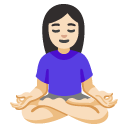
Woman In Lotus Position: Light Skin Tone
U+1F9D8 U+1F3FB U+200D U+2640 U+FE0F · :woman_in_lotus_position_light_skin_tone:
Trend 68
Meaning layers
- interpretation
- Used to signal a self-care era, unbothered energy, or ironically to say 'I'm too zen to deal with this drama.' Often deployed as a mock spiritual response to chaos.
- tiktok usage
- Appears in 'that girl' aesthetic content, morning routine videos, and 'soft life' TikToks. Also used ironically when someone is pretending to be calm while clearly stressed.
- irony level
- 5 / 10
Platform meanings
- meaning
- Represents wellness aesthetic, unbothered energy, or ironic calm amid chaos. Core symbol of the 'that girl' and 'soft life' trends.
- trend usage
- Used in morning routine videos, 'healing era' content, and satirical wellness parodies. Frequently appears in 'POV: you finally have your life together' clips.
- hashtags
- #thatgirl#morningroutine#selfcare#healingera#mindfulness
- virality score
- 72 / 100
Cultural meanings
🇺🇸
Western / Gen-Z
Heavily used ironically to signal fake calm or satirize wellness culture, while also being used sincerely in the 'that girl' and self-improvement aesthetic communities.
🇵🇰
Pakistan & India
Associated with yoga, Hindu/Buddhist spiritual traditions, and wellness practices. Widely respected as a symbol of meditation and inner peace, though skin tone variations carry visibility significance.
🌍
Middle East
Used primarily in wellness and fitness contexts; less spiritually loaded than in South Asia. Gaining traction among urban youth in wellness-focused social media.
🌐
Global Neutral
Universally recognized as a symbol of meditation, yoga, and calm. The light skin tone modifier may reduce relatability in non-white majority regions but the pose itself is globally understood.
🇧🇩
Bangladesh
Associated with yoga and meditation; not deeply tied to local religious practice but used in wellness and fitness communities. Gaining popularity through social media influence.
🇱🇰
Sri Lanka
Carries resonance with Buddhist meditation traditions. Used sincerely in wellness and spiritual contexts, particularly among younger urban populations on social media.
🇨🇳
China
Used in fitness and wellness contexts; associated with yoga which has grown significantly in urban China. The spiritual connotations are secondary to the health and lifestyle associations.
🇯🇵
Japan
Connected to mindfulness, zazen, and wellness aesthetics. Used in lifestyle and self-care content; the minimalist calm it represents aligns well with Japanese aesthetic values.
🇰🇷
South Korea
Common in K-wellness content, yoga influencer posts, and self-care culture. Associated with the 'healing' trend popular in Korean social media culture.
🇹🇼
Taiwan
Used in yoga, wellness, and mindfulness contexts. Popular among health-conscious urban youth and aligns with growing interest in spiritual and mental wellness practices.
🇭🇰
Hong Kong
Used in urban wellness contexts, particularly among young professionals seeking work-life balance. Resonates with the growing mental health awareness movement.
🇵🇭
Philippines
Associated with yoga and wellness trends popularized through social media. Used by fitness influencers and wellness communities; spirituality connection is secondary.
🇮🇩
Indonesia
Used in fitness and wellness contexts; the meditation/yoga connotation is understood but may be nuanced given the predominantly Muslim cultural context where secular wellness framing is preferred.
🇹🇭
Thailand
Strongly resonates with Buddhist meditation traditions and wellness tourism. Used sincerely and frequently in spiritual and wellness content.
🇻🇳
Vietnam
Growing usage in wellness and yoga communities. Associated with modern health trends and mindfulness practices adopted through global social media influence.
🇲🇾
Malaysia
Used in wellness and fitness contexts; generally accepted as a yoga/meditation symbol. The spiritual dimensions are navigated carefully in the Muslim-majority cultural context.
🇸🇦
Saudi Arabia
Primarily used in fitness and wellness contexts with spiritual connotations de-emphasized. Growing yoga community uses it, though cultural sensitivity around non-Islamic spiritual symbols applies.
🇦🇪
UAE
Common in the cosmopolitan wellness and fitness culture of cities like Dubai. Used by expats and nationals alike in yoga and mindfulness content with minimal cultural friction.
🇪🇬
Egypt
Used in fitness and wellness communities; yoga culture is growing in urban Egypt. Spiritual connotations are generally secondary to the health/lifestyle interpretation.
🇹🇷
Turkey
Associated with yoga and mindfulness trends popular among urban Turkish youth. Used in wellness content with the pose understood as health and self-care rather than spiritual practice.
🇮🇷
Iran
Used cautiously in wellness contexts; yoga and meditation are popular in urban areas. The symbol is appreciated for its calm aesthetic and is used in private social media wellness communities.
🇳🇬
Nigeria
Growing usage among urban wellness communities and fitness influencers. Associated with self-care trends popularized through Instagram and TikTok; spirituality framing varies by individual.
🇿🇦
South Africa
Used in wellness, yoga, and mindfulness communities. Popular among urban youth; resonates with both sincere wellness practitioners and ironic users familiar with global meme culture.
🇬🇧
UK & Ireland
Used both sincerely by wellness enthusiasts and ironically to mock wellness culture or signal fake composure. The ironic detachment usage is notably high in British online culture.
🇫🇷
France
Associated with yoga and mindfulness in lifestyle contexts. French social media users tend toward ironic or understated usage; sincere wellness branding uses it heavily.
🇩🇪
Germany
Used in wellness and fitness contexts; Germans tend toward sincere rather than ironic usage. Associated with work-life balance discussions and corporate mindfulness programs.
🇪🇸
Spain & Italy
Used in wellness and lifestyle content; popular among yoga communities and influencers. The warm social media cultures of these countries mean it often appears in self-care and relaxation posts.
🇧🇷
Brazil
Widely used in yoga, wellness, and spiritual communities which have strong presence in Brazil. Both sincere and ironic usage exist; aligns with Brazil's vibrant wellness culture.
🇲🇽
Mexico
Used in wellness and yoga communities growing significantly in urban Mexico. Associated with self-care culture and mindfulness trends popularized through social media.
🌎
Latin America
Broadly recognized as a wellness and yoga symbol across Latin America. Growing usage tied to expanding fitness influencer culture and mental health awareness movements.
🇦🇺
Australia & NZ
Strong sincere usage in yoga and wellness communities; also used ironically in line with the dry humor common in Australian online culture. Resonates with outdoor wellness and mindfulness lifestyle content.
How its meaning shifted
- 2010
Emoji did not exist yet; meditation and yoga were represented by text descriptions or basic symbols. The concept existed but had no dedicated visual representation.
- 2015
The base lotus position emoji was introduced around this period. Usage was primarily sincere and niche — yoga practitioners, spiritual communities, and wellness bloggers.
- 2020
Usage exploded with the pandemic-era wellness boom. Became a staple of self-care content, mental health awareness posts, and 'healing era' social media. Ironic usage began to emerge.
- 2026
Dual existence as sincere wellness symbol and ironic meme tool is fully established. Heavily embedded in 'that girl' aesthetic, but also standard irony shorthand for fake calm. Skin tone variations are increasingly consciously chosen.
See it on every platform
Adjacent emojis
- Often confused with
- woman bowingperson kneelingwoman sitting
- Can replace
- sparklesherbsun with face
Share & embed
Frequently asked
01What does the 🧘🏻♀️ Woman In Lotus Position: Light Skin Tone emoji mean?
A woman sitting in the lotus position (cross-legged meditation pose) with light skin tone, hands resting on knees, eyes closed in a peaceful meditative state.
02What does 🧘🏻♀️ mean on TikTok?
Represents wellness aesthetic, unbothered energy, or ironic calm amid chaos. Core symbol of the 'that girl' and 'soft life' trends.
03What does 🧘🏻♀️ mean on WhatsApp?
Signals relaxation, self-care, or that someone is taking a break from stress. Also used to tell someone to calm down.
04What does 🧘🏻♀️ mean in Gen-Z slang?
Used to signal a self-care era, unbothered energy, or ironically to say 'I'm too zen to deal with this drama.' Often deployed as a mock spiritual response to chaos.
05Is the 🧘🏻♀️ emoji safe to use?
Meditation, yoga, mindfulness, self-care, spiritual practice, inner peace, wellness lifestyle.
06What does 🧘🏻♀️ mean in texting?
Signals a desire for grounding and emotional regulation. Can represent genuine mindfulness practice or performative peace — the emoji often serves as an aspirational emotional state rather than a current one.
07What is the shortcode for 🧘🏻♀️?
The shortcode for Woman In Lotus Position: Light Skin Tone is :woman_in_lotus_position_light_skin_tone:
08What does 🧘🏻♀️ mean in dating?
Low flirt value; sometimes used to signal that someone is 'spiritually elevated' and selective, which can function as soft gatekeeping in dating contexts.
Safety & usage
- Safe meaning
- Meditation, yoga, mindfulness, self-care, spiritual practice, inner peace, wellness lifestyle.
- Caution
- Can be used to mock or dismiss serious problems with toxic positivity. Rarely weaponized but can signal passive-aggressive disengagement.
Generally very safe. The light skin tone modifier may occasionally prompt conversations about representation. No significant harmful usage patterns documented. Wellness culture mockery is the most notable edge case.
How it looks across platforms
Appearance varies by platform and device. Google Noto, Twemoji, and OpenMoji are open-source.