🧘🏼♀️
The Emoji
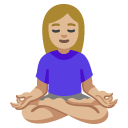
Woman In Lotus Position: Medium-light Skin Tone
U+1F9D8 U+1F3FC U+200D U+2640 U+FE0F · :woman_in_lotus_position_mediumlight_skin_tone:
Trend 68
Meaning layers
- interpretation
- Used to signal self-care mode, healing era, unbothered energy, or 'I'm working on myself' vibes. Also used sarcastically when someone is trying too hard to appear zen.
- tiktok usage
- Appears in 'that girl' aesthetic videos, morning routine content, manifestation TikToks, and 'soft life' era posts.
- irony level
- 5 / 10
Platform meanings
- meaning
- Represents the 'that girl' or wellness aesthetic; used in morning routine, manifestation, and self-improvement content.
- trend usage
- Heavily used in 5am routine videos, 75 Hard challenge content, therapy TikTok, and spiritual healing arcs.
- hashtags
- #thatgirl#morningroutine#mindfulness#healingera#selfcare
- virality score
- 72 / 100
Cultural meanings
🇺🇸
Western / Gen-Z
Deeply embedded in the 'that girl' and healing era aesthetics; used both sincerely and ironically to signal wellness culture participation or mock toxic positivity.
🇵🇰
Pakistan & India
Associated with yoga's cultural roots; used respectfully in wellness contexts but also increasingly by urban youth in self-care content on Instagram and WhatsApp.
🌍
Middle East
Gaining traction in Gulf wellness culture; used by women in fitness and mindfulness spaces, though cultural conservatism means it is more common in private digital spaces.
🌐
Global Neutral
Universally understood as a symbol of meditation, yoga, and mindfulness; considered a positive and calming emoji across most global contexts.
🇧🇩
Bangladesh
Primarily used in urban, educated circles in the context of yoga and mental wellness; growing alongside increasing mental health awareness content.
🇱🇰
Sri Lanka
Connected to Buddhist meditation traditions; used sincerely in spiritual and wellness contexts, particularly among mindfulness practitioners.
🇨🇳
China
Used in wellness and fitness communities on WeChat and Douyin; associated with 'self-improvement' culture and the growing mindfulness movement among urban millennials.
🇯🇵
Japan
Resonates with mindfulness and Zen culture; used in wellness apps and lifestyle content, though often perceived as more Western yoga than traditional Japanese practice.
🇰🇷
South Korea
Popular in K-wellness content on KakaoTalk and Instagram; associated with 'healing' culture and mental wellness, a significant trend among Korean youth.
🇹🇼
Taiwan
Used in wellness and lifestyle content; associated with yoga studios and mindfulness apps popular among urban Taiwanese women.
🇭🇰
Hong Kong
Common in high-pressure urban wellness discourse; used to signal mental health breaks and self-care amid fast-paced city life.
🇵🇭
Philippines
Increasingly used in self-care content on Facebook and TikTok; associated with wellness influencers and mental health advocacy.
🇮🇩
Indonesia
Used in wellness and fitness content; gaining popularity alongside the growing yoga and mindfulness movement in urban Indonesian communities.
🇹🇭
Thailand
Connected to both local Buddhist mindfulness and international yoga culture; used sincerely in wellness and spiritual content.
🇻🇳
Vietnam
Emerging in urban wellness spaces; used by young Vietnamese women in self-care and fitness content on TikTok and Instagram.
🇲🇾
Malaysia
Used in multicultural wellness spaces; popular among urban women in yoga and mindfulness communities across ethnic groups.
🇸🇦
Saudi Arabia
Used carefully in women's wellness spaces, especially since Vision 2030 opened up fitness and wellness culture; more common in private groups and female-only spaces.
🇦🇪
UAE
Common in Dubai's robust wellness and fitness culture; used by expats and locals alike in yoga studios and wellness influencer content.
🇪🇬
Egypt
Emerging in urban wellness discourse; used by younger Egyptians interested in mindfulness, though yoga carries some cultural skepticism in conservative circles.
🇹🇷
Turkey
Popular in Istanbul's urban wellness scene; used in yoga studio content and mental health conversations among progressive youth.
🇮🇷
Iran
Used cautiously in private digital spaces; associated with wellness and self-care among educated urban women, often in closed social groups.
🇳🇬
Nigeria
Growing in Lagos wellness culture; used by urban Nigerian women in fitness and self-care content as wellness influencer culture expands.
🇿🇦
South Africa
Common in Cape Town and Johannesburg wellness communities; used across racial groups in yoga and mindfulness content.
🇬🇧
UK & Ireland
Used earnestly in wellness communities and ironically in British humor contexts; common in 'spiritual girl autumn' aesthetic content.
🇫🇷
France
Associated with wellness and yoga culture but used with characteristic French irony about wellness trends; appears in lifestyle and self-care content.
🇩🇪
Germany
Used in wellness and mindfulness content; Germans appreciate the direct association with health and mental wellbeing without much ironic usage.
🇪🇸
Spain & Italy
Used in yoga and wellness contexts; gaining popularity in Mediterranean wellness culture alongside mindfulness and slow-living aesthetics.
🇧🇷
Brazil
Popular in Brazil's thriving wellness and yoga community; used extensively on Instagram in self-care and fitness content.
🇲🇽
Mexico
Used in wellness content growing on TikTok and Instagram; associated with the expanding yoga and mindfulness culture in urban Mexico.
🌎
Latin America
Broadly used across Latin America in wellness, yoga, and self-care content; signals modern health-conscious lifestyle aspirations.
🇦🇺
Australia & NZ
Widely used in the strong Australian wellness culture; appears in beach yoga content, mindfulness apps, and health influencer posts.
How its meaning shifted
- 2010
Emoji did not exist yet; yoga and meditation representation online was limited to text descriptions and basic yoga pose images.
- 2015
Precursor emojis existed but the lotus position emoji was not yet introduced; meditation apps were rising and wellness culture was beginning to take off online.
- 2020
Widely adopted during COVID-19 pandemic as meditation and home yoga surged; used earnestly in self-care and mental health content across all platforms.
- 2026
Used both sincerely in wellness communities and heavily ironically in Gen Z meme culture; central to 'healing era' discourse and 'that girl' aesthetic critique.
See it on every platform
Adjacent emojis
- Often confused with
- person bowingperson kneelingperson in lotus position
- Can replace
- person in lotus positionsparklesherb
Share & embed
Frequently asked
01What does the 🧘🏼♀️ Woman In Lotus Position: Medium-light Skin Tone emoji mean?
A woman sitting in the lotus position with medium-light skin tone, representing meditation, yoga, mindfulness, and spiritual practice.
02What does 🧘🏼♀️ mean on TikTok?
Represents the 'that girl' or wellness aesthetic; used in morning routine, manifestation, and self-improvement content.
03What does 🧘🏼♀️ mean on WhatsApp?
Tells someone you are meditating, relaxing, or need quiet time; also used to say 'I'm trying to stay calm about this'.
04What does 🧘🏼♀️ mean in Gen-Z slang?
Used to signal self-care mode, healing era, unbothered energy, or 'I'm working on myself' vibes. Also used sarcastically when someone is trying too hard to appear zen.
05Is the 🧘🏼♀️ emoji safe to use?
Meditation, yoga, mindfulness, self-care, inner peace, and wellness.
06What does 🧘🏼♀️ mean in texting?
Signals a desire for emotional regulation and mental clarity; often used as a performative or aspirational marker of inner peace rather than an actual state of calm.
07What is the shortcode for 🧘🏼♀️?
The shortcode for Woman In Lotus Position: Medium-light Skin Tone is :woman_in_lotus_position_mediumlight_skin_tone:
08What does 🧘🏼♀️ mean in dating?
Used to signal a grounded, spiritual personality or 'I take care of myself' energy; subtly attractive in wellness-oriented dating profiles.
Safety & usage
- Safe meaning
- Meditation, yoga, mindfulness, self-care, inner peace, and wellness.
- Caution
- Can be weaponized in toxic positivity contexts; occasionally used to dismiss legitimate grievances by suggesting someone just 'meditate' instead of addressing real issues.
Generally very safe. Minor concern around cultural appropriation discussions regarding yoga's Hindu and Buddhist origins being commercialized in Western wellness culture. No NSFW usage documented.
How it looks across platforms
Appearance varies by platform and device. Google Noto, Twemoji, and OpenMoji are open-source.