🧎🏻♀️➡️
The Emoji
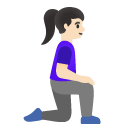
Woman Kneeling Facing Right: Light Skin Tone
U+1F9CE U+1F3FB U+200D U+2640 U+FE0F U+200D U+27A1 U+FE0F · :woman_kneeling_facing_right_light_skin_tone:
Trend 44
Meaning layers
- interpretation
- Used to express begging, pleading, or being on one's knees for something or someone. Also used ironically to signal extreme devotion, desperation, or humility toward a person, trend, or piece of media.
- tiktok usage
- Appears in comments like 'me after watching this video 🧎🏻♀️➡️' to signal being floored or completely devoted. Also used in skits about desperately wanting something.
- irony level
- 6 / 10
Platform meanings
- meaning
- Represents being on one's knees in awe, desperation, or worship — often in response to a stunning video, person, or product.
- trend usage
- Used in comment sections and duet reactions to express being completely floored by content. Frequently appears in 'POV: me after seeing ___' trends.
- hashtags
- #kneeling#obsessed#devotion#fangirl#ireallywant
- virality score
- 52 / 100
Cultural meanings
🇺🇸
Western / Gen-Z
Used ironically and humorously to express begging, desperation, or extreme admiration — a staple of hyperbolic internet communication.
🇵🇰
Pakistan & India
Can carry connotations of prayer or reverence, potentially interpreted as a respectful or religious gesture rather than an ironic one.
🌍
Middle East
Likely associated with prayer postures or acts of humility before a higher power, given cultural familiarity with kneeling in worship contexts.
🌐
Global Neutral
Generally understood as representing a kneeling woman, with meaning heavily dependent on surrounding context and accompanying text.
🇧🇩
Bangladesh
Similar to South Asian interpretations — may be seen as a posture of prayer, respect, or supplication in religious or familial contexts.
🇱🇰
Sri Lanka
Interpreted through a religious or cultural lens of bowing/kneeling in Buddhist or Hindu devotional contexts.
🇨🇳
China
May be associated with bowing or kneeling as an act of deep respect or apology, though internet-savvy users will understand the ironic begging usage.
🇯🇵
Japan
Resonates with the concept of 'seiza' (formal kneeling) or bowing deeply in apology or respect — younger users will also understand the humorous desperation angle.
🇰🇷
South Korea
K-pop fandom culture readily adopts this emoji to express worship of idols; also used in relatable memes about working hard or begging.
🇹🇼
Taiwan
Used similarly to mainland China and Japan — both in traditional respect contexts and modernly as ironic admiration or pleading.
🇭🇰
Hong Kong
Bilingual internet culture means this emoji is used both traditionally (respect/prayer) and in Western ironic begging memes.
🇵🇭
Philippines
Commonly used humorously in Filipino internet culture to express dramatic pleading or devotion, fitting the expressive digital communication style.
🇮🇩
Indonesia
May carry religious undertones of kneeling in prayer; also used among younger users in relatable meme content about desperation.
🇹🇭
Thailand
Associated with traditional kneeling/bowing gestures of respect in Thai culture; younger Thai users also use it for humorous online begging.
🇻🇳
Vietnam
Interpreted as a gesture of deep respect or supplication; Gen Z Vietnamese users increasingly adopt the ironic Western internet usage.
🇲🇾
Malaysia
Multicultural context means interpretations vary — religious users may see prayer/humility, while younger users use it for ironic pleading memes.
🇸🇦
Saudi Arabia
Likely associated with prayer posture; careful use advised as kneeling has specific religious significance in Islamic prayer contexts.
🇦🇪
UAE
Cosmopolitan digital culture allows for both religious interpretation and Western ironic usage, particularly among younger expat and local populations.
🇪🇬
Egypt
May be interpreted through a religious lens; also used by Egyptian youth online to express dramatic begging or desperation humorously.
🇹🇷
Turkey
Used in Turkish internet culture for dramatic expressions of desperation or admiration; less commonly tied to religious interpretation in digital spaces.
🇮🇷
Iran
Can carry religious connotations; among younger digitally active Iranians, also used ironically for begging or expressing intense admiration.
🇳🇬
Nigeria
Used expressively in Nigerian digital culture — Nollywood and social media savvy users deploy it for dramatic begging or worship-level admiration.
🇿🇦
South Africa
Understood in the context of humility and respect across diverse cultural groups; also used humorously in South African meme culture.
🇬🇧
UK & Ireland
Used in classic British sarcastic and self-deprecating humor — 'me after paying rent 🧎🏻♀️➡️' — with dry wit attached.
🇫🇷
France
Used similarly to other Western European countries for ironic expressions of desperation or admiration, though less prevalent than in Anglophone spaces.
🇩🇪
Germany
Practical German internet culture uses it sparingly, mostly in fandom or meme contexts to signal admiration or humorous begging.
🇪🇸
Spain & Italy
Expressive communication cultures in Spain and Italy use this emoji for dramatic emotional emphasis — begging, worshipping, or extreme admiration.
🇧🇷
Brazil
Brazilian internet culture embraces dramatic emoji use; this is used for humorous begging, fandom worship, and relatable desperation memes.
🇲🇽
Mexico
Used in Mexican digital spaces to express dramatic devotion or begging, fitting the expressive and humor-rich Mexican internet culture.
🌎
Latin America
Across Latin America, used for expressive humor, fan devotion, and relatable content about desperately wanting something.
🇦🇺
Australia & NZ
Used in a similar way to UK/US — mostly for humorous begging or ironic worship, often with self-deprecating Antipodean humor attached.
How its meaning shifted
- 2010
This specific emoji did not exist in 2010; directional and skin-tone variants of kneeling emojis were not yet part of the Unicode standard.
- 2015
Still not available; basic kneeling emojis were beginning to be discussed in Unicode proposals but directional variants were years away.
- 2020
Directional kneeling emojis began entering the Unicode standard; initial usage was primarily literal — representing kneeling, prayer, or physical exercise positions.
- 2026
Widely used in Gen Z internet culture for hyperbolic expressions of begging, devotion, and admiration; directional variant adds specificity for sticker-like usage in diverse digital content.
See it on every platform
Adjacent emojis
- Often confused with
- person kneelingwoman kneeling facing rightperson in lotus position
- Can replace
- folded handsperson bowingwoman kneeling
Share & embed
Frequently asked
01What does the 🧎🏻♀️➡️ Woman Kneeling Facing Right: Light Skin Tone emoji mean?
A woman kneeling and facing to the right, displayed with a light skin tone modifier. The emoji depicts a female figure in a kneeling posture oriented toward the right side.
02What does 🧎🏻♀️➡️ mean on TikTok?
Represents being on one's knees in awe, desperation, or worship — often in response to a stunning video, person, or product.
03What does 🧎🏻♀️➡️ mean on WhatsApp?
Sent to friends to signal extreme begging or desperation in a humorous way, e.g., 'please come with me 🧎🏻♀️➡️'.
04What does 🧎🏻♀️➡️ mean in Gen-Z slang?
Used to express begging, pleading, or being on one's knees for something or someone. Also used ironically to signal extreme devotion, desperation, or humility toward a person, trend, or piece of media.
05Is the 🧎🏻♀️➡️ emoji safe to use?
Represents a woman kneeling and facing right — used for prayer, humility, exercise, devotion, or humorous begging in digital communication.
06What does 🧎🏻♀️➡️ mean in texting?
The kneeling posture is one of the most universally recognized gestures of submission and reverence across human cultures, triggering associations with vulnerability, prayer, and earnest supplication.
07What is the shortcode for 🧎🏻♀️➡️?
The shortcode for Woman Kneeling Facing Right: Light Skin Tone is :woman_kneeling_facing_right_light_skin_tone:
08What does 🧎🏻♀️➡️ mean in dating?
Can be used playfully to signal 'I'd kneel for you' or extreme attraction, implying the sender is completely swept off their feet by someone.
Safety & usage
- Safe meaning
- Represents a woman kneeling and facing right — used for prayer, humility, exercise, devotion, or humorous begging in digital communication.
- Caution
- Could theoretically be used in degrading contexts to imply subservience or submission in an inappropriate or demeaning way.
Generally safe; context-dependent. In rare cases, could be misused in toxic relationship dynamics to imply forced submission, but this is uncommon. Skin tone specificity does not significantly alter risk.
How it looks across platforms
Appearance varies by platform and device. Google Noto, Twemoji, and OpenMoji are open-source.