🚣♀️
The Emoji
Woman Rowing Boat
U+1F6A3 U+200D U+2640 U+FE0F · :woman_rowing_boat:
Trend 38
Meaning layers
- interpretation
- Used to signal hustling through life alone, grinding without help, or metaphorically 'rowing your own boat' — self-reliance energy. Also used sarcastically when someone is clearly struggling but refuses to ask for help.
- tiktok usage
- Appears in 'main character' montages, solo grind content, and 'doing it myself' empowerment videos. Often paired with motivational audio.
- irony level
- 5 / 10
Platform meanings
- meaning
- Symbol of solo hustle, independence, and navigating life's challenges without support. Used in empowerment and grind culture content.
- trend usage
- Featured in 'doing it alone' POV videos, independent woman anthems, and sarcastic 'no help needed' content. Occasional appearance in outdoor/fitness lifestyle trends.
- hashtags
- #rowingmyownboat#independentwoman#sologrind#maincharacter#boatlife
- virality score
- 42 / 100
Cultural meanings
🇺🇸
Western / Gen-Z
Strongly associated with the 'doing it all alone' narrative and self-reliance aesthetic — used ironically and sincerely in equal measure as a symbol of independent woman energy.
🇵🇰
Pakistan & India
Primarily literal — associated with water sports, river travel, or tourism. Occasionally used by younger urban women in empowerment contexts on Instagram.
🌍
Middle East
Mostly literal use tied to tourism or water activities. In more progressive online spaces, women use it to symbolize independence and self-sufficiency.
🌐
Global Neutral
Universally understood as a woman doing a water activity or moving forward independently. Safe and non-controversial across most global contexts.
🇧🇩
Bangladesh
Carries strong literal resonance given the country's river culture — boats are central to daily life. Used in travel and nature content; metaphorical use is emerging among youth.
🇱🇰
Sri Lanka
Associated with coastal tourism, traditional fishing culture imagery, and sports. Urban youth use it to signal independence and adventure.
🇨🇳
China
Used in sports and travel contexts. On Weibo and Xiaohongshu, young women use it for 'self-reliance' narratives; literal boating tourism also common.
🇯🇵
Japan
Used for outdoor recreation content, particularly in summer. Also appears in self-improvement and quiet determination contexts, aligning with 'ikigai' perseverance themes.
🇰🇷
South Korea
Popular on fitness and outdoor lifestyle content. Young women use it in combination with other sporty emojis for aesthetic posts about health and independence.
🇹🇼
Taiwan
Used in outdoor adventure content, hiking and water sports posts. Carries a positive, free-spirited independent woman connotation in Taiwanese youth culture.
🇭🇰
Hong Kong
Appears in harbor activity, outdoor recreation, and travel content. Urban users occasionally use it metaphorically for navigating busy city life alone.
🇵🇭
Philippines
Associated with island life and water travel — very literal resonance. Also used in OFW (overseas worker) communities as a metaphor for journeying forward alone.
🇮🇩
Indonesia
Tied to maritime culture and island tourism. Young Indonesian women use it on Instagram for travel content and emerging independence narratives.
🇹🇭
Thailand
Connected to river tourism, floating markets, and water sports. On Thai social media, used in travel and lifestyle posts by women.
🇻🇳
Vietnam
Strong literal resonance with river life and traditional water travel. Younger urban users adopt it for independence and 'going forward' metaphors online.
🇲🇾
Malaysia
Used in outdoor and travel content. In urban youth circles, it signals independence and the 'girl boss' mindset similar to Western interpretations.
🇸🇦
Saudi Arabia
Primarily literal in sports and tourism contexts. With increasing women's sports participation post-2017 reforms, it has positive connotations of female athletic achievement.
🇦🇪
UAE
Used in luxury water activities, tourism, and sports content. Expat communities use it more broadly; nationals use it in sports and travel contexts.
🇪🇬
Egypt
Associated with Nile river imagery and tourism. Metaphorically used by younger Egyptian women online to represent navigating life's challenges independently.
🇹🇷
Turkey
Connected to Bosphorus and coastal culture. Used in travel and sports content; young Turkish women online use it for independence and resilience themes.
🇮🇷
Iran
Used cautiously but appears in sports and outdoor context by Iranian women online, particularly in diaspora communities celebrating female athleticism and independence.
🇳🇬
Nigeria
Used in travel, adventure, and motivational content. The 'rowing your own boat' metaphor resonates strongly with entrepreneurial hustle culture narratives.
🇿🇦
South Africa
Associated with outdoor sports and nature activities. Used by active lifestyle communities and in women empowerment messaging on South African social media.
🇬🇧
UK & Ireland
Used in boating, rowing club, and outdoor recreation contexts. Also commonly used in wry humor about 'being left to row this ship alone' at work or in relationships.
🇫🇷
France
Associated with leisure water activities and summer holidays. French users lean toward the aesthetic and vacation usage rather than metaphorical self-reliance framing.
🇩🇪
Germany
Used in sports and outdoor recreation contexts — rowing is a respected sport in Germany. Metaphorical independence use is emerging among younger German digital natives.
🇪🇸
Spain & Italy
Connected to summer water activities and coastal culture. Mediterranean users associate it with holiday vibes; younger users adopt the independence metaphor online.
🇧🇷
Brazil
Used in outdoor adventure, river tourism, and Amazonian travel content. Also used in women's empowerment circles online, particularly in feminist and fitness communities.
🇲🇽
Mexico
Associated with water tourism and outdoor sports. On Mexican social media, used in travel posts and increasingly in 'mujer independiente' empowerment content.
🌎
Latin America
Broadly used across Latin America for travel, adventure, and water activity content. The independence metaphor is growing in women-focused online communities.
🇦🇺
Australia & NZ
Strongly associated with outdoor sports, kayaking, and water recreation given the coastal culture. Also used humorously to signal persevering through tough situations alone.
How its meaning shifted
- 2010
Did not exist — the gender-neutral rowing person emoji was released in 2010 but the woman-specific variant came later. Water activity representation was minimal.
- 2015
Introduced as part of Unicode 7.0 gender expansion. Primarily used literally for water sports, rowing activities, and travel content with little metaphorical weight.
- 2020
Gained metaphorical traction during COVID-19 when themes of solitude, self-reliance, and 'navigating alone' surged. Appeared in pandemic coping and empowerment content.
- 2026
Firmly established as a dual-use emoji — literal outdoor/sports use and metaphorical independence/hustle symbol. Strong presence in Gen Z feminist and self-reliance content online.
See it on every platform
Compare with
Adjacent emojis
- Opposite
- woman sittinganchorsleeping face
- Often confused with
- person rowing boatwoman in motorboatwoman canoeing
- Can replace
- person rowing boatkayakwoman running
Share & embed
Frequently asked
01What does the 🚣♀️ Woman Rowing Boat emoji mean?
A woman rowing a boat, depicted as a female figure using oars to propel a small watercraft forward.
02What does 🚣♀️ mean on TikTok?
Symbol of solo hustle, independence, and navigating life's challenges without support. Used in empowerment and grind culture content.
03What does 🚣♀️ mean on WhatsApp?
Casually signals going somewhere by water, doing something active, or metaphorically moving forward on one's own.
04What does 🚣♀️ mean in Gen-Z slang?
Used to signal hustling through life alone, grinding without help, or metaphorically 'rowing your own boat' — self-reliance energy. Also used sarcastically when someone is clearly struggling but refuses to ask for help.
05Is the 🚣♀️ emoji safe to use?
A woman rowing a boat — positive representation of female athleticism, independence, adventure, and forward motion.
06What does 🚣♀️ mean in texting?
Psychologically represents agency and forward motion — the act of rowing requiring sustained effort suggests perseverance under pressure. Often used by those processing autonomy and self-sufficiency themes.
07What is the shortcode for 🚣♀️?
The shortcode for Woman Rowing Boat is :woman_rowing_boat:
08What does 🚣♀️ mean in dating?
Rarely used as a direct flirt. Occasionally appears in bios to signal 'I don't need anyone' energy or to hint at an active, outdoorsy lifestyle.
Safety & usage
- Safe meaning
- A woman rowing a boat — positive representation of female athleticism, independence, adventure, and forward motion.
- Caution
- Extremely rare toxic use. Occasionally used sarcastically to imply someone is 'alone in their delusion' or mockingly when someone refuses help.
No significant toxic or coded misuse patterns identified. Context-dependent sarcasm is the only mild concern.
How it looks across platforms
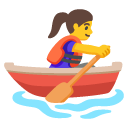
Appearance varies by platform and device. Google Noto, Twemoji, and OpenMoji are open-source.