🦹♀️
The Emoji
Woman Supervillain
U+1F9B9 U+200D U+2640 U+FE0F · :woman_supervillain:
Trend 78
Meaning layers
- interpretation
- Used to express unapologetic confidence, chaotic energy, or a 'I do what I want' attitude. Often deployed ironically when someone is doing something mildly devious, petty, or boldly self-serving without remorse.
- tiktok usage
- Paired with 'villain arc' content where creators embrace being selfish, unbothered, or ruthlessly focused on their own goals. Common in POV videos and 'main character' content.
- irony level
- 7 / 10
Platform meanings
- meaning
- Represents entering a villain era, doing petty or chaotic things with no remorse, or embodying a powerful dark feminine energy.
- trend usage
- Used in #VillainArc and #MainCharacter trends, often in voiceovers where creators narrate their morally grey decisions with dramatic music.
- hashtags
- #VillainArc#WomanSupervillain#ChaoticEnergy#UnbotheredEra#EvilGirlSummer
- virality score
- 82 / 100
Cultural meanings
🇺🇸
Western / Gen-Z
Heavily associated with the 'villain arc' trend — used to celebrate embracing selfishness, pettiness, and unapologetic confidence. A cultural badge of honor for leaving people-pleasing behind.
🇵🇰
Pakistan & India
Less commonly used in mainstream digital communication; when used, it tends to reference Bollywood-style dramatic female antagonists or is adopted by younger urban users in villain-era internet culture.
🌍
Middle East
Occasionally used by younger Arabic-speaking social media users to reference strong or scheming female characters in drama or to signal bold, unapologetic behavior, though cultural conservatism limits wide adoption.
🌐
Global Neutral
Generally understood as representing a powerful, dark, or villainous female character — used for dramatic flair or comic-book references universally.
🇧🇩
Bangladesh
Used mainly by younger, internet-savvy users familiar with global meme culture; otherwise interpreted literally as a cartoon villain character.
🇱🇰
Sri Lanka
Appears among younger social media users to signal bold or cheeky behavior, but lacks deep cultural meme penetration compared to Western markets.
🇨🇳
China
Used on platforms like Weibo and Douyin to represent the '反派女主' (female villain protagonist) archetype popular in Chinese dramas; resonates with the 'black lotus' character trope.
🇯🇵
Japan
Connected to the 'ヴィラン女子' (villain girl) aesthetic and manga/anime antagonist culture; used by fans of dark magical girl or anti-hero characters.
🇰🇷
South Korea
Linked to K-drama female villain archetypes (the cold, calculating antagonist); used in fan communities and by those claiming a 'dark unni' persona online.
🇹🇼
Taiwan
Used in the context of online drama, sass, or admiration for cool female antagonist characters in Taiwanese and East Asian media.
🇭🇰
Hong Kong
Associated with Cantopop drama antagonists and Hong Kong cinema's fierce female characters; used in playful digital contexts to signal cunning.
🇵🇭
Philippines
Used by Gen Z Filipinos in villain arc content and to react to teleserye (soap opera) antagonist moments; widely understood through K-drama and Western media influence.
🇮🇩
Indonesia
Adopted by younger users in the context of 'era jahat' (villain era) content on TikTok and Instagram; associated with dark aesthetic and bold self-expression.
🇹🇭
Thailand
Connected to Thai lakorn (drama) villain tropes; used by fans of scheming female characters and in playful digital expression among Gen Z.
🇻🇳
Vietnam
Used among Vietnamese youth familiar with global meme trends to express petty or chaotic energy; also linked to female villain characters in Vietnamese web dramas.
🇲🇾
Malaysia
Used by Malaysian social media users — especially youth — in villain arc contexts and when referencing scheming female characters in Malay or K-dramas.
🇸🇦
Saudi Arabia
Primarily used by younger, globally connected Saudi users; resonates in the context of powerful female characters in international media consumed via streaming platforms.
🇦🇪
UAE
Used by the diverse, globally connected youth population of the UAE to express bold or scheming energy, often influenced by Western and South Asian digital culture.
🇪🇬
Egypt
Appears in Egyptian social media among younger users influenced by Turkish and international dramas featuring strong female antagonists.
🇹🇷
Turkey
Connected to Turkish dizi (drama) villain archetypes — the cunning, powerful female antagonist; widely understood as a symbol of dangerous feminity.
🇮🇷
Iran
Used mostly by younger Iranians on international platforms to express rebellion, unapologetic attitude, or admiration for strong anti-hero female characters.
🇳🇬
Nigeria
Used by Nigerian Gen Z on Twitter/X and TikTok to signal a petty or unbothered era; also referenced in Nollywood villain character contexts.
🇿🇦
South Africa
Used in South African youth culture online to signal chaotic confidence or a villain arc moment, influenced by both Western and local media.
🇬🇧
UK & Ireland
Used similarly to US Gen Z — villain arc, petty wins, and chaotic energy — with a distinct dry humor twist. Often accompanied by deadpan captions.
🇫🇷
France
Used by younger French social media users in the context of 'badasserie' and femme fatale aesthetics; connected to French cinema's iconic dark female characters.
🇩🇪
Germany
Adopted by German internet users in gaming and fandom contexts, and more recently in villain-era content; generally more literal in interpretation than Anglo-American usage.
🇪🇸
Spain & Italy
Used to express dramatic, bold, or scheming female energy — resonates with the cultural archetype of the passionate, dangerous woman in Mediterranean storytelling.
🇧🇷
Brazil
Heavily used in Brazilian TikTok and Twitter culture to signal 'fase vilã' (villain phase) content; associated with funk and trap aesthetics tied to dark empowerment.
🇲🇽
Mexico
Used in Mexican social media to express petty or scheming behavior with humor; connected to telenovela villain characters who are fan favorites.
🌎
Latin America
Broadly used across Latin America to reference telenovela antagonists, signal a villain era, or express unapologetic bold energy — universally resonant with the region's love of dramatic storytelling.
🇦🇺
Australia & NZ
Used similarly to UK/US Gen Z contexts — villain arc, chaotic confidence, and dry humor. Also appears in gaming communities for villain role-playing.
How its meaning shifted
- 2010
This emoji did not exist in 2010. The Unicode supervillain family was not yet conceived — villain-related expression was done through 💀, 😈, or text emoticons.
- 2015
Still not introduced; villain expression online relied on 😈 and 👿. The concept of a dedicated female supervillain emoji was not part of mainstream emoji vocabulary.
- 2020
Introduced in 2018 and gaining traction by 2020, primarily used in gaming, comic/superhero fandom contexts, and early adopters of the 'villain arc' meme trend on TikTok.
- 2026
Firmly embedded in internet culture as a symbol of the villain era, dark feminine energy, and unapologetic self-prioritization. Widely used across all major platforms in both ironic and sincere contexts.
See it on every platform
Compare with
Adjacent emojis
- Often confused with
- woman magewoman in tuxedoskull
Share & embed
Frequently asked
01What does the 🦹♀️ Woman Supervillain emoji mean?
A woman depicted as a supervillain, typically wearing a dark costume with a cape and a mask, often with a menacing expression. This is the female variant of the supervillain emoji.
02What does 🦹♀️ mean on TikTok?
Represents entering a villain era, doing petty or chaotic things with no remorse, or embodying a powerful dark feminine energy.
03What does 🦹♀️ mean on WhatsApp?
Sent when someone is in a petty or scheming mood, or to describe themselves as being in 'villain mode' — usually lighthearted.
04What does 🦹♀️ mean in Gen-Z slang?
Used to express unapologetic confidence, chaotic energy, or a 'I do what I want' attitude. Often deployed ironically when someone is doing something mildly devious, petty, or boldly self-serving without remorse.
05Is the 🦹♀️ emoji safe to use?
Playful expression of confidence, pettiness, chaotic energy, or villain-era self-empowerment. Used humorously and ironically in the vast majority of contexts.
06What does 🦹♀️ mean in texting?
Taps into the psychological concept of embracing the 'shadow self' — the parts of identity that are assertive, rule-breaking, or morally grey. It allows people to safely perform transgression and confidence without literal malice.
07What is the shortcode for 🦹♀️?
The shortcode for Woman Supervillain is :woman_supervillain:
08What does 🦹♀️ mean in dating?
Used to signal a mysterious, dangerous, or 'bad girl' persona — often flirtatious in a 'you can't handle me' way. Sent after making a bold or slightly manipulative move.
Safety & usage
- Safe meaning
- Playful expression of confidence, pettiness, chaotic energy, or villain-era self-empowerment. Used humorously and ironically in the vast majority of contexts.
- Caution
- In rare cases, could be used to glorify genuinely manipulative or harmful behavior, or to signal aggressive intent toward someone in a threatening message chain.
Generally harmless and ironic. Context matters — when combined with threatening language or targeted harassment, it can contribute to a hostile tone, but standalone usage is almost universally playful.
How it looks across platforms
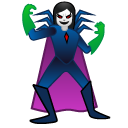
Appearance varies by platform and device. Google Noto, Twemoji, and OpenMoji are open-source.