🩻
The Emoji
X-ray
U+1FA7B · :xray:
Trend 58
Meaning layers
- interpretation
- Used to express seeing through someone's lies or BS, transparency, being 'exposed,' or having a deep emotional/spiritual connection with someone ('you see right through me'). Also used when talking about physical health scares or hospital visits.
- tiktok usage
- Appears in 'I can see right through you' callout content, mental health check-in videos, and edgy aesthetic body/health content. Sometimes used ironically to say 'my situationship broke my bones.'
- irony level
- 6 / 10
Platform meanings
- meaning
- Represents being emotionally or literally exposed, medical drama storytelling, and the 'see through your lies' callout trope.
- trend usage
- Featured in hospital/health scare storytime videos, 'this broke my soul not just my bones' captions, and dark humor health content. Paired with dramatic audio.
- hashtags
- #xray#medicalcore#seethruyu#hospitalcheck#exposedbyxray
- virality score
- 62 / 100
Cultural meanings
🇺🇸
Western / Gen-Z
Primarily used metaphorically to signal emotional transparency, calling out fake behavior, or darkly humorous takes on physical injury. Medical-core aesthetic users deploy it stylistically.
🇵🇰
Pakistan & India
Mostly used in its literal sense — sharing health updates, hospital visits, and medical news with family and friends via WhatsApp. Some urban Gen Z use the metaphorical 'exposed' meaning.
🌍
Middle East
Predominantly literal usage in medical and family health communication contexts. Occasionally used in educational and medical professional social media content.
🌐
Global Neutral
Universally understood as a medical imaging symbol. Cross-culturally communicates hospital visits, health checks, bone injuries, and diagnostic medicine without ambiguity.
🇧🇩
Bangladesh
Used primarily in literal medical contexts — injury updates, hospital check-ins, and health news shared in family group chats. Limited metaphorical use.
🇱🇰
Sri Lanka
Literal interpretation dominates — hospital visits, medical appointments, and healthcare discussions. Young urban users may adopt Gen Z metaphorical usage through global media influence.
🇨🇳
China
Associated with medical healthcare, hospital visits, and modern diagnostic technology. Social media use tends to remain literal with some ironic usage emerging among younger Weibo/Douyin users.
🇯🇵
Japan
Used in health and medical contexts, and occasionally in a clinical-aesthetic or kawaii-science crossover aesthetic. Japanese users appreciate its precise, clean visual symbolism.
🇰🇷
South Korea
Appears in health content, medical drama fan communities, and K-content where hospital storylines are popular. Medical-core aesthetic fits into Korean 'concept' culture.
🇹🇼
Taiwan
Used in medical and health update contexts. Younger Taiwanese users influenced by Western Gen Z content may use it metaphorically for transparency and emotional exposure.
🇭🇰
Hong Kong
Literal medical usage is primary. Some bilingual digital-native users adopt English-language Gen Z ironic interpretations from Western social media.
🇵🇭
Philippines
Used predominantly for health updates and medical contexts in family group chats. OFW (Overseas Filipino Worker) communities use it in health check communications.
🇮🇩
Indonesia
Primarily literal in health and hospital contexts. Growing adoption of metaphorical 'exposed/see-through' usage among younger Indonesian TikTok and Twitter users.
🇹🇭
Thailand
Associated with medical care and hospital aesthetics. Thai social media users may pair it with dramatic health-related content or beauty/body check content.
🇻🇳
Vietnam
Literal medical usage is dominant. Young Vietnamese users on TikTok are beginning to adopt the ironic and transparent/exposed metaphorical usage.
🇲🇾
Malaysia
Used for health communication in multi-platform family messaging. Bilingual younger users blend literal and Gen Z metaphorical uses across social platforms.
🇸🇦
Saudi Arabia
Primarily literal — medical appointments, health updates, and hospital-related communication. Medical education communities use it professionally on social platforms.
🇦🇪
UAE
Multicultural digital population means both literal and metaphorical uses coexist. Healthcare professionals use it professionally; younger expat communities adopt Gen Z meanings.
🇪🇬
Egypt
Literal medical use is primary. Egyptian social media humor sometimes incorporates it in ironic health commentary. Medical professional communities use it educationally.
🇹🇷
Turkey
Used in health and medical contexts. Turkish social media users with Gen Z influence may adopt the 'seeing through lies' metaphor in online discourse.
🇮🇷
Iran
Predominantly literal in medical and health communication. Usage among younger Iranians on Instagram and Telegram may reflect broader Gen Z metaphorical meanings.
🇳🇬
Nigeria
Used in health update communications and medical discussions. Nollywood hospital drama fans and medical students use it contextually online.
🇿🇦
South Africa
Literal medical usage combined with emerging Gen Z ironic use among urban digital natives. Health awareness campaigns use it in educational social content.
🇬🇧
UK & Ireland
Used both literally for NHS/medical content and metaphorically in Gen Z 'seeing through BS' usage. British dark humor makes the ironic skeleton/injury format popular.
🇫🇷
France
Primarily literal in French medical and healthcare communication. Younger French TikTok users adopt the Anglo-Gen Z metaphorical interpretations through platform culture.
🇩🇪
Germany
Predominantly literal and professional — used in medical, healthcare, and scientific contexts. German directness aligns with the emoji's transparent/revealing metaphor when used figuratively.
🇪🇸
Spain & Italy
Medical and health usage is primary. Mediterranean expressive culture means it occasionally appears in dramatic health storytelling and emotional vulnerability contexts.
🇧🇷
Brazil
Used in health contexts and enthusiastically adopted into Brazilian meme culture — Brazilian Gen Z use it in injury humor and 'seeing through you' callout posts with characteristic flair.
🇲🇽
Mexico
Medical usage is primary but Mexican internet culture embraces the dark humor skeleton angle (influenced by Día de los Muertos cultural comfort with skeletal imagery). Used humorously in memes.
🌎
Latin America
Across Latin America, medical literal use dominates while younger users in urban centers adopt both the dark skeleton humor and the 'transparent/exposed' metaphorical meanings.
🇦🇺
Australia & NZ
Used in literal health contexts and enthusiastically adopted into dry Australian humor for injury stories, 'seeing through' callouts, and medical dark comedy online.
How its meaning shifted
- 2010
This emoji did not exist in 2010. Medical imaging was represented by workarounds like 💉🏥 or described in text. The concept had no dedicated emoji representation.
- 2015
Still nonexistent as a dedicated emoji. Medical and healthcare digital communication relied on hospital and syringe emojis. X-ray content was purely photographic on early social platforms.
- 2020
Introduced in Unicode 13.1 in 2020/2021, initial usage was almost entirely literal — medical professionals, healthcare workers, and patients sharing health updates. Metaphorical usage had not yet developed.
- 2026
Firmly established in both literal medical communication and Gen Z metaphorical usage. 'Medical-core' aesthetic has elevated it to style icon status. Widely used in 'transparent/exposed' discourse, skeleton dark humor, and emotional vulnerability contexts across all major platforms.
See it on every platform
Compare with
Emoji combinations
Adjacent emojis
- Often confused with
- film framesidentification cardframed picture
- Can replace
- hospitalboneanatomical heart
Share & embed
Frequently asked
01What does the 🩻 X-ray emoji mean?
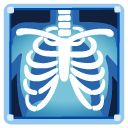
A medical X-ray image showing skeletal structure, typically depicting a chest or full-body radiograph with visible bones against a dark background.
02What does 🩻 mean on TikTok?
Represents being emotionally or literally exposed, medical drama storytelling, and the 'see through your lies' callout trope.
03What does 🩻 mean on WhatsApp?
Sent to indicate a medical appointment, an X-ray result, injury update, or to express 'you can see right through me' vulnerability in conversation.
04What does 🩻 mean in Gen-Z slang?
Used to express seeing through someone's lies or BS, transparency, being 'exposed,' or having a deep emotional/spiritual connection with someone ('you see right through me'). Also used when talking about physical health scares or hospital visits.
05Is the 🩻 emoji safe to use?
Medical imaging, healthcare communication, health updates, transparency, emotional vulnerability, and dark skeleton humor.
06What does 🩻 mean in texting?
The X-ray evokes a sense of being laid bare — stripped of external appearances to the core structure. Psychologically it can trigger health anxiety but also metaphorical feelings of being deeply seen or understood, connecting to both fear and intimacy.
07What is the shortcode for 🩻?
The shortcode for X-ray is :xray:
08What does 🩻 mean in dating?
Used flirtatiously to say 'you see right through me' or 'you know me better than anyone,' suggesting deep emotional intimacy. Rare but notable in vulnerable romantic messaging.
Safety & usage
- Safe meaning
- Medical imaging, healthcare communication, health updates, transparency, emotional vulnerability, and dark skeleton humor.
- Caution
- Rarely weaponized, but could theoretically be used to mock someone's health condition or body in a cruel context. Extremely uncommon.
Generally safe across all contexts. May trigger health anxiety in sensitive individuals when used in medical discussion. No significant toxic usage patterns identified.
How it looks across platforms


Appearance varies by platform and device. Google Noto, Twemoji, and OpenMoji are open-source.