🚡
The Emoji
Aerial Tramway
U+1F6A1 · :aerial_tramway:
Trend 12
Meaning layers
- interpretation
- Rarely used literally; sometimes deployed ironically to signal being 'above it all' or detached from drama, floating above the chaos of life.
- tiktok usage
- Appears in travel aesthetic videos, ski trip content, or as a quirky niche transport flex. Occasionally used ironically in 'unbothered' trend formats.
- irony level
- 5 / 10
Platform meanings
- meaning
- Travel flex or niche transportation content; used in ski trip and mountain adventure videos.
- trend usage
- Appears in 'POV: you're above the clouds' aesthetic videos and satisfying mountain transportation clips.
- hashtags
- #AerialTramway#MountainVibes#SkiTrip#TravelAesthetic#AboveTheClouds
- virality score
- 18 / 100
Cultural meanings
🇺🇸
Western / Gen-Z
Mostly a niche travel emoji used literally for ski trips or ironically to signal being 'above the drama'; rarely carries deeper cultural weight.
🇵🇰
Pakistan & India
Used by urban professionals and travel influencers referencing scenic cable cars in Himalayan destinations like Gulmarg, Mussoorie, or Queenstown-style resorts; a luxury travel signal.
🌍
Middle East
Associated with luxury mountain tourism in destinations like Faraya (Lebanon) or global travel; used by affluent travelers sharing holiday content.
🌐
Global Neutral
Universally understood as a cable car or gondola transportation symbol; broadly used for mountain travel content across all cultures.
🇧🇩
Bangladesh
Rarely used; occasionally appears in travel content by Bangladeshis visiting hill stations or international mountain destinations.
🇱🇰
Sri Lanka
Used in tourism content, particularly referencing scenic tea plantation or hill country gondola rides; signals a highland getaway.
🇨🇳
China
Strongly associated with scenic area cable cars (索道) common in Chinese mountain tourism spots like Huangshan and Zhangjiajie; widely used in travel posts.
🇯🇵
Japan
Connected to ropeway culture (ロープウェイ) prevalent at Japanese mountain resorts and hot spring areas; evokes a peaceful, scenic mountain journey.
🇰🇷
South Korea
Linked to popular cable car destinations like Namsan Tower in Seoul and ski resort gondolas in Pyeongchang; used in winter travel and couple trip content.
🇹🇼
Taiwan
Associated with mountain tourism and scenic rides; used in travel content about Taiwan's mountainous regions and National Park cable cars.
🇭🇰
Hong Kong
Strongly associated with the Ngong Ping 360 cable car to Lantau Island and the Peak Tram; a recognizable local landmark emoji for residents.
🇵🇭
Philippines
Used in travel content featuring highland destinations like Baguio or Bukidnon; signals aspirational mountain tourism.
🇮🇩
Indonesia
Associated with cable car attractions at popular resorts and theme parks; used in family travel and tourism content.
🇹🇭
Thailand
Linked to mountain resorts in Chiang Mai and Chiang Rai; used in northern Thailand travel content and eco-tourism posts.
🇻🇳
Vietnam
Strongly associated with the Fansipan cable car in Sa Pa, one of the world's longest cable cars; a proud national tourism symbol.
🇲🇾
Malaysia
Connected to Genting Highlands and Penang Hill cable cars — iconic Malaysian tourist attractions; widely recognized as a highland getaway symbol.
🇸🇦
Saudi Arabia
Used in tourism content featuring mountain cable cars in Abha and Taif; increasingly relevant with Vision 2030 tourism development pushing mountain resort infrastructure.
🇦🇪
UAE
Associated with luxury mountain tourism experiences and international travel flexes; used by UAE residents sharing trips to alpine destinations.
🇪🇬
Egypt
Occasionally used in travel content; associated with international mountain tourism rather than local landmarks.
🇹🇷
Turkey
Connected to the Tünektepe cable car in Antalya and various mountain resorts; used in domestic travel and tourism content.
🇮🇷
Iran
Associated with Tochal and Dizin ski resorts in Tehran's mountains, which have well-known cable cars; a symbol of Tehran's mountain leisure culture.
🇳🇬
Nigeria
Used primarily in aspirational travel content by Nigerians visiting or dreaming of international mountain destinations; signals luxury travel.
🇿🇦
South Africa
Associated with the Table Mountain Aerial Cableway in Cape Town — one of the most iconic tourist attractions in Africa; a recognizable national landmark symbol.
🇬🇧
UK & Ireland
Used for European ski trip content or referencing the Cairngorm Mountain Railway; generally signals a winter holiday or mountain adventure.
🇫🇷
France
Strongly associated with French Alps ski culture, with famous cable cars in Chamonix and Mont Blanc; an iconic symbol of French mountain leisure and skiing.
🇩🇪
Germany
Connected to Bavarian Alps cable cars (Seilbahn) in destinations like Zugspitze; used in outdoor and mountain hiking/skiing content.
🇪🇸
Spain & Italy
Associated with Alpine and Pyrenean ski resorts, as well as iconic Italian Dolomite cable cars; used in ski season content and mountain travel posts.
🇧🇷
Brazil
Associated with the iconic Pão de Açúcar (Sugarloaf Mountain) cable car in Rio de Janeiro — a globally famous Brazilian landmark; widely recognized domestically.
🇲🇽
Mexico
Occasionally used in content about teleféricos at tourist sites like Monterrey's Cerro de la Silla; signals both local tourism and international mountain travel.
🌎
Latin America
Associated with the famous Mi Teleférico urban gondola system in La Paz, Bolivia, and scenic cable cars in Medellín, Colombia; a symbol of innovative Latin American transit.
🇦🇺
Australia & NZ
Associated with Queenstown's Skyline Gondola in New Zealand or Scenic World cable cars in the Blue Mountains; used in travel and adventure content.
How its meaning shifted
- 2010
Extremely niche usage; primarily used in technical contexts by transit enthusiasts or in literal travel documentation shortly after Unicode 6.0 introduction.
- 2015
Slightly more mainstream as emoji keyboards became universal; used in ski trip posts and mountain travel content but still relatively obscure.
- 2020
Gained minor traction during pandemic-era travel dreaming content; used in aspirational travel posts and 'places I want to go' lists.
- 2026
Remains a niche but stable emoji; occasionally adopted in ironic 'floating above it all' meme formats and continues as a reliable marker for mountain travel and ski content.
See it on every platform
Adjacent emojis
- Opposite
- automobilemetroferry
- Often confused with
- suspension railwaymountain cablewayroller coaster
- Can replace
- suspension railwaymountainsnowboarder
Share & embed
Frequently asked
01What does the 🚡 Aerial Tramway emoji mean?
The 🚡 emoji depicts an aerial tramway, also known as a cable car or gondola lift, suspended on cables above the ground and used for mountain or urban transportation.
02What does 🚡 mean on TikTok?
Travel flex or niche transportation content; used in ski trip and mountain adventure videos.
03What does 🚡 mean on WhatsApp?
Telling someone you're at or heading to a mountain resort, ski area, or scenic tramway attraction.
04What does 🚡 mean in Gen-Z slang?
Rarely used literally; sometimes deployed ironically to signal being 'above it all' or detached from drama, floating above the chaos of life.
05Is the 🚡 emoji safe to use?
A benign transportation and travel emoji with no harmful associations; safe for all audiences and contexts.
06What does 🚡 mean in texting?
Evokes a sense of suspension between two worlds — a liminal, peaceful state. Psychologically tied to feelings of freedom, detachment from ground-level stress, and scenic beauty.
07What is the shortcode for 🚡?
The shortcode for Aerial Tramway is :aerial_tramway:
08What does 🚡 mean in dating?
Could be used as an invitation: 'Let's take the tramway up and watch the sunset 🚡' — a creative, adventurous date suggestion.
Safety & usage
- Safe meaning
- A benign transportation and travel emoji with no harmful associations; safe for all audiences and contexts.
- Caution
- No known toxic, coded, or harmful meanings in any major online community.
No warnings necessary. This emoji has no documented misuse as a coded symbol in harmful or toxic communities.
How it looks across platforms
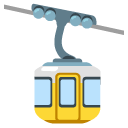


Appearance varies by platform and device. Google Noto, Twemoji, and OpenMoji are open-source.