🚛
The Emoji
Articulated Lorry
U+1F69B · :articulated_lorry:
Trend 58
Meaning layers
- interpretation
- Used to hype up someone 'hauling' through life, carrying a heavy load of responsibilities, or to say someone just got absolutely run over metaphorically. Also used for 'big moves' energy.
- tiktok usage
- Appears in videos about trucking culture, blue-collar appreciation content, or as a metaphor for plowing through obstacles. Sometimes used as 'I got hit by a truck' dramatic effect.
- irony level
- 5 / 10
Platform meanings
- meaning
- Represents trucking culture, blue-collar pride, logistics content, or dramatic metaphors for life hitting hard.
- trend usage
- Used heavily in #TruckTok and #BlueCollar communities; also in anime meme edits referencing truck-kun isekai tropes.
- hashtags
- #TruckTok#TruckLife#TruckerTok#BlueCollarTikTok#IsekaiTruck
- virality score
- 62 / 100
Cultural meanings
🇺🇸
Western / Gen-Z
Primarily recognized through the anime 'truck-kun' isekai meme and TruckTok blue-collar pride content; used ironically to describe life hitting hard.
🇵🇰
Pakistan & India
Represents the vibrant truck art culture where decorated trucks are a celebrated folk art form; also used in logistics and supply chain conversations.
🌍
Middle East
Associated with the massive freight transport networks connecting Gulf states; used in business logistics and cross-border trade discussions.
🌐
Global Neutral
Universally understood as a symbol of freight transport, logistics, and long-haul delivery across global supply chains.
🇧🇩
Bangladesh
Linked to the busy freight corridors and garment industry logistics; used in trade and import/export business communications.
🇱🇰
Sri Lanka
Represents goods transportation across the island; used in supply chain and import discussions, especially post-economic crisis logistics.
🇨🇳
China
Associated with the vast national freight network and Belt and Road logistics operations; heavily used in trade and e-commerce shipping contexts.
🇯🇵
Japan
Strongly linked to the isekai anime 'truck-kun' meme where being hit by a truck triggers a fantasy reincarnation — a major internet culture reference.
🇰🇷
South Korea
Used in logistics and delivery contexts alongside K-commerce shipping culture; also picked up the Japanese isekai truck meme through shared anime culture.
🇹🇼
Taiwan
Represents cross-strait and domestic freight logistics; used in commerce and supply chain discussions with practical connotations.
🇭🇰
Hong Kong
Associated with cross-border freight to mainland China and port logistics; used in trade and import/export professional conversations.
🇵🇭
Philippines
Represents long-haul freight across the island archipelago; also connected to the culturally iconic jeepney-truck hybrid transport aesthetic.
🇮🇩
Indonesia
Linked to inter-island freight logistics and the vital role of heavy transport across the massive archipelago's supply chain.
🇹🇭
Thailand
Associated with freight transport on major trade routes like the East-West Economic Corridor; used in logistics and border trade contexts.
🇻🇳
Vietnam
Represents the growing logistics sector tied to Vietnam's manufacturing export boom; used in freight and trade-related content.
🇲🇾
Malaysia
Used in contexts related to the robust road freight network connecting Malaysia to Singapore and Thailand in regional supply chains.
🇸🇦
Saudi Arabia
Represents the heavy truck convoys moving goods across the Arabian Peninsula's vast road networks; used in trade and Vision 2030 infrastructure content.
🇦🇪
UAE
Associated with the Dubai logistics hub and Jebel Ali port freight operations; used professionally in supply chain and trade conversations.
🇪🇬
Egypt
Linked to freight movement along the Nile Delta and Suez Canal logistics corridor; used in trade and infrastructure discussions.
🇹🇷
Turkey
Represents Turkey's strategic position as a freight transit hub between Europe and Asia; used widely in logistics and trade content.
🇮🇷
Iran
Associated with cross-border trade freight given Iran's position on key Silk Road transit routes; used in commerce and supply chain contexts.
🇳🇬
Nigeria
Represents the heavy truck culture on West Africa's major freight corridors; used in logistics, trade, and infrastructure development discussions.
🇿🇦
South Africa
Linked to the long-haul trucking culture on routes like the N1 and N3 highways; associated with freight unions and truck driver communities.
🇬🇧
UK & Ireland
Represents HGV (Heavy Goods Vehicle) culture; heavily referenced during the post-Brexit driver shortage crisis that disrupted supply chains.
🇫🇷
France
Associated with French trucker strike culture (grèves des routiers) and the gilets jaunes protests; a symbol of working-class labor action.
🇩🇪
Germany
Linked to Germany's Autobahn freight culture and the dominant role of German logistics companies like DHL and DB Schenker.
🇪🇸
Spain & Italy
Represents Mediterranean freight routes and the vital role of truck transport in Southern European logistics and food distribution.
🇧🇷
Brazil
Strongly associated with the powerful Brazilian truck driver strike movements and the country's total dependence on road freight for goods distribution.
🇲🇽
Mexico
Represents cross-border trucking on the US-Mexico trade corridor, deeply tied to NAFTA/USMCA trade flows and border logistics culture.
🌎
Latin America
Broadly represents road freight across Latin America's developing highway infrastructure; used in commerce, trade, and logistics discussions.
🇦🇺
Australia & NZ
Represents the iconic road train culture of the Australian outback and the vital long-haul trucking networks across vast distances.
How its meaning shifted
- 2010
Used almost exclusively in literal contexts — transportation discussions, logistics planning, and vehicle identification in early emoji adoption.
- 2015
Began appearing in supply chain, shipping, and e-commerce contexts as online retail boomed and logistics became a frequent discussion topic.
- 2020
Exploded in usage during COVID-19 supply chain crisis discussions; also gained meme traction through isekai truck-kun anime content going mainstream.
- 2026
Established dual identity as both a serious logistics/blue-collar pride symbol (TruckTok culture) and an ironic meme emoji for life's unexpected impacts.
See it on every platform
Compare with
Emoji combinations
Adjacent emojis
- Opposite
- bicyclewalking personsmall boat
- Often confused with
- bustrolleybuspickup truck
- Can replace
- delivery trucklocomotivepackage
Share & embed
Frequently asked
01What does the 🚛 Articulated Lorry emoji mean?
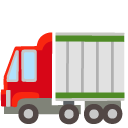
A large articulated lorry (semi-truck or tractor-trailer) depicted from the side, typically shown in red or a bold color, representing heavy freight transportation and logistics.
02What does 🚛 mean on TikTok?
Represents trucking culture, blue-collar pride, logistics content, or dramatic metaphors for life hitting hard.
03What does 🚛 mean on WhatsApp?
Sent in logistics, delivery, and transport group chats to indicate a shipment is on the way or to discuss trucking work.
04What does 🚛 mean in Gen-Z slang?
Used to hype up someone 'hauling' through life, carrying a heavy load of responsibilities, or to say someone just got absolutely run over metaphorically. Also used for 'big moves' energy.
05Is the 🚛 emoji safe to use?
Represents freight transport, logistics, trucking industry, supply chains, road trips, and blue-collar trucking culture.
06What does 🚛 mean in texting?
The truck symbolizes unstoppable forward momentum but also the weight of carrying burdens. It can evoke admiration for hard workers or the feeling of being overwhelmed by life's demands.
07What is the shortcode for 🚛?
The shortcode for Articulated Lorry is :articulated_lorry:
08What does 🚛 mean in dating?
Rarely used in flirting contexts; could be used humorously like 'you hit me like a truck 🚛' to describe being struck by someone's attractiveness.
Safety & usage
- Safe meaning
- Represents freight transport, logistics, trucking industry, supply chains, road trips, and blue-collar trucking culture.
- Caution
- In very rare edge cases, used in threatening contexts to imply running someone over — generally considered a fringe misuse.
Extremely low risk emoji. The only potential misuse is in explicit threatening language ('I'll send a 🚛 at you'), which is rare and context-dependent.
How it looks across platforms


Appearance varies by platform and device. Google Noto, Twemoji, and OpenMoji are open-source.