🛻
The Emoji
Pickup Truck
U+1F6FB · :pickup_truck:
Trend 55
Meaning layers
- interpretation
- Symbol of rural identity, country lifestyle, blue-collar pride, or ironically used by city kids romanticizing farm/country aesthetics. Also used as shorthand for 'truck guy' energy or redneck culture — sometimes affectionately, sometimes mockingly.
- tiktok usage
- Appears in 'country boy summer' content, truck meet videos, mudding clips, and ironically in city-dwellers cosplaying rural life. Also used in 'POV: you live in a small town' content.
- irony level
- 5 / 10
Platform meanings
- meaning
- Represents country/rural lifestyle content, truck culture, overlanding, and blue-collar identity. Also used ironically in city-rural culture clash content.
- trend usage
- Heavily used in #TruckTok, country boy summer trends, mudding videos, farm vlogs, and small-town POV content.
- hashtags
- #TruckTok#CountryBoy#LiftedTruck#RuralLife#TruckNation
- virality score
- 62 / 100
Cultural meanings
🇺🇸
Western / Gen-Z
Symbolizes country boy/girl aesthetic, blue-collar pride, and rural Americana — used both earnestly and ironically in culture war or lifestyle content.
🇵🇰
Pakistan & India
Rarely used culturally; when it appears it typically refers literally to a pickup truck used for transport or goods delivery rather than any lifestyle identity.
🌍
Middle East
Associated with utility vehicles common in the region; in Gulf countries it may evoke desert driving culture, though the Toyota Land Cruiser is more culturally iconic.
🌐
Global Neutral
Universally recognized as a truck or utility vehicle; used to represent hauling, transport, or practical work without strong cultural associations.
🇧🇩
Bangladesh
Used in literal transportation contexts, particularly for goods delivery or construction-related hauling; no strong lifestyle connotation.
🇱🇰
Sri Lanka
Recognized as a work vehicle; may appear in agricultural or construction contexts but carries no significant cultural lifestyle symbolism.
🇨🇳
China
Primarily used in practical contexts related to logistics, construction, and delivery; pickup trucks are growing in popularity among Chinese consumers.
🇯🇵
Japan
Associated with kei trucks (miniature pickups) and agricultural vehicles; seen as a work tool rather than a lifestyle symbol.
🇰🇷
South Korea
Represents utility and work; Korean pickup truck culture is relatively niche but growing, often connected to outdoor and camping trends.
🇹🇼
Taiwan
Used in work and agricultural contexts; less culturally loaded than in North America, primarily seen as a practical vehicle symbol.
🇭🇰
Hong Kong
Rarely used due to the dense urban environment; when it appears it's in literal transportation or logistics contexts.
🇵🇭
Philippines
Associated with utility vehicles and commercial transport; Filipino truck culture is tied to work and commerce rather than lifestyle identity.
🇮🇩
Indonesia
Represents a work vehicle commonly used in agriculture, construction, and inter-island transport; no strong lifestyle connotation.
🇹🇭
Thailand
Common in rural and agricultural areas; used in content about farming, rural life, and Thai countryside, where pickup trucks are extremely popular.
🇻🇳
Vietnam
Used in contexts of commerce, agriculture, and rural transport; pickup trucks are associated with small business and rural livelihoods.
🇲🇾
Malaysia
Represents utility and rural transport; pickup trucks are popular in Malaysia for both work and recreation, particularly in East Malaysia.
🇸🇦
Saudi Arabia
Associated with desert driving and off-road culture; Saudis use pickup trucks (especially Toyota Hilux) for desert adventures and tribal gatherings.
🇦🇪
UAE
Linked to off-road desert culture and dune bashing; pickup trucks are popular for recreational desert driving among Emirati and expat communities.
🇪🇬
Egypt
Represents a work and transport vehicle; common in rural and commercial settings, often associated with agriculture and goods delivery.
🇹🇷
Turkey
Used in agricultural and commercial contexts; pickup trucks are popular in rural Anatolia and associated with farming and hard work.
🇮🇷
Iran
Represents a work vehicle used in agriculture, construction, and trade; the Nissan and Toyota pickups are common sights in Iranian provinces.
🇳🇬
Nigeria
Associated with commercial transport, agriculture, and rural trade; pickup trucks are widely used as work vehicles across Nigeria.
🇿🇦
South Africa
Strong cultural resonance — pickup trucks (bakkies) are iconic in South African culture, used for work, braai (BBQ) trips, and off-road adventure.
🇬🇧
UK & Ireland
Relatively niche; associated with farmers, builders, and tradies. Less culturally prominent than in North America but recognized as a work vehicle.
🇫🇷
France
Seen as an American or rural symbol; not deeply embedded in French culture, sometimes used ironically when referencing American stereotypes.
🇩🇪
Germany
Associated with commercial utility and trades; Germans may use it in the context of Volkswagen Amarok or other European pickups for work purposes.
🇪🇸
Spain & Italy
Primarily seen as a commercial or agricultural vehicle; pickup trucks are less culturally prominent than in English-speaking countries.
🇧🇷
Brazil
Pickup trucks (caminhonetes) are extremely popular and culturally significant; used in agribusiness, sertanejo music culture, and rural lifestyle content.
🇲🇽
Mexico
Deeply tied to ranchero culture, norteño music, and rural identity; pickup trucks are icons of Mexican rural masculinity and hard work.
🌎
Latin America
Broadly associated with agricultural work, rural life, and masculinity across Latin America; regionally varies from practical work tool to lifestyle symbol.
🇦🇺
Australia & NZ
Utes (utility vehicles) are the Australian/NZ equivalent and are deeply culturally significant — symbols of outdoors, tradie (tradesperson) culture, and the bush lifestyle.
How its meaning shifted
- 2010
The emoji did not exist in 2010; pickup trucks were represented by the generic automobile or bus emoji in digital communication.
- 2015
Still not available as a distinct emoji; users relied on car emojis or text descriptions to reference pickup trucks in digital conversations.
- 2020
Introduced in Unicode 13.0 in 2020, quickly adopted by truck enthusiasts, country music fans, and rural lifestyle content creators on emerging platforms.
- 2026
Firmly embedded in country/rural aesthetic content, TruckTok culture, and American identity discourse; also used in EV transition conversations as Ford F-150 Lightning and similar electric trucks gain prominence.
See it on every platform
Emoji combinations
Adjacent emojis
- Opposite
- bicycleelectric plugcityscape
- Often confused with
- automobiledelivery truckarticulated lorry
- Can replace
- automobiledelivery truckracing car
Share & embed
Frequently asked
01What does the 🛻 Pickup Truck emoji mean?
A pickup truck emoji depicting a light-duty truck with an open cargo bed at the rear, typically used for hauling goods, recreation, or work purposes.
02What does 🛻 mean on TikTok?
Represents country/rural lifestyle content, truck culture, overlanding, and blue-collar identity. Also used ironically in city-rural culture clash content.
03What does 🛻 mean on WhatsApp?
Casually references a truck, road trip, moving day, or pickup logistics. Common in group chats organizing moves or hauling tasks.
04What does 🛻 mean in Gen-Z slang?
Symbol of rural identity, country lifestyle, blue-collar pride, or ironically used by city kids romanticizing farm/country aesthetics. Also used as shorthand for 'truck guy' energy or redneck culture — sometimes affectionately, sometimes mockingly.
05Is the 🛻 emoji safe to use?
A pickup truck used for work, hauling, recreation, road trips, or expressing rural/country lifestyle identity.
06What does 🛻 mean in texting?
For many users, the pickup truck emoji taps into identity — representing self-reliance, hard work, and a connection to land or manual labor. It can evoke nostalgia for simpler, rural life or signal tribal belonging to a working-class or outdoor subculture.
07What is the shortcode for 🛻?
The shortcode for Pickup Truck is :pickup_truck:
08What does 🛻 mean in dating?
Used on dating apps to signal outdoor adventure lifestyle, country boy/girl identity, or to hint at having a truck (seen as attractive in certain subcultures). 'Pick you up in my 🛻' is a common flirty line.
Safety & usage
- Safe meaning
- A pickup truck used for work, hauling, recreation, road trips, or expressing rural/country lifestyle identity.
- Caution
- Occasionally used in online spaces to represent hyper-masculine, anti-environment, or aggressive driving stereotypes; can appear in political trolling contexts.
Generally safe and benign. In politically charged contexts it may carry connotations tied to culture war debates around fossil fuels, masculinity, or rural vs. urban identity. No NSFW usage documented.
How it looks across platforms
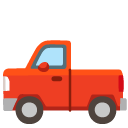


Appearance varies by platform and device. Google Noto, Twemoji, and OpenMoji are open-source.