🧑🏾🎨
The Emoji
Artist: Medium-dark Skin Tone
U+1F9D1 U+1F3FE U+200D U+1F3A8 · :artist_mediumdark_skin_tone:
Trend 58
Meaning layers
- interpretation
- Used to signal creative identity, artistic ambition, or aesthetic sensibility. Often deployed ironically by people who consider themselves artists of everyday life — memeing, styling outfits, or curating feeds.
- tiktok usage
- Appears in creator bios, art process videos, and 'POV: you're an art hoe' content. Also used sarcastically when someone does something remotely aesthetic.
- irony level
- 5 / 10
Platform meanings
- meaning
- Signals artistic identity, creative process content, or aesthetic lifestyle. Widely used by visual artists, illustrators, and creative influencers.
- trend usage
- Used in art speedpaint videos, 'day in the life of an artist' content, and creative transformation videos. Pairs with #ArtTok.
- hashtags
- #ArtTok#ArtistLife#CreativeProcess#BlackArtist#DigitalArt
- virality score
- 62 / 100
Cultural meanings
🇺🇸
Western / Gen-Z
Embraced as a core identity emoji for 'art hoe' culture and creative self-identification. Frequently ironic but also genuinely celebratory of artistic ambition.
🇵🇰
Pakistan & India
Used with pride by artists and creatives, especially those navigating creative careers against family expectations of traditional professions. Signals modern, aspirational identity.
🌍
Middle East
Represents artisans, calligraphers, and contemporary visual artists. Gaining traction among young creatives asserting cultural artistic identity in digital spaces.
🌐
Global Neutral
Universally understood as representing an artist or creative person. Safe for cross-cultural communication about art and creativity.
🇧🇩
Bangladesh
Used by emerging artists and art students to signal their craft, particularly in the growing digital art and fashion design communities.
🇱🇰
Sri Lanka
Associated with traditional arts, batik artists, and the growing contemporary art scene. Used with pride by creatives in urban centers.
🇨🇳
China
Popular among young digital artists, illustrators, and designers on platforms like Weibo and Bilibili. Signals creative profession or hobby with pride.
🇯🇵
Japan
Common in manga artist, illustrator, and craft communities. Resonates strongly in a culture with deep respect for artisanal skill and creative mastery.
🇰🇷
South Korea
Used by artists, webtoon creators, and the aesthetically inclined K-culture community. Strong association with the visual art side of hallyu culture.
🇹🇼
Taiwan
Embraced by independent artists, illustrators, and designers. Part of the vibrant indie creative culture in cities like Taipei.
🇭🇰
Hong Kong
Used by creatives navigating both traditional and contemporary art scenes. Signals artistic identity in a city with strong design and visual culture heritage.
🇵🇭
Philippines
Popular among Filipino artists, illustrators, and OFW creatives who maintain artistic identity abroad. Strong pride in creative talent.
🇮🇩
Indonesia
Used by digital artists, batik designers, and creative community members. Signals artistic identity in a growing creative economy.
🇹🇭
Thailand
Associated with contemporary artists, street muralists, and the booming Thai digital art and illustration community.
🇻🇳
Vietnam
Used by art students and professional creatives navigating Vietnam's growing design and contemporary art scene.
🇲🇾
Malaysia
Embraced by multicultural creative communities — visual artists, designers, and crafters use it to signal professional creative identity.
🇸🇦
Saudi Arabia
Increasingly used as Saudi Arabia's arts scene grows under Vision 2030. Represents contemporary artists and creative professionals in a rapidly evolving cultural landscape.
🇦🇪
UAE
Common among Dubai and Abu Dhabi's diverse creative communities, including the many international and Emirati artists contributing to the region's art boom.
🇪🇬
Egypt
Used by artists engaging with both classical Egyptian artistic heritage and contemporary digital art movements. Proud signal of creative identity.
🇹🇷
Turkey
Embraced by visual artists and creatives in Istanbul's thriving art scene. Represents both traditional crafts and contemporary artistic practices.
🇮🇷
Iran
Used cautiously but earnestly by Iranian artists, many of whom use social media to share work despite restrictions. A signal of creative resilience.
🇳🇬
Nigeria
Strong resonance with Afrobeat album art creators, Nollywood visual designers, and Nigeria's booming contemporary art scene. Used with cultural pride.
🇿🇦
South Africa
Common among artists engaging with post-apartheid visual storytelling, street art culture, and the vibrant Cape Town and Johannesburg creative scenes.
🇬🇧
UK & Ireland
Used by art school students, gallery workers, and the broader creative class. Has both earnest and slightly ironic usage in the British art world.
🇫🇷
France
Associated with the rich French artistic tradition — used both earnestly by professional artists and with slight irony given France's lofty art world reputation.
🇩🇪
Germany
Used by Bauhaus-influenced designers, contemporary artists, and creative professionals in Germany's robust cultural sector.
🇪🇸
Spain & Italy
Resonates deeply in cultures with strong visual art heritage. Used with genuine pride by artists connected to Mediterranean creative traditions.
🇧🇷
Brazil
Embraced enthusiastically by Brazil's vibrant street art, carnival design, and digital art communities. Strong association with creative cultural pride.
🇲🇽
Mexico
Connected to Mexico's extraordinary mural and folk art tradition. Used by artists honoring indigenous visual heritage and contemporary creative movements.
🌎
Latin America
Broadly used across Latin America to signal creative identity, with particular resonance in countries with strong visual art and craft traditions.
🇦🇺
Australia & NZ
Used by visual artists, Indigenous art advocates, and creative freelancers in Australia and New Zealand's laid-back but artistically rich cultures.
How its meaning shifted
- 2010
Emoji didn't exist yet. Artist representation was limited to basic paintbrush or palette emojis without human figures or skin tone options.
- 2015
Early versions of profession emojis were emerging, but skin tone modifiers were just being introduced. Artist representation was still limited.
- 2020
Gained significant traction as skin-tone-inclusive emojis became standard. Used in social justice contexts celebrating Black and Brown artists alongside genuine creative community use.
- 2026
Established staple in creative community communication. Used widely across digital art platforms, AI art discourse, and creative professional branding with both sincere and ironic registers.
See it on every platform
Adjacent emojis
- Often confused with
- magefairyperson gesturing ok
- Can replace
- artist palettepaintbrushsparkles
Share & embed
Frequently asked
01What does the 🧑🏾🎨 Artist: Medium-dark Skin Tone emoji mean?
A person with medium-dark skin tone depicted as an artist, typically shown holding a palette and paintbrush, representing creativity, visual arts, and artistic professions.
02What does 🧑🏾🎨 mean on TikTok?
Signals artistic identity, creative process content, or aesthetic lifestyle. Widely used by visual artists, illustrators, and creative influencers.
03What does 🧑🏾🎨 mean on WhatsApp?
Telling someone they're creative or talented. Also used to describe oneself when sharing artwork or crafts.
04What does 🧑🏾🎨 mean in Gen-Z slang?
Used to signal creative identity, artistic ambition, or aesthetic sensibility. Often deployed ironically by people who consider themselves artists of everyday life — memeing, styling outfits, or curating feeds.
05Is the 🧑🏾🎨 emoji safe to use?
Represents an artist or creative person with medium-dark skin tone. Positive representation of diversity in professional roles.
06What does 🧑🏾🎨 mean in texting?
Activates associations with autonomy and self-actualization. The artist archetype resonates deeply with people seeking identity through creative output, often tied to Maslow's higher-order needs.
07What is the shortcode for 🧑🏾🎨?
The shortcode for Artist: Medium-dark Skin Tone is :artist_mediumdark_skin_tone:
08What does 🧑🏾🎨 mean in dating?
Sending this to someone after seeing their creative work signals admiration and interest. 'You're literally 🧑🏾🎨' is a soft compliment in DMs.
Safety & usage
- Safe meaning
- Represents an artist or creative person with medium-dark skin tone. Positive representation of diversity in professional roles.
- Caution
- Extremely rare toxic usage — occasionally used dismissively to mock someone's creative work as childish or amateur.
Generally very safe emoji with no known widespread toxic appropriation. The skin tone modifier adds important representational value.
How it looks across platforms
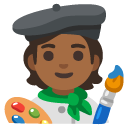


Appearance varies by platform and device. Google Noto, Twemoji, and OpenMoji are open-source.