🧑🏽🎨
The Emoji
Artist: Medium Skin Tone
U+1F9D1 U+1F3FD U+200D U+1F3A8 · :artist_medium_skin_tone:
Trend 68
Meaning layers
- interpretation
- Used to signal creative identity, aesthetic pursuits, or to flex an artsy personality. Often deployed ironically when doing something that barely qualifies as 'art' or to claim a chaotic creative lifestyle.
- tiktok usage
- Appears in art-process videos, creative transition reveals, and 'I'm not like other girls/guys' creative identity content. Also used humorously when someone scribbles something terrible.
- irony level
- 5 / 10
Platform meanings
- meaning
- Represents creative identity, art process content, and the chaotic artsy persona. Used in transitions where someone reveals a finished artwork.
- trend usage
- Art transformation videos, 'day in the life of an artist' content, speed-painting reveals, and ironically in 'I woke up and chose chaos (and art)' formats.
- hashtags
- #artistsoftiktok#arttok#creativesoftiktok#paintingprocess#artlife
- virality score
- 72 / 100
Cultural meanings
🇺🇸
Western / Gen-Z
Widely used to claim a creative identity online, often ironically. Signals someone who paints, draws, or simply aestheticizes their life heavily on social media.
🇵🇰
Pakistan & India
Used to represent traditional art forms like miniature painting, rangoli, or Bollywood poster art. Also common among young urban creatives sharing digital art.
🌍
Middle East
Associated with calligraphy artists, henna designers, and traditional Islamic geometric art practitioners. Growing use among young digital artists in the region.
🌐
Global Neutral
Universally understood as representing an artist or creative person. Culturally neutral in its base meaning across most global contexts.
🇧🇩
Bangladesh
Used by the growing Dhaka art scene to represent local painters, muralists, and textile designers. Also seen in rickshaw art appreciation posts.
🇱🇰
Sri Lanka
Associated with traditional mask-making, batik art, and the contemporary Colombo art scene. Used by young creatives to signal artistic careers.
🇨🇳
China
Popular among young artists on Weibo and Bilibili sharing traditional ink painting, contemporary art, or digital illustration content.
🇯🇵
Japan
Strongly associated with manga artists, anime illustrators, and traditional sumi-e painters. Very respected usage in creative communities.
🇰🇷
South Korea
Common in webtoon creator communities, K-pop fan art circles, and contemporary fine art spaces. Prestige attached to the artist identity.
🇹🇼
Taiwan
Used in indie comics and illustration communities. Taiwan has a strong graphic novel culture so this emoji carries significant creative prestige.
🇭🇰
Hong Kong
Associated with street art culture, protest art legacy, and commercial design industry. Carries both political and aesthetic connotations.
🇵🇭
Philippines
Used by the vibrant Filipino digital art community, OPM music visual creators, and traditional folk art revivalists.
🇮🇩
Indonesia
Connected to batik artists, shadow puppet (wayang) craftspeople, and a booming young digital art community on Instagram.
🇹🇭
Thailand
Linked to traditional mural painting, Buddhist temple art, and a thriving contemporary art and street art scene in Bangkok.
🇻🇳
Vietnam
Associated with lacquerware artists, silk painters, and the growing contemporary art movement in Hanoi and Ho Chi Minh City.
🇲🇾
Malaysia
Used among batik designers, street muralists (Penang art scene), and digital illustrators in a culturally diverse creative community.
🇸🇦
Saudi Arabia
Increasingly used as art becomes more culturally visible post-Vision 2030. Associated with calligraphy, contemporary art galleries, and young creators.
🇦🇪
UAE
Tied to the booming Dubai and Abu Dhabi art scenes, Art Dubai fair culture, and luxury creative industries. High prestige usage.
🇪🇬
Egypt
Connected to hieroglyphic-inspired art, Cairo's vibrant graffiti and contemporary scene, and traditional Islamic pattern artists.
🇹🇷
Turkey
Associated with miniature painting (tezhip), marbled paper art (ebru), and Istanbul's contemporary art scene. Deep cultural reverence.
🇮🇷
Iran
Linked to Persian miniature painting, calligraphy masters, and a strong underground contemporary art community navigating cultural restrictions.
🇳🇬
Nigeria
Used by Afrobeats visual artists, Nollywood graphic designers, and the thriving Lagos contemporary art scene. Vibrant and culturally rich associations.
🇿🇦
South Africa
Connected to Soweto street art, beadwork artisans, and Cape Town's world-class contemporary art and design community.
🇬🇧
UK & Ireland
Used casually by art school students, gallery workers, and creative freelancers. Carries a slightly 'tortured artist' ironic humor in British usage.
🇫🇷
France
Strong cultural resonance given France's art heritage. Used seriously by fine artists and ironically by those mocking pretentious art culture.
🇩🇪
Germany
Associated with the Bauhaus tradition, Berlin's vibrant contemporary art scene, and serious design culture. More earnest than ironic in usage.
🇪🇸
Spain & Italy
Deeply connected to rich artistic heritage — used with pride by painters, sculptors, and designers. Evokes Renaissance and modern creative traditions.
🇧🇷
Brazil
Associated with carnival costume designers, street art (São Paulo muralism), and a huge digital illustration community. Energetic and expressive usage.
🇲🇽
Mexico
Strongly tied to muralism tradition (Rivera, Kahlo legacy), folk art (alebrije makers), and a thriving contemporary creative scene.
🌎
Latin America
Broadly represents creative identity across Latin America — used by illustrators, muralists, and craft artists celebrating indigenous and modern aesthetic traditions.
🇦🇺
Australia & NZ
Used casually among art students, indie creatives, and Aboriginal/Māori art appreciators. Strong connection to Indigenous art acknowledgment in progressive contexts.
How its meaning shifted
- 2010
Emoji didn't exist yet; the concept was being represented by basic smiley faces or the generic 🎨 palette emoji for art-related contexts.
- 2015
The base artist emoji was introduced around this period but skin tone variants were new. Usage was largely literal — tagging artists or art-related posts.
- 2020
Became widely used in creative community building during COVID lockdowns when many people took up art. Also started appearing ironically in meme culture.
- 2026
Now a staple of creative identity expression online. Deeply embedded in both sincere artistic communities and ironic 'I made this abomination' meme culture. Heavily used in AI art discourse.
See it on every platform
Adjacent emojis
- Often confused with
- person gesturing okmageperson raising hand
- Can replace
- palettepaintbrushsparkles
Share & embed
Frequently asked
01What does the 🧑🏽🎨 Artist: Medium Skin Tone emoji mean?
A person with medium skin tone depicted as an artist, typically shown holding a palette and paintbrush, representing visual arts, creativity, and artistic professions.
02What does 🧑🏽🎨 mean on TikTok?
Represents creative identity, art process content, and the chaotic artsy persona. Used in transitions where someone reveals a finished artwork.
03What does 🧑🏽🎨 mean on WhatsApp?
Casually signals 'I'm working on something creative' or used to identify oneself as an artist in group chats.
04What does 🧑🏽🎨 mean in Gen-Z slang?
Used to signal creative identity, aesthetic pursuits, or to flex an artsy personality. Often deployed ironically when doing something that barely qualifies as 'art' or to claim a chaotic creative lifestyle.
05Is the 🧑🏽🎨 emoji safe to use?
Represents artists, creative professionals, and anyone who identifies with making visual art. Universally positive and celebratory of creativity.
06What does 🧑🏽🎨 mean in texting?
Signals a deep connection to personal identity through creative output. Using this emoji often correlates with individuals who tie their self-worth to artistic ability or aesthetic sensibility.
07What is the shortcode for 🧑🏽🎨?
The shortcode for Artist: Medium Skin Tone is :artist_medium_skin_tone:
08What does 🧑🏽🎨 mean in dating?
Sent when sharing artwork with a crush or implying 'I made something inspired by you.' Can be a soft flirt with artistic mystique.
Safety & usage
- Safe meaning
- Represents artists, creative professionals, and anyone who identifies with making visual art. Universally positive and celebratory of creativity.
- Caution
- Occasionally used to dismiss someone as 'painting a narrative' or fabricating stories, but this usage is mild and not inherently harmful.
No significant toxic associations. Can be used dismissively in online arguments to imply someone is 'making things up', but this is low-level at worst.
How it looks across platforms
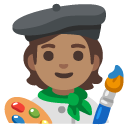


Appearance varies by platform and device. Google Noto, Twemoji, and OpenMoji are open-source.