👶🏼
The Emoji
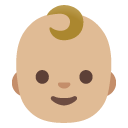
Baby: Medium-light Skin Tone
U+1F476 U+1F3FC · :baby_mediumlight_skin_tone:
Trend 55
Meaning layers
- interpretation
- Used ironically to call someone immature, childish, or inexperienced. Also used affectionately to call someone cute or to refer to oneself as a 'baby' in a vulnerable or needy context. Sometimes deployed sarcastically when someone is acting dramatic.
- tiktok usage
- Appears in comment sections to call out immature behavior ('you're such a 👶🏼'), used in 'POV you're a baby' skits, or when someone is being overly sensitive about something trivial.
- irony level
- 7 / 10
Platform meanings
- meaning
- Signals immaturity, newness, or childlike behavior. Also used earnestly in parenting content and pregnancy announcements.
- trend usage
- Appears in comment sections under videos where someone is acting naive or dramatic. Also used in '#babytok' parenting communities.
- hashtags
- #babytok#newborn#babyannouncement#crybaby#babymode
- virality score
- 62 / 100
Cultural meanings
🇺🇸
Western / Gen-Z
Primarily used ironically to call someone immature or overly sensitive; sincerely used in parenting and pregnancy announcement contexts among millennials and older Gen Z.
🇵🇰
Pakistan & India
Deeply affectionate use — babies are culturally celebrated and the emoji is widely used in family WhatsApp groups to celebrate births and share baby photos. Skin tone modifier resonates with medium-light complexions common in the subcontinent.
🌍
Middle East
Used warmly in family and community contexts to celebrate newborns; children hold high cultural value and this emoji carries genuine joy and blessings in messaging.
🌐
Global Neutral
Universally understood as representing an infant; the medium-light skin tone makes it relatable across a wide range of ethnicities globally.
🇧🇩
Bangladesh
Used sincerely in family group chats and social media to share birth news and baby milestones; babies are considered blessings and the emoji carries joyful connotations.
🇱🇰
Sri Lanka
Affectionately used in family communications to refer to newborns and young children; often paired with prayer or blessing emojis in announcement contexts.
🇨🇳
China
Used in parenting communities and family WeChat groups; single-child policy legacy makes baby-related content especially emotionally resonant. Ironic uses are less common here.
🇯🇵
Japan
Used sincerely and with kawaii (cute) connotations; fits well within Japanese emoji culture that prizes roundness and infantile features as aesthetically pleasing.
🇰🇷
South Korea
Common in parenting content and family group chats; also appears in 'aegyo' (acting cute) culture where adults playfully imitate baby-like vulnerability.
🇹🇼
Taiwan
Used warmly in family communications; also appears in cute-culture content, often paired with soft aesthetic visuals in social media posts.
🇭🇰
Hong Kong
Used in family messaging apps to celebrate births; among younger users, may carry ironic undertones similar to Western Gen Z usage.
🇵🇭
Philippines
Babies are deeply cherished in Filipino culture and this emoji is used with genuine warmth in family and community announcements; also appears in humorous contexts among youth.
🇮🇩
Indonesia
Widely used in family WhatsApp groups for birth celebrations; also appears in parenting content on TikTok and Instagram which are very popular platforms in Indonesia.
🇹🇭
Thailand
Used affectionately in family and social contexts; Thailand's baby-soft aesthetic culture (similar to Japan's kawaii) means this emoji also appears in cute-themed content.
🇻🇳
Vietnam
Used sincerely in family communications and parenting communities; babies are highly valued and the emoji carries warm, celebratory meaning.
🇲🇾
Malaysia
Common in family messaging across ethnic communities; used affectionately for birth announcements and baby-related content, reflecting multicultural Malaysian family values.
🇸🇦
Saudi Arabia
Used in family and community contexts to celebrate new births, which are considered divine blessings; tone is sincere and joyful rather than ironic.
🇦🇪
UAE
Used warmly across the diverse expatriate and local population; in a multicultural hub like UAE, the medium-light skin tone has broad relatability.
🇪🇬
Egypt
Babies are deeply celebrated and the emoji is used with genuine affection in family communications; often paired with religious blessings in birth announcements.
🇹🇷
Turkey
Used affectionately in family contexts and parenting communities; younger Turkish social media users may also use it ironically in the Western Gen Z sense.
🇮🇷
Iran
Used sincerely in family messaging to celebrate births; babies carry strong cultural and religious significance and the emoji is treated with warmth.
🇳🇬
Nigeria
Widely used in WhatsApp family and community groups to celebrate newborns; babies are seen as blessings and the emoji is used with genuine joy.
🇿🇦
South Africa
Used sincerely in family contexts across all communities; among younger South African Gen Z users on TikTok, ironic usage mirrors Western patterns.
🇬🇧
UK & Ireland
Used both sincerely in parenting contexts and ironically in banter culture; British dry humor lends itself to using this emoji to call someone a 'big baby'.
🇫🇷
France
Used warmly in family and personal communications for birth announcements; French social media users may also deploy it ironically with characteristic Gallic wit.
🇩🇪
Germany
Primarily used sincerely in parenting and family contexts; German directness means the ironic 'you're being a baby' usage is also common and unambiguous.
🇪🇸
Spain & Italy
Used warmly in family contexts where children are culturally celebrated; Mediterranean family culture gives this emoji a particularly tender and communal warmth.
🇧🇷
Brazil
Used with high enthusiasm in family WhatsApp groups for birth celebrations; Brazilian social media culture also embraces ironic uses in meme contexts.
🇲🇽
Mexico
Deeply affectionate use in family communications; babies are central to Mexican family culture and the emoji is used joyfully and sincerely in announcements.
🌎
Latin America
Across Latin America, babies hold strong cultural significance tied to family and faith; this emoji is predominantly used with warmth and celebration.
🇦🇺
Australia & NZ
Used sincerely in parenting contexts and ironically in casual banter; Aussie/Kiwi humor readily adopts this emoji to mock someone for being soft or dramatic.
How its meaning shifted
- 2010
Barely in circulation; the skin tone modifier system did not yet exist and emoji usage overall was nascent and primarily literal on early platforms like iOS.
- 2015
Skin tone modifiers introduced in Unicode 8.0, making 👶🏼 available. Usage was primarily sincere — representing actual babies in family and parenting contexts.
- 2020
Ironic and sarcastic usage gained traction among Gen Z on TikTok and Twitter, with the emoji increasingly used to mock immature behavior alongside its sincere parenting uses.
- 2026
Dual-use fully established: sincere parenting/family context remains strong while ironic 'crybaby' usage is deeply embedded in Gen Z and younger millennial digital communication. Skin tone representation normalized.
See it on every platform
Compare with
Adjacent emojis
- Often confused with
- hatching chickdollcherub
Share & embed
Frequently asked
01What does the 👶🏼 Baby: Medium-light Skin Tone emoji mean?
A baby with medium-light skin tone, represented as a small infant with a round face and minimal hair. This is a skin tone modifier applied to the base baby emoji.
02What does 👶🏼 mean on TikTok?
Signals immaturity, newness, or childlike behavior. Also used earnestly in parenting content and pregnancy announcements.
03What does 👶🏼 mean on WhatsApp?
Most commonly used to refer to an actual baby or child, often shared by parents in family group chats.
04What does 👶🏼 mean in Gen-Z slang?
Used ironically to call someone immature, childish, or inexperienced. Also used affectionately to call someone cute or to refer to oneself as a 'baby' in a vulnerable or needy context. Sometimes deployed sarcastically when someone is acting dramatic.
05Is the 👶🏼 emoji safe to use?
Represents an infant or baby; used in birth announcements, parenting content, and affectionate messaging.
06What does 👶🏼 mean in texting?
The baby emoji taps into both nurturing instincts (caregiving, protectiveness) and social hierarchy dynamics (calling someone naive or inexperienced). It can evoke warmth or be weaponized as a subtle put-down.
07What is the shortcode for 👶🏼?
The shortcode for Baby: Medium-light Skin Tone is :baby_mediumlight_skin_tone:
08What does 👶🏼 mean in dating?
Used as a pet name reference — calling someone 'baby' in emoji form. Can feel endearing and soft in early romantic exchanges.
Safety & usage
- Safe meaning
- Represents an infant or baby; used in birth announcements, parenting content, and affectionate messaging.
- Caution
- Can be used to demean or infantilize someone in an argument, particularly in online harassment contexts where calling someone a 'baby' is meant to dismiss their feelings or opinions.
Generally safe. The skin tone modifier adds representation value. In rare cases, could be used in contexts involving child safety discussions — always check surrounding content. Not inherently NSFW.
How it looks across platforms


Appearance varies by platform and device. Google Noto, Twemoji, and OpenMoji are open-source.