🤰
The Emoji
Pregnant Woman
U+1F930 · :pregnant_woman:
Trend 68
Meaning layers
- interpretation
- Used humorously to signal being 'full' after eating, fake pregnancy announcements as jokes, or to dramatize bloating. Also used in chaotic meme contexts unrelated to actual pregnancy.
- tiktok usage
- Appears in 'food baby' content after eating large meals, in ironic pregnancy reveal parodies, and in body-humor skits. Often paired with dramatic music for comedic effect.
- irony level
- 7 / 10
Platform meanings
- meaning
- Primarily used in food content as a joke about being full, in pregnancy announcement trends, and in body-positive or pregnancy journey content.
- trend usage
- Appears in #FoodBaby videos, 'I ate my body weight in pasta 🤰' captions, and real pregnancy journey vlogs that have gained massive followings.
- hashtags
- #FoodBaby#PregnancyAnnouncement#BabyBump#ExpectingMom#MomTok
- virality score
- 74 / 100
Cultural meanings
🇺🇸
Western / Gen-Z
Primarily used ironically for the 'food baby' joke after eating large meals; genuine pregnancy use coexists with heavy meme culture around the emoji.
🇵🇰
Pakistan & India
Used sincerely to announce pregnancies in family WhatsApp groups and to congratulate expecting mothers; strong cultural reverence for pregnancy reduces ironic usage significantly.
🌍
Middle East
Carries deep respect and is used genuinely in family and friend communications to celebrate pregnancies; ironic or humorous use is uncommon and may be considered disrespectful.
🌐
Global Neutral
Universally understood as representing pregnancy; used sincerely across most global contexts with ironic usage primarily concentrated in Western English-speaking audiences.
🇧🇩
Bangladesh
Used sincerely in family communications to share pregnancy news; associated with celebration, community support, and religious blessings for the mother and child.
🇱🇰
Sri Lanka
Employed genuinely in family chats and social media to announce pregnancies; cultural celebrations around pregnancy make the emoji a positive and warmly received symbol.
🇨🇳
China
Used earnestly in parenting apps, WeChat family groups, and baby product marketing; pregnancy is a topic of intense social and family focus especially given historical one-child policy context.
🇯🇵
Japan
Appears in pregnancy-related content and family communication apps; Japanese internet culture uses it sincerely with minimal irony, often paired with soft kawaii aesthetics in maternity content.
🇰🇷
South Korea
Used in mommy blogs, parenting content on Naver and Kakao, and family announcements; K-culture beauty and wellness trends have made pregnancy content highly aestheticized on social media.
🇹🇼
Taiwan
Used sincerely for pregnancy announcements and parenting community discussions; Taiwanese social media embraces wholesome family content where this emoji fits naturally.
🇭🇰
Hong Kong
Appears in both Cantonese-language family chats for genuine pregnancy news and occasionally in food memes popular among younger Hong Kong internet users.
🇵🇭
Philippines
Widely used in family group chats to announce pregnancies with joy; Filipino culture's strong family values make this emoji a celebratory and cherished symbol.
🇮🇩
Indonesia
Used sincerely to announce pregnancies and share maternity milestones; religious and family-oriented culture in Indonesia means the emoji is treated with care and positivity.
🇹🇭
Thailand
Appears in pregnancy and parenting content on Facebook and LINE, which dominate Thai social media; used sincerely with occasional food-humor crossover among younger Thai users.
🇻🇳
Vietnam
Used genuinely in family Zalo and Facebook communications to announce pregnancies; Vietnamese parenting communities on social media actively use the emoji in support groups.
🇲🇾
Malaysia
Employed sincerely in family and friend communications across WhatsApp and Facebook; multicultural context means it resonates positively across Malay, Chinese, and Indian Malaysian communities.
🇸🇦
Saudi Arabia
Used respectfully in family communications to announce pregnancies; cultural and religious significance of motherhood in Saudi culture makes this emoji a symbol of blessing and joy.
🇦🇪
UAE
Appears in family announcements and parenting content; the diverse expat population means it's used both by locals in the traditional sincere sense and by Western expats in occasional humorous contexts.
🇪🇬
Egypt
Used sincerely and with celebration in family circles to announce pregnancies; Egyptian culture's communal approach to family milestones means the emoji is met with warmth and congratulations.
🇹🇷
Turkey
Used genuinely in family WhatsApp and Instagram announcements; Turkish family culture holds pregnancy in high regard, so the emoji is treated with sincerity and joy.
🇮🇷
Iran
Used carefully in family communications to share pregnancy news; cultural values around family and modesty mean the emoji is used sincerely with little ironic repurposing.
🇳🇬
Nigeria
Widely used in family WhatsApp groups and Facebook to celebrate pregnancies; Nigerian culture's communal celebration of new life makes this one of the most positively received family-related emojis.
🇿🇦
South Africa
Used sincerely across diverse South African communities for pregnancy announcements; younger South African users occasionally adopt Western food-baby humor on platforms like TikTok.
🇬🇧
UK & Ireland
Used both sincerely for pregnancy announcements and humorously after large meals, particularly British Sunday roasts or pub meals; British dry humor embraces the food-baby joke.
🇫🇷
France
Employed mostly sincerely in family announcements; French social media culture is less emoji-heavy but the emoji appears in genuine maternity content and occasionally in food humor.
🇩🇪
Germany
Used practically and sincerely in family and parenting contexts; German internet culture tends toward directness, so the emoji typically signals genuine pregnancy rather than irony.
🇪🇸
Spain & Italy
Used with warmth and celebration for pregnancy announcements reflecting Mediterranean family culture; younger users in both countries also engage with food-humor usage of the emoji.
🇧🇷
Brazil
Used enthusiastically in family WhatsApp groups and Instagram for pregnancy announcements; Brazilian social media's expressive culture means the emoji is paired with multiple celebration emojis.
🇲🇽
Mexico
Appears in family celebrations of pregnancy news on WhatsApp and Facebook; Mexican family culture treats pregnancy as a communal joyous event reflected in how the emoji is used.
🌎
Latin America
Broadly used across Latin America to celebrate pregnancies in family-oriented social media content; the emoji fits naturally into the region's expressive, family-first digital communication style.
🇦🇺
Australia & NZ
Used both genuinely for pregnancy announcements and humorously in the food-baby context; Australian and New Zealand internet humor aligns with the Western ironic use of the emoji.
How its meaning shifted
- 2010
Predates the emoji's existence — pregnancy was communicated with text descriptions or basic smileys; no standardized visual representation existed.
- 2015
Just entering mainstream emoji sets; used almost exclusively for genuine pregnancy announcements and maternity-related sincere communication.
- 2020
Dual usage firmly established — sincere pregnancy announcements coexist with the 'food baby' internet meme; TikTok accelerates the humorous usage significantly.
- 2026
Deeply embedded in both sincere pregnancy culture and internet humor; the 'food baby' meaning is now equally recognized as the literal meaning among younger demographics globally.
See it on every platform
Emoji combinations
Adjacent emojis
- Opposite
- no entryskullperson running
- Often confused with
- person gesturing okpregnant manperson standing
- Can replace
- babyhatching chickpregnant person
Share & embed
Frequently asked
01What does the 🤰 Pregnant Woman emoji mean?
A woman with a visibly pregnant belly, used to represent pregnancy, expecting a baby, or maternity-related topics.
02What does 🤰 mean on TikTok?
Primarily used in food content as a joke about being full, in pregnancy announcement trends, and in body-positive or pregnancy journey content.
03What does 🤰 mean on WhatsApp?
Used to announce pregnancy to family and friends in group chats, or jokingly after eating too much in casual friend conversations.
04What does 🤰 mean in Gen-Z slang?
Used humorously to signal being 'full' after eating, fake pregnancy announcements as jokes, or to dramatize bloating. Also used in chaotic meme contexts unrelated to actual pregnancy.
05Is the 🤰 emoji safe to use?
Represents pregnancy, expecting a baby, maternity, or humorously a full stomach after a large meal.
06What does 🤰 mean in texting?
Pregnancy is one of the most emotionally complex human experiences — the emoji carries weight related to identity transformation, fear, hope, and social expectation, making its ironic misuse particularly charged.
07What is the shortcode for 🤰?
The shortcode for Pregnant Woman is :pregnant_woman:
08What does 🤰 mean in dating?
Rarely used flirtatiously; sometimes sent as a joke between couples to tease about 'what if' scenarios or to reference intimacy humorously.
Safety & usage
- Safe meaning
- Represents pregnancy, expecting a baby, maternity, or humorously a full stomach after a large meal.
- Caution
- Can be used in targeted harassment toward women about their bodies, unsolicited pregnancy commentary, or shaming contexts about weight and body image.
Should be used sensitively around individuals who may have experienced pregnancy loss, infertility, or body image struggles. Sending to someone without context can be deeply offensive if misinterpreted as a body comment.
How it looks across platforms
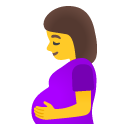


Appearance varies by platform and device. Google Noto, Twemoji, and OpenMoji are open-source.