🦬
The Emoji
Bison
U+1F9AC · :bison:
Trend 34
Meaning layers
- interpretation
- Used to convey being built different, unbothered, or charging forward with unstoppable energy. Also used humorously to describe someone who is big, sturdy, or moves through life with brute force and zero cares.
- tiktok usage
- Appears in 'I am the bison' energy videos where creators describe living life unapologetically and trampling obstacles. Often paired with dramatic music and slow-motion walks.
- irony level
- 5 / 10
Platform meanings
- meaning
- Symbol of unstoppable forward momentum, raw nature energy, and 'charging through life' metaphors in motivational and ironic content.
- trend usage
- Used in POV videos, gym TikToks, national park content, and ironic 'main character' videos where creators stomp forward dramatically.
- hashtags
- #BisonEnergy#BuiltDifferent#NationalPark#WildlifeOfTikTok#AmericanWild
- virality score
- 38 / 100
Cultural meanings
🇺🇸
Western / Gen-Z
Represents raw power, unbothered energy, and American wilderness pride. Used ironically in 'I am the bison' meme format to describe charging through life's problems.
🇵🇰
Pakistan & India
Mostly understood as a generic large animal emoji. Occasionally compared to the Indian gaur or wild buffalo; rarely used in everyday digital conversation.
🌍
Middle East
Recognized as an exotic North American animal. Not culturally embedded; used occasionally in educational or wildlife content.
🌐
Global Neutral
Universally understood as a large bovine wildlife animal. Used in nature, travel, and conservation contexts globally without strong cultural baggage.
🇧🇩
Bangladesh
Primarily recognized as a foreign wildlife animal similar to local water buffalo. Low everyday usage; appears in school or educational contexts.
🇱🇰
Sri Lanka
Seen as a North American version of the water buffalo. Not commonly used in local digital communication; appears in wildlife or travel content.
🇨🇳
China
Understood as the American buffalo (美洲野牛). Used in educational content and wildlife documentaries. Occasionally appears in posts about American culture or nature.
🇯🇵
Japan
Known as バイソン (baison). Appreciated in wildlife and nature content. Japan has strong kawaii animal culture so cute bison illustrations are well-received.
🇰🇷
South Korea
Referred to as 들소 (deulso). Appears in K-content related to nature documentaries and American culture references. Not in mainstream emoji vocabulary.
🇹🇼
Taiwan
Used in wildlife and ecology discussions. Taiwan's strong environmental awareness community embraces it in conservation-related posts.
🇭🇰
Hong Kong
Generally understood as an American wildlife symbol. Occasionally used by outdoor enthusiasts and travelers planning USA trips.
🇵🇭
Philippines
Recognized as a foreign exotic animal. Appears in social media posts about North America, Yellowstone, or wildlife documentaries shared on Facebook.
🇮🇩
Indonesia
Understood as the American buffalo. Used in wildlife and nature educational content; compared locally to the Anoa, a dwarf buffalo native to Sulawesi.
🇹🇭
Thailand
Seen as a large foreign animal similar to the gaur. Used in wildlife content and by Thais who have visited or plan to visit American national parks.
🇻🇳
Vietnam
Understood as an American wild buffalo. Not deeply embedded in digital culture but appears in wildlife and travel content about the USA.
🇲🇾
Malaysia
Recognized as North American wildlife. Occasionally used by Malaysian students and nature lovers in educational or travel contexts.
🇸🇦
Saudi Arabia
Understood as an American animal with little local cultural resonance. Appears in wildlife content and posts about USA travel or nature documentaries.
🇦🇪
UAE
Used by the globally connected UAE population in travel and nature content. Expats from North America may use it with more cultural fluency.
🇪🇬
Egypt
Recognized as an American animal from TV and movies. Used in social media posts about the US, cowboys, and Western Americana themes.
🇹🇷
Turkey
Known as bizon in Turkish. Used in nature content and wildlife discussions. Occasionally appears when discussing American indigenous culture or history.
🇮🇷
Iran
Understood as the American بیسون. Appears in educational and wildlife content. Young Iranians with global media access may use it in nature contexts.
🇳🇬
Nigeria
Seen as a large foreign animal comparable to the African buffalo. Used in wildlife comparison content and posts about North American nature.
🇿🇦
South Africa
Compared to the iconic African Cape Buffalo. Used in wildlife discussions, nature content, and by South Africans who appreciate animal comparisons across continents.
🇬🇧
UK & Ireland
Understood as the American buffalo or bison. Used in Americana content, national park travel posts, and wildlife discussions. Slight exoticism attached to it.
🇫🇷
France
Known as le bison. Appears in nature, travel, and Americana content. France has a romantic fascination with the American West that gives this emoji occasional cultural pull.
🇩🇪
Germany
Known as Bison or Wisent (European bison). Germans, with strong nature conservation culture, may also reference the rewilding of European bison alongside the American variety.
🇪🇸
Spain & Italy
Recognized as the American buffalo from westerns and cowboy culture. Used in travel content about the USA and wildlife discussions; carries a mild cinematic nostalgia.
🇧🇷
Brazil
Known as bisão in Portuguese. Brazil's strong nature culture means this appears in wildlife comparison content alongside the Brazilian tapir or capybara in animal posts.
🇲🇽
Mexico
Known as bisonte. Appears in content about North American wildlife, pre-Columbian history (as Plains indigenous cultures are discussed), and travel to US national parks.
🌎
Latin America
Broadly understood as the American bisonte. Used in educational and travel content across Latin America when discussing USA nature and indigenous history.
🇦🇺
Australia & NZ
Seen as a distinctly American animal — exotic and intriguing. Australians compare it to their own large wildlife; used in 'American things we don't have' content.
How its meaning shifted
- 2010
The bison emoji did not exist in Unicode before 2020, so digital usage in 2010 was nonexistent. Users relied on 'buffalo' text or the generic cow emoji as a substitute.
- 2015
Still absent from Unicode; bison references in digital communication were handled with cow 🐄 or ox 🐂 emojis as loose proxies, or simply spelled out in text.
- 2020
Introduced in Unicode 13.0 in 2020. Initial usage was largely literal — wildlife enthusiasts, conservationists, and national park visitors adopted it first. Limited mainstream penetration.
- 2026
Established in nature, fitness, and Americana aesthetics niches. The 'I am the bison' energy meme format has given it ironic cultural currency. Used for strength metaphors and unbothered energy alongside its literal wildlife usage.
See it on every platform
Compare with
Share & embed
Frequently asked
01What does the 🦬 Bison emoji mean?
The American Bison (buffalo), a large bovine mammal native to North America, depicted in a side-facing brown shaggy illustration with prominent hump and horns.
02What does 🦬 mean on TikTok?
Symbol of unstoppable forward momentum, raw nature energy, and 'charging through life' metaphors in motivational and ironic content.
03What does 🦬 mean on WhatsApp?
Usually sent literally when talking about animals, nature trips, or US national parks. Among friends it can mean 'I'm charging through, nothing stopping me.'
04What does 🦬 mean in Gen-Z slang?
Used to convey being built different, unbothered, or charging forward with unstoppable energy. Also used humorously to describe someone who is big, sturdy, or moves through life with brute force and zero cares.
05Is the 🦬 emoji safe to use?
Represents the American bison animal, North American wildlife, conservation, national parks, strength, and untamed nature.
06What does 🦬 mean in texting?
The bison psychologically evokes primal strength and perseverance. Its near-extinction and comeback story resonates deeply as a symbol of survival against overwhelming odds, triggering feelings of hope and tenacity.
07What is the shortcode for 🦬?
The shortcode for Bison is :bison:
08What does 🦬 mean in dating?
Rarely used as a flirt emoji directly, but occasionally deployed humorously to call someone 'built' or physically imposing in an admiring way — 'you're a total 🦬 at the gym.'
Safety & usage
- Safe meaning
- Represents the American bison animal, North American wildlife, conservation, national parks, strength, and untamed nature.
- Caution
- No significant toxic usage documented. In extremely rare edge cases, could be used in anti-Indigenous contexts mocking bison near-extinction, but this is not an established pattern.
Generally safe with no known harmful slang associations. Monitor context in politically charged threads about land rights or Indigenous history where the bison holds deep cultural significance.
How it looks across platforms
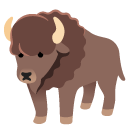


Appearance varies by platform and device. Google Noto, Twemoji, and OpenMoji are open-source.