🐈
The Emoji
Cat
U+1F408 · :cat:
Trend 78
Meaning layers
- interpretation
- Used to express a chill, unbothered, or independent personality. Often paired with ironic or 'I don't care' energy. Also shorthand for cat ownership pride or 'cat person' identity.
- tiktok usage
- Appears in videos about cats doing chaotic things, introverted humor, or as a subtle flex of being a 'cat parent'. Used ironically when someone acts aloof or mysterious.
- irony level
- 4 / 10
Platform meanings
- meaning
- Represents cat content, cat parent identity, or someone displaying cat-like (aloof, chaotic, cute) behavior.
- trend usage
- Used in #CatTok which has billions of views. Appears in videos of cats doing odd things, POV cat skits, and 'day in my life as a cat mom' content.
- hashtags
- #CatTok#CatMom#CatsOfTikTok#CatLife#CatParent
- virality score
- 82 / 100
Cultural meanings
🇺🇸
Western / Gen-Z
Used to express 'cat person' identity, aloof independence, or ironic relatability — being a 'cat on the internet' is aspirational in Gen Z humor.
🇵🇰
Pakistan & India
Commonly used when sharing cat photos or videos; cats are increasingly popular as urban pets, and 🐈 reflects growing online pet culture in cities like Mumbai, Lahore, and Delhi.
🌍
Middle East
Cats hold a special place in Islamic tradition (the Prophet Muhammad ﷺ loved cats), so 🐈 is used warmly and sincerely to express affection for cats, which are widely kept and respected.
🌐
Global Neutral
Universally understood as a domestic cat; used cross-culturally without significant loaded meaning, making it a safe and friendly emoji in international communication.
🇧🇩
Bangladesh
Used in urban social media circles to share cat content; street cats are common and increasingly celebrated online through 🐈 in posts about feeding or rescuing strays.
🇱🇰
Sri Lanka
Appears in posts about household cats or stray cat welfare; the emoji is used affectionately and straightforwardly in pet-related social media content.
🇨🇳
China
Cats are hugely popular in Chinese internet culture ('猫系' — cat-type personality is a popular identity); 🐈 is used extensively on WeChat, Weibo, and Bilibili to represent cat lovers and cute cat aesthetics.
🇯🇵
Japan
Japan has a deep cultural love for cats (Maneki-neko, cat cafes, island cats); 🐈 is used extensively and carries connotations of good luck, cuteness (kawaii), and comfort.
🇰🇷
South Korea
Cat cafes are popular and 'cat-like' personalities (도도함 — aloofness) are considered attractive; 🐈 is used to describe someone mysterious or pretty, or simply to celebrate cat ownership.
🇹🇼
Taiwan
Cats are beloved pets and symbols of coziness; 🐈 is widely used in Taiwanese social media to accompany cat photos, express a chill mood, or signal cat-café culture.
🇭🇰
Hong Kong
Used frequently in pet-related posts and to express a city-dweller's affection for a small apartment companion; cats are popular pets in Hong Kong's dense urban environment.
🇵🇭
Philippines
Used to share cat content and express affection for pets; cat ownership is growing in the Philippines and 🐈 reflects a warm, community-sharing tone around animal love.
🇮🇩
Indonesia
Commonly used in pet content on Instagram and TikTok; cats are the most popular pet in Indonesia and 🐈 is a staple in animal lover communities online.
🇹🇭
Thailand
Cats are culturally significant (revered in temples and considered good omens); 🐈 is used warmly in daily conversation and is especially popular in animal welfare and rescue communities.
🇻🇳
Vietnam
Used in pet content and animal welfare posts; cats are increasingly popular as pets among younger urban Vietnamese, and 🐈 signals a modern, pet-loving lifestyle.
🇲🇾
Malaysia
Used across multicultural communities to share cat photos and express pet love; as cats are generally permissible across cultures present in Malaysia, 🐈 is widely and warmly used.
🇸🇦
Saudi Arabia
Cats are beloved and permissible pets in Islam; 🐈 is used sincerely and affectionately in Saudi social media, especially among younger generations who share cat content widely.
🇦🇪
UAE
Popular among the diverse urban population; cats are common pets in UAE households and 🐈 is used in casual conversation and pet community groups across all expat and local communities.
🇪🇬
Egypt
Cats have ancient sacred significance in Egyptian culture (revered in ancient times); 🐈 carries a mix of cultural pride and modern affection, commonly used in pet content and casual conversation.
🇹🇷
Turkey
Istanbul's famous street cats make cats a central part of Turkish cultural identity; 🐈 is used with great warmth and pride, often in posts celebrating street cat culture and individual cats.
🇮🇷
Iran
Cats are popular pets and culturally accepted; 🐈 is used affectionately on Iranian social media platforms to share cat photos and express fondness for pet cats.
🇳🇬
Nigeria
Used mostly by urban, internet-connected Nigerians who keep pets; pet culture is growing and 🐈 appears in lifestyle and pet-related content, though it's less central than in East Asian or Western contexts.
🇿🇦
South Africa
Used in pet lover communities and casual conversation about cats; South Africa's growing pet culture means 🐈 appears regularly in lifestyle content on Instagram and TikTok.
🇬🇧
UK & Ireland
Cats are one of the UK's most popular pets; 🐈 is used warmly and often humorously — British internet culture has a deep love for cat memes and cat personality humor.
🇫🇷
France
Cats are a staple of French domestic life and internet culture; 🐈 is used affectionately and frequently, often in the context of Parisian apartment life or as a marker of independent, artistic personality.
🇩🇪
Germany
Cats are the most popular pet in Germany; 🐈 is used in a direct, sincere manner in pet-related content, though German internet culture also enjoys ironic cat humor.
🇪🇸
Spain & Italy
Cats are beloved across Mediterranean culture; 🐈 is used warmly in pet content and also carries associations with mystery and independence, fitting the cultural appreciation for personality and flair.
🇧🇷
Brazil
Cat content is hugely popular on Brazilian social media; 🐈 is used expressively and often humorously, fitting Brazil's vibrant meme culture and strong online pet-lover communities.
🇲🇽
Mexico
Used in pet content and to express the independent or mysterious side of someone's personality; Mexican meme culture embraces cat humor and 🐈 is a fun, casual marker in online spaces.
🌎
Latin America
Broadly used across Latin America in pet-related content and casual conversation; the emoji is straightforward and affectionate, reflecting growing urban pet culture throughout the region.
🇦🇺
Australia & NZ
Cats are popular pets and the subject of much Australian internet humor; 🐈 is used in a laid-back, humorous way and is common in both sincere pet content and ironic personality posts.
How its meaning shifted
- 2010
Used almost exclusively to represent a literal cat in text conversations, before emoji culture had developed significant layered meanings. Pet owners used it to talk about their cats.
- 2015
Began appearing alongside the explosion of internet cat culture (Grumpy Cat, Nyan Cat era). Started being used as a personality marker for 'cat people' and in early meme contexts.
- 2020
Became deeply embedded in aesthetic identities (cottagecore, cozy gaming, lo-fi), 'cat mom/dad' culture, and ironic Gen Z humor. CatTok exploded, making 🐈 a high-use emoji.
- 2026
Fully integrated into multi-layered communication: used for cat content, aloof personality expression, cozy aesthetic signaling, and ironic self-identification. Remains one of the most universally positive and widely used animal emojis.
See it on every platform
Compare with
Adjacent emojis
- Often confused with
- cat faceleopardtiger face
- Can replace
- cat facepaw printssmiling cat face
Share & embed
Frequently asked
01What does the 🐈 Cat emoji mean?
A full-body depiction of a domestic cat, typically shown in profile or from the side, representing the common house cat (Felis catus).
02What does 🐈 mean on TikTok?
Represents cat content, cat parent identity, or someone displaying cat-like (aloof, chaotic, cute) behavior.
03What does 🐈 mean on WhatsApp?
Sent when talking about one's cat, seeing a cat, or referencing cat-like behavior in a friend.
04What does 🐈 mean in Gen-Z slang?
Used to express a chill, unbothered, or independent personality. Often paired with ironic or 'I don't care' energy. Also shorthand for cat ownership pride or 'cat person' identity.
05Is the 🐈 emoji safe to use?
A domestic cat — universally recognized as cute, friendly, and wholesome. Safe in all contexts.
06What does 🐈 mean in texting?
Cats symbolize both warmth and emotional self-sufficiency. Using 🐈 can signal a person who values their own space, appreciates quiet companionship, or is communicating in a soft, non-threatening way.
07What is the shortcode for 🐈?
The shortcode for Cat is :cat:
08What does 🐈 mean in dating?
Subtly signals a mysterious, independent, or slightly aloof personality. Sometimes used flirtatiously to say 'I'm cute but unpredictable' — especially in bio context.
Safety & usage
- Safe meaning
- A domestic cat — universally recognized as cute, friendly, and wholesome. Safe in all contexts.
- Caution
- In rare online communities, 'cat' language has been appropriated in coded ways, but 🐈 specifically carries no significant toxic connotations.
No significant warning notes. This emoji is considered safe, neutral, and positive across virtually all platforms and cultures.
How it looks across platforms
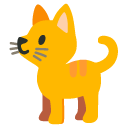


Appearance varies by platform and device. Google Noto, Twemoji, and OpenMoji are open-source.