👷🏽
The Emoji
Construction Worker: Medium Skin Tone
U+1F477 U+1F3FD · :construction_worker_medium_skin_tone:
Trend 45
Meaning layers
- interpretation
- Used to signal hard work, grind culture, or ironically to mock performative hustle. Also used when doing something that requires physical or mental effort, or when 'building' something metaphorically.
- tiktok usage
- Appears in 'under construction' captions for personal growth content, side hustles, or ironic 'we're working on it' commentary about relationships or life goals.
- irony level
- 5 / 10
Platform meanings
- meaning
- Represents hard work, hustle culture, or ironic self-improvement content. Used in transformation and 'building myself' narratives.
- trend usage
- Paired with time-lapse progress videos, DIY content, or 'glow-up under construction' storytelling arcs.
- hashtags
- #UnderConstruction#BuildingSomething#GrindSeason#WorkInProgress#HustleCulture
- virality score
- 52 / 100
Cultural meanings
🇺🇸
Western / Gen-Z
Primarily used ironically as a 'still under construction' metaphor for personal growth, relationships, or broken systems. Also used sincerely by young tradespeople reclaiming pride in blue-collar work.
🇵🇰
Pakistan & India
Widely used to represent the construction and labor workforce, which is a massive sector in both countries. Also used when talking about infrastructure development or major building projects.
🌍
Middle East
Associated with the enormous construction boom across Gulf states and the large labor migrant workforce. Used respectfully to represent hard work and the building sector.
🌐
Global Neutral
Universally understood as representing a construction worker or someone engaged in building and manual labor. Neutral and professional in tone across most global contexts.
🇧🇩
Bangladesh
Strongly associated with the labor export sector and garment/construction workers, a point of national economic identity. Used with pride and practicality in discussions about labor and development.
🇱🇰
Sri Lanka
Associated with infrastructure development and remittance-sending migrant construction workers abroad, especially in the Middle East. Used in discussions about overseas employment and national projects.
🇨🇳
China
Linked to China's massive infrastructure growth and belt-and-road projects. Symbolizes national development pride and the working class in social commentary.
🇯🇵
Japan
Used respectfully for the construction and civil engineering workforce, which holds cultural respect in Japan. Also used in discussions about urban redevelopment and the aging labor force crisis.
🇰🇷
South Korea
Connected to the powerful construction conglomerates (chaebols) and urban redevelopment culture in Korean cities. Also used in online discourse about labor conditions and housing.
🇹🇼
Taiwan
Used in the context of infrastructure projects and urban planning discussions. Reflects pride in technical and engineering achievements.
🇭🇰
Hong Kong
Associated with the city's skyline and high-rise construction culture. Used in discussions about development, urban crowding, and labor rights.
🇵🇭
Philippines
Strongly tied to the OFW (Overseas Filipino Worker) experience, as many Filipinos work in construction abroad. Used with both pride and empathy in diaspora conversations.
🇮🇩
Indonesia
Represents the large domestic and migrant construction labor force. Used in discussions about national infrastructure projects like toll roads and new capital city development.
🇹🇭
Thailand
Associated with urban development in Bangkok and migrant worker issues from neighboring countries. Used in practical and sometimes social justice contexts.
🇻🇳
Vietnam
Used in the context of Vietnam's rapid urbanization and construction boom. Represents blue-collar pride and economic development narratives.
🇲🇾
Malaysia
Linked to construction work and the significant migrant labor workforce. Used in community and news contexts about urban development and worker welfare.
🇸🇦
Saudi Arabia
Deeply associated with mega-projects like NEOM and Vision 2030 construction initiatives. Represents the massive labor force driving the kingdom's transformation.
🇦🇪
UAE
Iconically linked to Dubai and Abu Dhabi's world-famous skylines and ongoing megaprojects. Used with a mix of awe at development and awareness of migrant labor issues.
🇪🇬
Egypt
Connected to Egypt's massive new administrative capital construction project and Nile-side development. Used in both patriotic and critical contexts about national building efforts.
🇹🇷
Turkey
Associated with Turkey's construction sector, one of the country's largest export industries. Used in discussions about urban renewal (kentsel dönüşüm) and earthquake-resistant building debates.
🇮🇷
Iran
Used in the context of domestic construction projects and the sanctioned economy's labor force. Reflects national self-sufficiency narratives in infrastructure.
🇳🇬
Nigeria
Represents the booming construction and real estate sector in Lagos, Abuja, and beyond. Used with pride in entrepreneurial and real estate circles.
🇿🇦
South Africa
Associated with township housing projects, mining infrastructure, and post-apartheid development initiatives. Used in discussions about job creation and economic inequality.
🇬🇧
UK & Ireland
Used humorously in reference to perpetually ongoing road works and construction projects that never seem to finish. Tradespeople also use it with genuine professional pride.
🇫🇷
France
Associated with large public works projects and ongoing debates about urban renovation. Used in social commentary about government spending on infrastructure.
🇩🇪
Germany
Linked to Germany's renowned engineering and construction quality (Qualitätsarbeit). Used professionally and with a tone of precision and reliability.
🇪🇸
Spain & Italy
Often used humorously in reference to notoriously slow bureaucratic construction approvals. Also used genuinely in architecture, real estate, and construction sectors.
🇧🇷
Brazil
Associated with both official infrastructure projects and the massive informal housing construction sector. Used in discussions about inequality, favelas, and economic development.
🇲🇽
Mexico
Connected to the construction labor force and remittance culture, as well as government infrastructure projects. Used with blue-collar pride and in social commentary about labor conditions.
🌎
Latin America
Broadly represents the construction and informal labor sector across Latin America. Used in discussions about urbanization, migration, and economic development.
🇦🇺
Australia & NZ
Strongly associated with the booming residential and commercial construction market. Used casually by tradies (tradespeople) with cultural pride, as the 'tradie' identity is a celebrated part of culture.
How its meaning shifted
- 2010
Emoji did not exist yet; standard construction worker emoji without skin tones was rarely used outside of literal, utilitarian contexts in early smartphone messaging.
- 2015
Introduced as part of Unicode 8.0 skin tone modifiers. Initially used almost exclusively in literal contexts by construction workers or people describing physical labor.
- 2020
Expanded usage into metaphorical 'under construction' self-improvement narratives on TikTok and Instagram. Gained traction in hustle culture content and ironic memes about broken systems.
- 2026
Now used across a wide spectrum from sincere blue-collar pride and labor rights discourse to ironic commentary on personal development and broken infrastructure. Embedded in Gen Z vernacular for 'work in progress' narratives.
See it on every platform
Compare with
Adjacent emojis
- Often confused with
- man mechanicfactory workerman in hard hat
- Can replace
- hammerbuilding constructionconstruction sign
Share & embed
Frequently asked
01What does the 👷🏽 Construction Worker: Medium Skin Tone emoji mean?
A construction worker wearing a hard hat, depicted with a medium skin tone. Used to represent construction workers, builders, laborers, and physical work in general.
02What does 👷🏽 mean on TikTok?
Represents hard work, hustle culture, or ironic self-improvement content. Used in transformation and 'building myself' narratives.
03What does 👷🏽 mean on WhatsApp?
Signals that someone is busy working, at a job site, or doing physical labor. Commonly used to say 'I'm at work, talk later.'
04What does 👷🏽 mean in Gen-Z slang?
Used to signal hard work, grind culture, or ironically to mock performative hustle. Also used when doing something that requires physical or mental effort, or when 'building' something metaphorically.
05Is the 👷🏽 emoji safe to use?
Represents construction workers, labor, hard work, building projects, and the working class in a wholly positive and professional light.
06What does 👷🏽 mean in texting?
Evokes a sense of purposeful effort and blue-collar pride. Psychologically linked to the dignity of manual work and the satisfaction of building something tangible.
07What is the shortcode for 👷🏽?
The shortcode for Construction Worker: Medium Skin Tone is :construction_worker_medium_skin_tone:
08What does 👷🏽 mean in dating?
Occasionally used to signal that someone is 'building' a connection or putting in effort in a relationship. Can be used playfully to say 'I'm working on winning you over.'
Safety & usage
- Safe meaning
- Represents construction workers, labor, hard work, building projects, and the working class in a wholly positive and professional light.
- Caution
- Rarely used in toxic contexts, but can occasionally be deployed to mock or demean manual labor as lesser work in classist commentary.
Extremely low risk emoji. No known association with hate speech, NSFW content, or coded harmful meanings. The skin tone modifier (medium) is inclusive and non-controversial.
How it looks across platforms
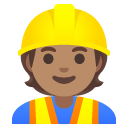


Appearance varies by platform and device. Google Noto, Twemoji, and OpenMoji are open-source.