🔨
The Emoji
Hammer
U+1F528 · :hammer:
Trend 52
Meaning layers
- interpretation
- Used to mean 'hammered' (drunk), 'going hard' at something, or emphasizing that someone absolutely destroyed or dominated a task. Also used ironically to mean hitting something repeatedly — like a point in an argument.
- tiktok usage
- Appears in POV videos about working hard, getting wasted, or absolutely destroying a challenge. Used in captions like 'me at 2am 🔨' to imply chaotic energy.
- irony level
- 6 / 10
Platform meanings
- meaning
- Represents hard work, getting hammered (drunk), or absolutely destroying a challenge. Used for DIY trends and work grind aesthetics.
- trend usage
- Appears in #DIYTok, cottage-core aesthetic videos, drunk storytimes, and 'I built this myself' flex content. Often paired with satisfying construction or craft videos.
- hashtags
- #DIYTok#HammerTime#NailedIt#BuildTok#CraftTok
- virality score
- 55 / 100
Cultural meanings
🇺🇸
Western / Gen-Z
Used to signal getting 'hammered' (drunk), absolutely dominating something, or as a mic-drop punctuation. Also big in DIY TikTok communities as a trade identity marker.
🇵🇰
Pakistan & India
Primarily used literally to represent construction, manual labor, and trades. Also used in political contexts to reference the Communist/socialist hammer symbol in South Asian political discourse.
🌍
Middle East
Associated with construction and building, hugely relevant given major infrastructure development in the region. Used in trade professional communities and family home-building contexts.
🌐
Global Neutral
Universally understood as a tool symbol representing construction, repair, and manual work. Carries no negative or controversial connotations in neutral international contexts.
🇧🇩
Bangladesh
Strongly associated with construction labor and the garment industry infrastructure. Used in contexts celebrating blue-collar work and the skilled trade workers who are central to the economy.
🇱🇰
Sri Lanka
Used to represent construction trades and artisan crafts. In political contexts, may reference the hammer-and-sickle symbolism in left-leaning political discourse.
🇨🇳
China
Carries ideological weight due to association with the Communist hammer-and-sickle symbol, though standalone use is mainly practical for construction and trades contexts on platforms like WeChat.
🇯🇵
Japan
Used in DIY culture (日曜大工, Sunday carpentry) and artisan crafting contexts. Associated with precision craftsmanship and the Japanese maker/DIY hobbyist community.
🇰🇷
South Korea
Popular in DIY content on KakaoTalk and Instagram, associated with the growing K-DIY trend. Also used in motivational content about 'building' success and hard work.
🇹🇼
Taiwan
Used primarily in construction and trades contexts. Also appears in Minecraft and gaming communities where building mechanics are central to gameplay.
🇭🇰
Hong Kong
Used in construction and trades contexts. Has gained some protest-related connotation due to its association with breaking and dismantling, used cautiously in political discourse.
🇵🇭
Philippines
Associated with OFW (Overseas Filipino Worker) construction workers and the skilled trades. A symbol of pride for hardworking laborers in the construction sector.
🇮🇩
Indonesia
Used in construction and home improvement contexts. Popular in Indonesian DIY Facebook groups and YouTube channels dedicated to home renovation and crafts.
🇹🇭
Thailand
Associated with construction and Songkran festival setup activities. Used in trade and crafts communities and increasingly in Thai DIY social media content.
🇻🇳
Vietnam
Represents construction and industrial work. Carries some political symbolism in relation to the Vietnamese Communist Party iconography but primarily used practically.
🇲🇾
Malaysia
Used in DIY and home improvement contexts popular on Malaysian social media. Associated with the skilled trades and construction boom in the country.
🇸🇦
Saudi Arabia
Primarily associated with the massive construction and infrastructure development ongoing in the Kingdom. Used by professionals in the giga-project sectors like NEOM.
🇦🇪
UAE
Strongly associated with the construction industry that defines Dubai and Abu Dhabi's global identity. Used by expat worker communities and construction industry professionals.
🇪🇬
Egypt
Associated with construction and ancient Egyptian architectural heritage in cultural contexts. Used in trades communities and DIY home improvement content popular on Egyptian social media.
🇹🇷
Turkey
Used in construction and home renovation contexts. Turkey's active construction sector makes this a commonly used emoji among trade professionals and homeowners.
🇮🇷
Iran
Primarily used in practical construction and repair contexts. Has some political symbolism awareness but is generally used neutrally in everyday DIY and trade conversations.
🇳🇬
Nigeria
Represents construction, trades, and the booming Nigerian real estate development sector. Used by Nollywood-adjacent content creators in 'building an empire' motivational contexts.
🇿🇦
South Africa
Used in home improvement and construction contexts. Associated with the popular Afrikaans DIY culture (selfdoen) and South African home building communities.
🇬🇧
UK & Ireland
Associated with DIY home improvement culture, a major British pastime. Referenced in 'DIY SOS' and British home renovation show culture, used affectionately by tradespeople.
🇫🇷
France
Used in artisan and craftsperson contexts. Associated with French carpentry (menuiserie) tradition and the 'bricolage' (DIY) culture that is deeply embedded in French domestic life.
🇩🇪
Germany
Strongly associated with German engineering precision and craftsmanship culture. Used by tradespeople (Handwerker) and in the serious DIY hobbyist community known for high standards.
🇪🇸
Spain & Italy
Associated with Mediterranean renovation and restoration culture. Used in the context of restoring old buildings, artisan crafts, and the beloved Italian and Spanish tradition of family home maintenance.
🇧🇷
Brazil
Used in construction contexts and the Brazilian DIY culture. Associated with 'gambiarra' (improvised fixes) culture and the popular Brazilian home improvement content creator community.
🇲🇽
Mexico
Associated with construction trades and the strong Mexican tradition of family home building. Used in contexts celebrating skilled craftspeople and the 'albañil' (mason/builder) profession.
🌎
Latin America
Generally associated with construction, trades, and home improvement across Latin America. Symbols of blue-collar pride and the essential workforce that builds the region's infrastructure.
🇦🇺
Australia & NZ
Central to the iconic Australian and Kiwi DIY culture and tradesperson identity. Used in 'tradie' communities and the beloved Australian tradition of weekend home improvement projects.
How its meaning shifted
- 2010
Used almost exclusively in its literal sense to represent hammers, construction, and manual labor. Primarily functional with no ironic or slang usage established yet.
- 2015
Began appearing in Minecraft-related discussions and gaming contexts. MC Hammer nostalgia references started emerging. Still predominantly literal in most platforms.
- 2020
DIY TikTok boom caused a significant surge in usage. 'Hammered' drunk slang use became more widespread. Home renovation content exploded during COVID lockdowns, making this emoji ubiquitous in domestic improvement contexts.
- 2026
Multi-layered meaning now firmly established — serves simultaneously as a literal tool reference, drunk/party slang, argument mic-drop symbol, and gaming crafting reference. Strong DIY creator economy identity marker.
See it on every platform
Compare with
Emoji combinations
Adjacent emojis
- Opposite
- broken heartseedlingpeace symbol
- Can replace
- wrenchtoolboxconstruction worker
Share & embed
Frequently asked
01What does the 🔨 Hammer emoji mean?
A hammer, a hand tool used for driving nails, breaking objects, or construction work. Depicted as a claw hammer or general-purpose hammer with a wooden or metal handle.
02What does 🔨 mean on TikTok?
Represents hard work, getting hammered (drunk), or absolutely destroying a challenge. Used for DIY trends and work grind aesthetics.
03What does 🔨 mean on WhatsApp?
Used to indicate fixing something, doing construction work, or being busy with manual tasks. 'Can't talk, at the house 🔨' is a common usage pattern.
04What does 🔨 mean in Gen-Z slang?
Used to mean 'hammered' (drunk), 'going hard' at something, or emphasizing that someone absolutely destroyed or dominated a task. Also used ironically to mean hitting something repeatedly — like a point in an argument.
05Is the 🔨 emoji safe to use?
Construction, DIY projects, manual labor, building, repair work, craftsmanship, home improvement, and trades professions.
06What does 🔨 mean in texting?
The hammer symbolizes decisive action and force of will. Psychologically associated with authority, problem-solving through direct action, and the satisfaction of physical accomplishment. Can also represent frustration when used repeatedly to emphasize a point.
07What is the shortcode for 🔨?
The shortcode for Hammer is :hammer:
08What does 🔨 mean in dating?
Rarely used flirtatiously, but can appear in DIY/handyperson contexts as a subtle flex — 'I can fix things around the house 🔨' as a low-key attractive quality signal.
Safety & usage
- Safe meaning
- Construction, DIY projects, manual labor, building, repair work, craftsmanship, home improvement, and trades professions.
- Caution
- Can be used to threaten violence in rare cases — 'I'll come at you with a 🔨' — or to imply aggressive physical intimidation. Extremely rare but possible in harassment contexts.
Generally very safe emoji with minimal misuse potential. The rare violent threat usage is context-dependent and usually requires explicit aggressive language to become concerning. No significant NSFW or hate-speech associations.
How it looks across platforms
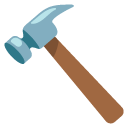


Appearance varies by platform and device. Google Noto, Twemoji, and OpenMoji are open-source.