👨🏾❤️👨🏽
The Emoji
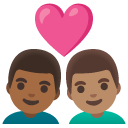
Couple With Heart: Man, Man, Medium-dark Skin Tone, Medium Skin Tone
U+1F468 U+1F3FE U+200D U+2764 U+FE0F U+200D U+1F468 U+1F3FD · :couple_with_heart_man_man_mediumdark_skin_tone_medium_skin_tone:
Trend 58
Meaning layers
- interpretation
- Used to celebrate gay male relationships, represent LGBTQ+ love, or show support for queer couples. Often posted proudly by gay men in relationships or by allies affirming queer love.
- tiktok usage
- Appears in LGBTQ+ couple content, Pride Month videos, queer relationship storytelling, and as a subtle signal of queer identity in bios and captions.
- irony level
- 1 / 10
Platform meanings
- meaning
- Represents gay male couples, LGBTQ+ love stories, and queer relationship content, especially highlighting interracial or mixed skin tone pairings.
- trend usage
- Featured in Pride Month trends, 'our love story' couple videos, LGBTQ+ coming out content, and 'put this in your bio if you support love' chain trends.
- hashtags
- #GayCouple#PrideMonth#LoveIsLove#QueerLove#LGBTQPride
- virality score
- 62 / 100
Cultural meanings
🇺🇸
Western / Gen-Z
Widely embraced and used naturally by LGBTQ+ Gen Z individuals and their allies in the US, Canada, and Western Europe as a normal, celebrated expression of gay love.
🇵🇰
Pakistan & India
Rarely used publicly due to social and legal stigma around same-sex relationships; more likely to appear in private LGBTQ+ support spaces or urban progressive circles.
🌍
Middle East
Largely avoided in public digital communication due to criminalization or severe social stigma around homosexuality in most Middle Eastern countries; used only in very private or anonymous contexts.
🌐
Global Neutral
Universally recognized as a symbol of same-sex male romantic love; its reception varies widely by cultural and legal context but its meaning is globally consistent.
🇧🇩
Bangladesh
Extremely rare in public use given strong social and religious taboos; may appear in private conversations among LGBTQ+ individuals or underground support communities.
🇱🇰
Sri Lanka
Seldom used publicly; same-sex relationships face social stigma, though urban youth and progressive communities may use it in private or online spaces.
🇨🇳
China
Used cautiously; LGBTQ+ visibility faces increasing censorship on Chinese platforms, but the emoji circulates in private chats and on VPN-accessible international platforms.
🇯🇵
Japan
Used within Japan's visible but culturally discreet LGBTQ+ community; more common in queer-identified social media spaces than in mainstream public posts.
🇰🇷
South Korea
Growing usage among younger LGBTQ+ South Koreans and K-pop fan communities who champion queer representation, though societal conservatism limits mainstream visibility.
🇹🇼
Taiwan
Freely and proudly used given Taiwan's status as the first Asian country to legalize same-sex marriage; represents celebrated love and LGBTQ+ rights progress.
🇭🇰
Hong Kong
Used within the active LGBTQ+ community in Hong Kong, particularly in digital spaces; faces some friction amid recent political and social shifts.
🇵🇭
Philippines
Mixed usage; the Philippines has a visible and expressive LGBTQ+ culture with open use in queer communities, but Catholic conservative values create public friction.
🇮🇩
Indonesia
Very rarely used publicly due to strong Islamic conservative norms and increasing anti-LGBTQ+ sentiment; confined to private or anonymous digital spaces.
🇹🇭
Thailand
Used openly within Thailand's famously visible LGBTQ+ community; commonly appears in social media, dating apps, and Pride-related content.
🇻🇳
Vietnam
Increasingly used as LGBTQ+ visibility grows among Vietnamese youth, particularly in urban areas like Ho Chi Minh City, though full legal recognition is absent.
🇲🇾
Malaysia
Rarely used publicly due to legal prohibitions on homosexuality and strong religious conservatism; circulates privately among LGBTQ+ individuals and allies.
🇸🇦
Saudi Arabia
Effectively absent from public digital use due to strict criminalization of homosexuality; any usage is confined to deeply private or anonymous contexts.
🇦🇪
UAE
Rarely used publicly given legal prohibitions; LGBTQ+ expatriate communities may use it in private digital spaces while avoiding public visibility.
🇪🇬
Egypt
Seldom used publicly due to social stigma and legal risks; private LGBTQ+ digital communities may use it in secure messaging environments.
🇹🇷
Turkey
Usage is growing in LGBTQ+ activist circles despite government crackdowns on Pride events; used as a digital resistance symbol by queer communities.
🇮🇷
Iran
Extremely rare in any digital context due to severe criminalization of homosexuality; its appearance would carry significant personal risk.
🇳🇬
Nigeria
Very rare in public use given criminalization of same-sex relationships and strong cultural stigma; LGBTQ+ Nigerians may use it in diaspora or private online spaces.
🇿🇦
South Africa
Used freely given South Africa's constitutionally protected LGBTQ+ rights and visible queer culture; common in Cape Town's prominent Pride community and online.
🇬🇧
UK & Ireland
Embraced openly as part of a culturally progressive acceptance of LGBTQ+ relationships; common in social media, dating profiles, and Pride content.
🇫🇷
France
Used naturally in LGBTQ+ French social media culture; France's tradition of civil liberties and same-sex civil unions creates an accepting context.
🇩🇪
Germany
Widely used in Germany's open LGBTQ+ culture; common in Berlin's internationally known queer scene and across progressive German social media.
🇪🇸
Spain & Italy
Openly used in Spain where same-sex marriage has been legal since 2005; slightly less common in Italy where LGBTQ+ rights progress has been slower but visibility is growing.
🇧🇷
Brazil
Frequently used in Brazil's enormous and vibrant LGBTQ+ community, home to the world's largest Pride parade; celebrated openly despite political tensions.
🇲🇽
Mexico
Increasingly used as same-sex marriage becomes legal across Mexican states; visible in LGBTQ+ digital culture particularly in Mexico City's progressive spaces.
🌎
Latin America
Usage varies widely across Latin America — more open in Argentina (which legalized same-sex marriage in 2010) and Uruguay, more restricted in conservative Central American nations.
🇦🇺
Australia & NZ
Freely and warmly used following marriage equality legislation in both countries; common in Pride content, LGBTQ+ community posts, and supportive ally communications.
How its meaning shifted
- 2010
This specific emoji did not exist in 2010; same-sex couples had no dedicated emoji representation, and users improvised with generic heart and male face combinations.
- 2015
Basic same-sex couple emojis began appearing but without skin tone diversity; this specific medium-dark and medium skin tone combination was not yet available.
- 2020
Skin tone combinations for couple emojis expanded significantly; this emoji became available and was adopted by LGBTQ+ individuals celebrating diverse queer representation.
- 2026
Normalized and widely used across LGBTQ+ digital culture; part of standard emoji vocabulary for gay couples, Pride content, and queer visibility advocacy globally.
See it on every platform
Adjacent emojis
- Often confused with
- handshakepeople huggingbusts in silhouette
- Can replace
- rainbow flagred heartmen holding hands
Share & embed
Frequently asked
01What does the 👨🏾❤️👨🏽 Couple With Heart: Man, Man, Medium-dark Skin Tone, Medium Skin Tone emoji mean?
A couple with heart featuring two men, one with medium-dark skin tone and one with medium skin tone, representing a same-sex male romantic couple with interracial or mixed skin tone representation.
02What does 👨🏾❤️👨🏽 mean on TikTok?
Represents gay male couples, LGBTQ+ love stories, and queer relationship content, especially highlighting interracial or mixed skin tone pairings.
03What does 👨🏾❤️👨🏽 mean on WhatsApp?
Signals a gay male relationship or affection between two male individuals of different skin tones; used in personal chats to express love or relationship status.
04What does 👨🏾❤️👨🏽 mean in Gen-Z slang?
Used to celebrate gay male relationships, represent LGBTQ+ love, or show support for queer couples. Often posted proudly by gay men in relationships or by allies affirming queer love.
05Is the 👨🏾❤️👨🏽 emoji safe to use?
A positive, loving representation of a gay male couple; used to celebrate LGBTQ+ relationships, express romantic love, and affirm queer visibility.
06What does 👨🏾❤️👨🏽 mean in texting?
Representation matters deeply — this emoji carries psychological weight for LGBTQ+ individuals who historically lacked inclusive visual language, providing a sense of validation and visibility.
07What is the shortcode for 👨🏾❤️👨🏽?
The shortcode for Couple With Heart: Man, Man, Medium-dark Skin Tone, Medium Skin Tone is :couple_with_heart_man_man_mediumdark_skin_tone_medium_skin_tone:
08What does 👨🏾❤️👨🏽 mean in dating?
Gay men may use this in flirty DMs or romantic exchanges to signal interest or to communicate that they are in or seeking a committed same-sex relationship.
Safety & usage
- Safe meaning
- A positive, loving representation of a gay male couple; used to celebrate LGBTQ+ relationships, express romantic love, and affirm queer visibility.
- Caution
- In rare cases, weaponized by bad actors to mock, harass, or bait homophobic responses in comment sections or reply threads.
In regions where homosexuality is criminalized or severely stigmatized, visible use of this emoji in public digital spaces could expose individuals to social or legal risk. Platforms should be aware of regional context when moderating content using this emoji.
How it looks across platforms
Appearance varies by platform and device. Google Noto, Twemoji, and OpenMoji are open-source.