👨🏽❤️👨🏿
The Emoji
Couple With Heart: Man, Man, Medium Skin Tone, Dark Skin Tone
U+1F468 U+1F3FD U+200D U+2764 U+FE0F U+200D U+1F468 U+1F3FF · :couple_with_heart_man_man_medium_skin_tone_dark_skin_tone:
Trend 58
Meaning layers
- interpretation
- Used to celebrate queer male love, interracial couples, and visible LGBTQ+ representation. Gen Z uses it as a pride statement, allyship signal, or genuine expression of love between two men of different backgrounds.
- tiktok usage
- Appears in pride content, interracial couple reveals, LGBTQ+ storytime videos, and 'soft life' couple aesthetic posts. Often paired with coming out or relationship milestone videos.
- irony level
- 1 / 10
Platform meanings
- meaning
- Symbol of gay interracial love and LGBTQ+ visibility, used in couple content, coming-out videos, and Pride celebrations.
- trend usage
- Paired with trending sounds about love and identity; frequently in 'meet my boyfriend' videos and Pride Month compilations.
- hashtags
- #GayCouple#QueerLove#InterracialCouple#PrideMonth#LGBTQRepresentation
- virality score
- 62 / 100
Cultural meanings
🇺🇸
Western / Gen-Z
Widely embraced as a positive symbol of queer visibility and interracial love; Gen Z actively uses it to normalize same-sex relationships and signal allyship or personal identity across social media.
🇵🇰
Pakistan & India
Highly sensitive due to social stigma around homosexuality and legal ambiguities; rarely used openly and if seen is typically in private LGBTQ+ communities or by diaspora users, where it carries weight as a symbol of identity assertion against cultural norms.
🌍
Middle East
In most Middle Eastern countries homosexuality is criminalized or heavily stigmatized, so this emoji is essentially unusable in public discourse; its appearance online may attract hostility or be viewed as provocative Western influence.
🌐
Global Neutral
Internationally recognized as a same-sex male couple symbol representing love and diversity; broadly understood even if not universally accepted.
🇧🇩
Bangladesh
Similar to Pakistan and India, same-sex relationships are illegal and heavily stigmatized; the emoji would be used only in very private contexts or by activists and is not part of mainstream digital culture.
🇱🇰
Sri Lanka
Same-sex relations remain criminalized though enforcement is inconsistent; this emoji is rarely used publicly, though urban youth and diaspora communities may use it in private LGBTQ+ spaces.
🇨🇳
China
While homosexuality is not criminalized, LGBTQ+ content is heavily censored on Chinese platforms; this emoji may be filtered or flagged on domestic apps like WeChat, though it is used cautiously in private chats among the LGBTQ+ community.
🇯🇵
Japan
Japan has a vibrant but still somewhat closeted LGBTQ+ culture; this emoji is used in pride contexts and by younger generations but same-sex marriage remains legally unrecognized, giving the emoji a layered meaning of hope and advocacy alongside love.
🇰🇷
South Korea
Used within LGBTQ+ spaces and by younger allies, particularly around Seoul Pride events, but faces significant social conservatism; the emoji is a visible act of identity expression in a culture where coming out still carries real risk.
🇹🇼
Taiwan
Taiwan's status as the first Asian country to legalize same-sex marriage makes this emoji a joyful and freely used symbol of love and pride, widely accepted and celebrated particularly among younger Taiwanese.
🇭🇰
Hong Kong
Used within Hong Kong's visible LGBTQ+ community and ally spaces, though political pressures in recent years have somewhat dampened public pride expression; it remains a symbol of resistance and love.
🇵🇭
Philippines
The Philippines has a relatively visible and celebrated gay culture but lacks legal protections; this emoji is used warmly and openly by the LGBTQ+ community, often with humor and affection, though family and religious conservatism create complexity.
🇮🇩
Indonesia
In Indonesia, particularly in Aceh where sharia law applies, homosexuality can be criminalized; this emoji is deeply sensitive and would only be used in private LGBTQ+ circles, with its visibility online carrying real personal risk.
🇹🇭
Thailand
Thailand's famously inclusive culture toward gender diversity and the kathoey community means this emoji is relatively well received; same-sex marriage recognition is progressing, and the emoji is used openly especially in urban youth spaces.
🇻🇳
Vietnam
Vietnam decriminalized homosexuality and has a growing LGBTQ+ visibility movement; this emoji is used in urban LGBTQ+ communities with increasing openness, though family acceptance and legal recognition remain ongoing challenges.
🇲🇾
Malaysia
Malaysia's combination of civil and sharia law makes this emoji extremely sensitive; public display of same-sex affection is legally punishable in some contexts, so the emoji is confined to private LGBTQ+ networks and diaspora spaces.
🇸🇦
Saudi Arabia
Homosexuality is illegal and can carry severe penalties in Saudi Arabia; this emoji would never appear in public digital discourse and its use even privately carries significant personal risk.
🇦🇪
UAE
Similar to Saudi Arabia, homosexuality is criminalized in the UAE; the emoji is not publicly usable and would be seen as provocative or illegal if circulated openly.
🇪🇬
Egypt
While not explicitly criminalized under a single law, LGBTQ+ individuals face persecution under morality laws in Egypt; this emoji is used only covertly and is associated with significant social and legal danger.
🇹🇷
Turkey
Turkey has become increasingly hostile to LGBTQ+ visibility with Istanbul Pride banned since 2015; this emoji carries activist connotations and is used defiantly by LGBTQ+ Turks and allies despite government crackdowns.
🇮🇷
Iran
Homosexuality is criminalized and can be punishable by death in Iran; this emoji carries extreme risk if used publicly and represents a powerful if dangerous statement of identity within underground LGBTQ+ communities.
🇳🇬
Nigeria
Same-sex relationships are criminalized with severe penalties in Nigeria; the emoji is virtually absent from mainstream digital culture and its use is confined to hidden LGBTQ+ networks and diaspora communities.
🇿🇦
South Africa
South Africa is constitutionally the most LGBTQ+-affirming country on the African continent with same-sex marriage legal since 2006; this emoji is used openly and positively especially in urban spaces, though rural areas retain significant homophobia.
🇬🇧
UK & Ireland
Widely used and positively received in the UK and Ireland where same-sex marriage is legal and LGBTQ+ visibility is high; the emoji appears freely in everyday digital communication as a symbol of love, pride, and inclusivity.
🇫🇷
France
France has legal same-sex marriage and a strong tradition of personal liberty; this emoji is used openly in romantic, celebratory, and activist contexts, and is generally seen as a normal expression of love.
🇩🇪
Germany
Germany legalized same-sex marriage in 2017 and has a strong LGBTQ+ culture particularly in cities like Berlin; this emoji is embraced across digital platforms as a symbol of love, diversity, and progressive values.
🇪🇸
Spain & Italy
Spain has had same-sex marriage since 2005 and uses this emoji openly and warmly; Italy only recently passed civil union legislation and lacks same-sex marriage, giving the emoji both celebratory and aspirational political tones there.
🇧🇷
Brazil
Brazil has legal same-sex marriage and a famously vibrant LGBTQ+ culture, especially during São Paulo Pride which is one of the world's largest; this emoji is used joyfully and prolifically though far-right political currents add a layer of resilience to its use.
🇲🇽
Mexico
Same-sex marriage is progressively being legalized across Mexican states; this emoji is used openly in urban LGBTQ+ communities and ally spaces, carrying both celebratory and advocacy meanings as the legal landscape evolves.
🌎
Latin America
Across Latin America the emoji's reception varies widely by country and urban vs. rural context; in countries with legal protections it signals love and pride, while in more conservative regions it carries activist connotations and personal risk.
🇦🇺
Australia & NZ
Both Australia and New Zealand have legalized same-sex marriage and have strong LGBTQ+ advocacy cultures; this emoji is used freely and positively in everyday digital communication as an affirmation of love, diversity, and inclusion.
How its meaning shifted
- 2010
This specific emoji did not exist in 2010; same-sex couple emojis were not yet part of Unicode and LGBTQ+ representation in emoji was entirely absent, with users resorting to text-based expressions like ':heart: :two men:' workarounds.
- 2015
Couple with heart emoji variants began appearing but skin tone modifiers and same-sex specific combinations were still limited; the general same-sex couple emoji was celebrated as a landmark in LGBTQ+ representation following advocacy efforts.
- 2020
By 2020 this emoji was available and gained significant traction during a surge in social justice and representation discourse; it was widely shared during Pride Month and in the context of the Black Lives Matter movement, giving the interracial combination particular resonance.
- 2026
By 2026 this emoji is a normalized part of LGBTQ+ digital expression, used casually by couples and allies alike, with its interracial combination increasingly valued as intersectional representation within broader diversity conversations on all major platforms.
See it on every platform
Adjacent emojis
Share & embed
Frequently asked
01What does the 👨🏽❤️👨🏿 Couple With Heart: Man, Man, Medium Skin Tone, Dark Skin Tone emoji mean?
A couple with heart featuring two men, one with medium skin tone and one with dark skin tone, joined by a red heart symbol representing love and romantic partnership between same-sex male partners of different skin tones.
02What does 👨🏽❤️👨🏿 mean on TikTok?
Symbol of gay interracial love and LGBTQ+ visibility, used in couple content, coming-out videos, and Pride celebrations.
03What does 👨🏽❤️👨🏿 mean on WhatsApp?
Sent between gay male partners of different skin tones to express love and togetherness; also used by allies celebrating LGBTQ+ relationships.
04What does 👨🏽❤️👨🏿 mean in Gen-Z slang?
Used to celebrate queer male love, interracial couples, and visible LGBTQ+ representation. Gen Z uses it as a pride statement, allyship signal, or genuine expression of love between two men of different backgrounds.
05Is the 👨🏽❤️👨🏿 emoji safe to use?
A loving symbol representing a same-sex male interracial couple; used to express love, celebrate LGBTQ+ identity, signal allyship, and advocate for queer visibility and rights.
06What does 👨🏽❤️👨🏿 mean in texting?
This emoji carries deep emotional weight for those who have historically lacked representation. Seeing one's identity reflected in a widely-used symbol fosters a sense of validation, belonging, and social acceptance, which is psychologically significant for marginalized communities.
07What is the shortcode for 👨🏽❤️👨🏿?
The shortcode for Couple With Heart: Man, Man, Medium Skin Tone, Dark Skin Tone is :couple_with_heart_man_man_medium_skin_tone_dark_skin_tone:
08What does 👨🏽❤️👨🏿 mean in dating?
Used by gay or bisexual men to signal romantic interest or availability to other men, especially men of different ethnicities. Signals openness to interracial dating within the queer community.
Safety & usage
- Safe meaning
- A loving symbol representing a same-sex male interracial couple; used to express love, celebrate LGBTQ+ identity, signal allyship, and advocate for queer visibility and rights.
- Caution
- In rare cases weaponized by bad actors to harass or bait conservative users, or used mockingly in homophobic contexts to demean same-sex relationships.
This emoji can expose users to targeted harassment in homophobic or legally hostile environments. In countries where homosexuality is criminalized, its use in public-facing digital spaces may carry real legal and personal safety risks. Platforms should be mindful of context-sensitive content policies when this emoji appears.
How it looks across platforms
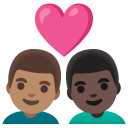
Appearance varies by platform and device. Google Noto, Twemoji, and OpenMoji are open-source.