HomeEmojis👩🏿❤️👩🏾 Couple With Heart: Woman, Woman, Dark Skin Tone, Medium-dark Skin ToneField Guide
👩🏿❤️👩🏾
The Emoji
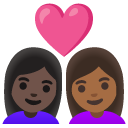
Couple With Heart: Woman, Woman, Dark Skin Tone, Medium-dark Skin Tone
U+1F469 U+1F3FF U+200D U+2764 U+FE0F U+200D U+1F469 U+1F3FE · :couple_with_heart_woman_woman_dark_skin_tone_mediumdark_skin_tone:
Trend 65
Meaning layers
- interpretation
- Used to celebrate WLW (women loving women) relationships, sapphic love, and queer female partnerships. Often used to signal pride in same-sex relationships or to support LGBTQ+ visibility, especially with melanin representation.
- tiktok usage
- Appears in WLW relationship content, sapphic couple TikToks, pride videos, and 'soft life' aesthetic content featuring Black and brown queer women.
- irony level
- 1 / 10
Platform meanings
- meaning
- Signals WLW identity, sapphic couple content, and queer Black/brown female representation in short-form video.
- trend usage
- Used in couple reveal videos, pride month challenges, 'day in the life' content for queer women of color, and melanin-centered relationship content.
- hashtags
- #WLW#SapphicCouple#BlackQueerLove#RepresentationMatters#PrideMonth
- virality score
- 72 / 100
Cultural meanings
🇺🇸
Western / Gen-Z
Widely embraced as a positive symbol of WLW love and queer representation, especially celebrated for its skin tone diversity; frequently used in progressive online spaces without hesitation.
🇵🇰
Pakistan & India
Largely taboo due to conservative social norms and legal frameworks around same-sex relationships; may be used privately by LGBTQ+ individuals in urban digital spaces but is rarely shared openly.
🌍
Middle East
Generally avoided or considered offensive in most Middle Eastern contexts due to prevailing cultural and religious opposition to same-sex relationships; used only within very private or diaspora digital communities.
🌐
Global Neutral
Universally understood as representing a same-sex female couple with diverse skin tones; perceived positively in LGBTQ+-affirming contexts globally and neutrally in educational or representation discussions.
🇧🇩
Bangladesh
Rarely used openly due to significant social and legal stigma around same-sex relationships; may appear in the feeds of LGBTQ+ Bangladeshis living abroad or in very private digital circles.
🇱🇰
Sri Lanka
Similar to other South Asian contexts, mostly avoided publicly; some use within urban, educated, or diaspora communities who engage with international LGBTQ+ discourse online.
🇨🇳
China
Usage is limited and often censored on domestic platforms like WeChat and Weibo due to government restrictions on LGBTQ+ content; may circulate on VPN-accessed international platforms among Chinese queer communities.
🇯🇵
Japan
Used by the yuri (girls' love) fandom community and LGBTQ+ Japanese users; Japan has a relatively accepting pop culture approach to WLW aesthetics, though legal same-sex marriage recognition remains pending.
🇰🇷
South Korea
Used within the Korean LGBTQ+ community and among progressive youth, but largely avoided in mainstream digital communication due to social conservatism; gains visibility during Pride events.
🇹🇼
Taiwan
Positively received given Taiwan's status as the first Asian country to legalize same-sex marriage; used openly and celebratorily in Taiwanese digital culture.
🇭🇰
Hong Kong
Used within Hong Kong's active LGBTQ+ community, particularly in the context of Pride events and advocacy; less openly used following recent social and political changes.
🇵🇭
Philippines
Used by the vibrant Filipino LGBTQ+ community, particularly within WLW and bakla digital spaces; the Philippines has a culturally complex but often visible queer community.
🇮🇩
Indonesia
Largely avoided in mainstream digital communication due to strong social and religious opposition to LGBTQ+ relationships; used privately by Indonesian LGBTQ+ individuals online.
🇹🇭
Thailand
Used comfortably by Thailand's visible LGBTQ+ community, especially within the tom-dee (Thai lesbian) culture; Thailand has a relatively open pop cultural approach to female same-sex relationships.
🇻🇳
Vietnam
Has increasing use among Vietnamese LGBTQ+ youth online, particularly after Vietnam's evolving stance on same-sex relationships; still largely absent from mainstream digital communication.
🇲🇾
Malaysia
Rarely used openly due to legal and religious restrictions on same-sex relationships; circulates privately within Malaysian LGBTQ+ digital communities.
🇸🇦
Saudi Arabia
Effectively absent from mainstream digital use due to strict legal and religious prohibitions on same-sex relationships; only seen in the most private or encrypted digital communications.
🇦🇪
UAE
Similar to Saudi Arabia, avoided in public digital spaces; the skin tone diversity adds a layer of complexity given the multicultural demographic of the UAE's queer diaspora community.
🇪🇬
Egypt
Very rarely used openly given Egypt's legal and social hostility toward LGBTQ+ relationships; may appear in the digital spaces of Egyptian queer diaspora communities abroad.
🇹🇷
Turkey
Used within Turkey's LGBTQ+ community, particularly in Istanbul-centered queer digital spaces, though public visibility has decreased in recent years due to Pride bans and increasing social pressure.
🇮🇷
Iran
Essentially absent from open digital use given Iran's severe legal penalties for same-sex relationships; may appear in communications of Iranian LGBTQ+ diaspora communities internationally.
🇳🇬
Nigeria
Rarely used openly given Nigeria's strong legal and social opposition to same-sex relationships; however, the emoji carries added significance for Black queer diaspora Nigerians in Western countries who use it proudly.
🇿🇦
South Africa
Used positively and openly, reflecting South Africa's constitutional protections for LGBTQ+ rights and the country's active queer community, particularly in urban centers like Cape Town and Johannesburg.
🇬🇧
UK & Ireland
Widely and positively used in LGBTQ+ affirming contexts; particularly meaningful in Black British and Irish queer communities who celebrate the specific skin tone representation.
🇫🇷
France
Used within French LGBTQ+ spaces and among progressive communities; the skin tone representation resonates with Afro-French queer communities who have advocated for greater intersectional visibility.
🇩🇪
Germany
Embraced in Germany's organized and visible LGBTQ+ community; Germany's generally progressive stance on LGBTQ+ rights means this emoji is used openly and positively.
🇪🇸
Spain & Italy
Used in Spain's vibrant LGBTQ+ scene without reservation; in Italy, more commonly seen in urban progressive circles and LGBTQ+ advocacy spaces.
🇧🇷
Brazil
Enthusiastically used in Brazil's massive and culturally prominent LGBTQ+ community; the skin tone diversity is particularly resonant given Brazil's multiracial population and active Afro-Brazilian queer community.
🇲🇽
Mexico
Used within Mexico's growing LGBTQ+ visibility movement and among urban progressive youth; carries special meaning for Afro-Mexican and mestiza queer women.
🌎
Latin America
Generally used positively within LGBTQ+ communities across Latin America, where queer visibility is growing; the skin tone representation is especially meaningful given the region's diverse racial demographics.
🇦🇺
Australia & NZ
Widely and positively used in Australia and New Zealand's progressive LGBTQ+ communities; particularly resonant for Aboriginal, Māori, and Pacific Islander queer women who see their skin tones represented.
How its meaning shifted
- 2010
This specific emoji did not exist in 2010; general couple emojis were limited to a single default yellow/ambiguous skin tone, and same-sex couple emojis with skin tone modifiers were not yet available.
- 2015
Basic same-sex couple emojis began to be introduced, but multi-skin-tone combinations for same-sex couples were not yet available; LGBTQ+ digital communities began advocating for greater representation.
- 2020
Skin tone combination emojis for same-sex couples were introduced as part of Unicode's diversity push; initial adoption was strong in LGBTQ+ communities, particularly among Black and brown queer women who felt seen.
- 2026
Widely adopted and normalized across LGBTQ+ digital spaces globally; increasingly visible in mainstream media representation discussions, Pride content, and intersectional advocacy around race and queer identity.
See it on every platform
Compare with
Adjacent emojis
- Often confused with
- two women holding handspeople hugginghandshake
- Can replace
- red heartrainbow flagsparkling heart
Share & embed
Frequently asked
01What does the 👩🏿❤️👩🏾 Couple With Heart: Woman, Woman, Dark Skin Tone, Medium-dark Skin Tone emoji mean?
A couple with a heart between two women, with the left woman having a dark skin tone and the right woman having a medium-dark skin tone, representing a romantic relationship between two women of these specific skin tones.
02What does 👩🏿❤️👩🏾 mean on TikTok?
Signals WLW identity, sapphic couple content, and queer Black/brown female representation in short-form video.
03What does 👩🏿❤️👩🏾 mean on WhatsApp?
Represents a same-sex female couple or is used to talk about a WLW relationship in private chats.
04What does 👩🏿❤️👩🏾 mean in Gen-Z slang?
Used to celebrate WLW (women loving women) relationships, sapphic love, and queer female partnerships. Often used to signal pride in same-sex relationships or to support LGBTQ+ visibility, especially with melanin representation.
05Is the 👩🏿❤️👩🏾 emoji safe to use?
Represents love, commitment, and partnership between two women of specific skin tones; a positive symbol of LGBTQ+ identity and intersectional representation.
06What does 👩🏿❤️👩🏾 mean in texting?
Carries deep emotional weight for Black and brown queer women who have historically been underrepresented in both mainstream and LGBTQ+ media. Seeing one's specific identity reflected in an emoji can reinforce a powerful sense of visibility and validation.
07What is the shortcode for 👩🏿❤️👩🏾?
The shortcode for Couple With Heart: Woman, Woman, Dark Skin Tone, Medium-dark Skin Tone is :couple_with_heart_woman_woman_dark_skin_tone_mediumdark_skin_tone:
08What does 👩🏿❤️👩🏾 mean in dating?
Used by WLW individuals to signal romantic interest, often placed in bios or DMs to indicate one is in or seeking a same-sex relationship. Acts as a subtle 'I'm queer and taken/looking' signal.
Safety & usage
- Safe meaning
- Represents love, commitment, and partnership between two women of specific skin tones; a positive symbol of LGBTQ+ identity and intersectional representation.
- Caution
- In hostile contexts, this emoji may be used to mock, harass, or provoke anti-LGBTQ+ sentiment; occasionally weaponized in hate speech or trolling directed at queer women of color.
Context-dependent: completely safe and celebratory in LGBTQ+-affirming spaces; potentially sensitive or dangerous in regions or communities with strong anti-LGBTQ+ legal or social environments. Visibility in certain cultural contexts may expose LGBTQ+ individuals to risk.
How it looks across platforms
Appearance varies by platform and device. Google Noto, Twemoji, and OpenMoji are open-source.