👩🏿❤️👩🏽
The Emoji
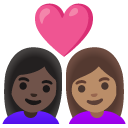
Couple With Heart: Woman, Woman, Dark Skin Tone, Medium Skin Tone
U+1F469 U+1F3FF U+200D U+2764 U+FE0F U+200D U+1F469 U+1F3FD · :couple_with_heart_woman_woman_dark_skin_tone_medium_skin_tone:
Trend 68
Meaning layers
- interpretation
- Used to celebrate WLW (women loving women) relationships, sapphic love, and interracial queer couples. Represents pride, representation, and unapologetic love.
- tiktok usage
- Appears in WLW relationship videos, pride content, 'soft girl summer' posts, and sapphic couple duets. Often paired with rainbow flags or pride month content.
- irony level
- 1 / 10
Platform meanings
- meaning
- Symbol of WLW love and sapphic couple content, often in relationship milestone videos and pride celebrations
- trend usage
- Used in 'meet my girlfriend' videos, WLW couple transitions, pride month TikToks, and interracial couple appreciation posts
- hashtags
- #WLW#SapphicCouple#QueerLove#PrideMonth#WomenWhoLoveWomen
- virality score
- 72 / 100
Cultural meanings
🇺🇸
Western / Gen-Z
A widely recognized and celebrated symbol of WLW love and queer interracial relationships, used proudly in bios, posts, and everyday messaging to signal queer identity and pride.
🇵🇰
Pakistan & India
Largely taboo in mainstream usage due to criminalization or social stigma around same-sex relationships; primarily used within underground LGBTQ+ communities and urban queer activist circles online.
🌍
Middle East
Generally not used in public social media due to strict cultural and legal prohibitions on same-sex relationships; confined to private queer networks and diaspora communities abroad.
🌐
Global Neutral
Universally understood as representing a same-sex female romantic couple with diverse skin tones, though reception varies dramatically based on local LGBTQ+ rights and cultural attitudes.
🇧🇩
Bangladesh
Rarely used publicly due to social and legal stigma; same-sex relationships are criminalized, so usage is restricted to private or diaspora queer digital spaces.
🇱🇰
Sri Lanka
Cautiously used within small urban LGBTQ+ communities; same-sex relationships face social stigma, though young Sri Lankan activists increasingly use it online for visibility.
🇨🇳
China
Used in niche LGBTQ+ WeChat and Weibo groups, though often censored on mainstream Chinese platforms; queer Chinese youth use it carefully in private communications.
🇯🇵
Japan
Understood in the context of yuri (women loving women) culture and LGBTQ+ communities; increasingly visible in Tokyo Pride circles and among younger Japanese queer individuals.
🇰🇷
South Korea
Used within Korea's growing but stigmatized LGBTQ+ community, particularly among younger queers on Twitter/X and in Seoul's Itaewon queer district communities.
🇹🇼
Taiwan
Celebrated and widely used, as Taiwan is Asia's most LGBTQ+-friendly country with legal same-sex marriage; commonly seen in Taiwanese queer couple posts and pride events.
🇭🇰
Hong Kong
Used among LGBTQ+ communities and activists, increasingly significant after political changes; serves as both a personal expression and a subtle form of resistance for queer Hong Kongers.
🇵🇭
Philippines
Used openly in urban LGBTQ+ Filipino communities and among younger Filipinos; the Philippines has a vibrant but legally unprotected queer culture, making this emoji a visible pride symbol.
🇮🇩
Indonesia
Rarely used publicly due to conservative Islamic social norms and growing anti-LGBTQ+ sentiment; restricted to private queer networks and diaspora communities online.
🇹🇭
Thailand
Used openly in Thailand's vibrant LGBTQ+ scene, particularly in Bangkok; tom-dee (butch-femme) culture and pride events make this emoji commonly recognized and celebrated.
🇻🇳
Vietnam
Increasingly used among young Vietnamese LGBTQ+ individuals in Hanoi and Ho Chi Minh City, though public displays remain cautious; Vietnam has a growing but legally ambiguous queer space.
🇲🇾
Malaysia
Rarely used publicly due to criminalization of same-sex relationships under both civil and Sharia law; primarily used in private queer Malaysian networks and diaspora communities.
🇸🇦
Saudi Arabia
Not used publicly due to strict criminalization of same-sex relationships; any usage is confined to anonymous or private accounts with significant personal risk to users.
🇦🇪
UAE
Same-sex relationships are criminalized; this emoji is avoided in public digital spaces and only circulates in private queer networks or among diaspora communities living abroad.
🇪🇬
Egypt
Not publicly used due to social and legal hostility toward LGBTQ+ individuals; Egyptian queer communities use it privately or in diaspora digital spaces for connection and solidarity.
🇹🇷
Turkey
Used within Turkey's active but increasingly pressured LGBTQ+ community, especially on Twitter/X; Istanbul Pride has historically been large, giving this emoji cultural resonance despite government bans.
🇮🇷
Iran
Extremely rare in public use due to severe criminalization of same-sex relationships; used discreetly in anonymous queer Iranian online spaces and diaspora communities.
🇳🇬
Nigeria
Rarely used due to strong legal and cultural prohibitions on same-sex relationships; Nigerian LGBTQ+ diaspora communities abroad use it more freely as a symbol of pride and resistance.
🇿🇦
South Africa
Celebrated openly as South Africa constitutionally protects same-sex relationships and has a vibrant Pride culture; used widely in Cape Town and Johannesburg queer communities.
🇬🇧
UK & Ireland
Widely and positively used across the UK and Ireland's accepting LGBTQ+ cultures; common in couple bios, pride posts, and everyday queer communication especially among Gen Z.
🇫🇷
France
Used in France's culturally liberal LGBTQ+ spaces; Paris Marais district culture and Nuit des fiertés (Pride) celebrations make this emoji a recognized symbol of queer love.
🇩🇪
Germany
Embraced in Germany's strong LGBTQ+ community culture, particularly in Berlin's globally renowned queer scene; used freely and proudly in digital spaces by queer Germans.
🇪🇸
Spain & Italy
Widely used in Spain's highly accepting LGBTQ+ culture (especially Madrid and Barcelona); more cautiously used in Italy where LGBTQ+ rights lag behind, though youth adoption is growing.
🇧🇷
Brazil
Used enthusiastically in Brazil's enormous LGBTQ+ community — home to the world's largest Pride parade; WLW Brazilians use this emoji widely despite a polarized political climate.
🇲🇽
Mexico
Used in Mexico's growing LGBTQ+ urban communities, especially in Mexico City and Guadalajara; cultural machismo creates tension, but younger generations use this emoji proudly.
🌎
Latin America
Adoption varies across Latin America — widely used in progressive urban centers like Buenos Aires and Bogotá, more cautiously in conservative rural areas and countries with less legal protection.
🇦🇺
Australia & NZ
Widely celebrated and used in Australia and New Zealand's highly progressive LGBTQ+ cultures; commonly seen in couple bios, pride events, and everyday queer digital communication.
How its meaning shifted
- 2010
This specific emoji did not exist in 2010; skin tone modifiers and same-sex couple emojis were not yet part of Unicode, making LGBTQ+ and diverse representation in emoji entirely absent.
- 2015
Basic same-sex couple emojis began appearing with Unicode 6.0 updates, but skin tone variants for couple emojis were still limited; early adoption was met with both celebration and controversy.
- 2020
With expanded Unicode support for diverse skin tone combinations in couple emojis, this specific variant became available; it gained rapid adoption during heightened BLM and Pride Month convergence in 2020.
- 2026
Mainstream and normalized across progressive digital cultures globally; used casually by WLW couples of color to represent their relationships without needing explanation, with steady growth in visibility and acceptance.
See it on every platform
Adjacent emojis
- Often confused with
- two women holding handspeople huggingcouple with heart
- Can replace
- red heartrainbow flagrevolving hearts
Share & embed
Frequently asked
01What does the 👩🏿❤️👩🏽 Couple With Heart: Woman, Woman, Dark Skin Tone, Medium Skin Tone emoji mean?
A couple with a heart between two women, with the left woman having dark skin tone and the right woman having medium skin tone, representing a same-sex female romantic partnership with interracial representation.
02What does 👩🏿❤️👩🏽 mean on TikTok?
Symbol of WLW love and sapphic couple content, often in relationship milestone videos and pride celebrations
03What does 👩🏿❤️👩🏽 mean on WhatsApp?
Sent between partners to express love and affirmation of their relationship, often as a casual 'thinking of you' message
04What does 👩🏿❤️👩🏽 mean in Gen-Z slang?
Used to celebrate WLW (women loving women) relationships, sapphic love, and interracial queer couples. Represents pride, representation, and unapologetic love.
05Is the 👩🏿❤️👩🏽 emoji safe to use?
A positive, affirming representation of a same-sex female romantic couple with diverse skin tones, used to celebrate love, LGBTQ+ identity, and interracial relationships.
06What does 👩🏿❤️👩🏽 mean in texting?
This emoji carries significant emotional weight for queer women of color, providing representation and validation. Seeing oneself reflected in an emoji can reinforce identity affirmation and a sense of belonging in digital spaces.
07What is the shortcode for 👩🏿❤️👩🏽?
The shortcode for Couple With Heart: Woman, Woman, Dark Skin Tone, Medium Skin Tone is :couple_with_heart_woman_woman_dark_skin_tone_medium_skin_tone:
08What does 👩🏿❤️👩🏽 mean in dating?
Used by WLW individuals to signal romantic interest, express affection toward a partner, or indicate relationship status on dating profiles. A clear, confident signal of sapphic identity.
Safety & usage
- Safe meaning
- A positive, affirming representation of a same-sex female romantic couple with diverse skin tones, used to celebrate love, LGBTQ+ identity, and interracial relationships.
- Caution
- In rare hostile contexts, this emoji may be used mockingly or derogatorily by homophobic or racist individuals to demean queer interracial relationships, though this is uncommon.
Usage in regions with anti-LGBTQ+ laws can expose individuals to risk; users in such regions should exercise caution in public digital spaces. Not appropriate to use this emoji to mock or stereotype LGBTQ+ individuals.
How it looks across platforms
Appearance varies by platform and device. Google Noto, Twemoji, and OpenMoji are open-source.