HomeEmojis👩🏾❤️👩🏿 Couple With Heart: Woman, Woman, Medium-dark Skin Tone, Dark Skin ToneField Guide
👩🏾❤️👩🏿
The Emoji
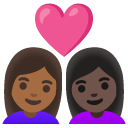
Couple With Heart: Woman, Woman, Medium-dark Skin Tone, Dark Skin Tone
U+1F469 U+1F3FE U+200D U+2764 U+FE0F U+200D U+1F469 U+1F3FF · :couple_with_heart_woman_woman_mediumdark_skin_tone_dark_skin_tone:
Trend 68
Meaning layers
- interpretation
- Used to celebrate WLW (women loving women) relationships, especially between women of color. A proud, unapologetic declaration of queer love and Black/Brown girl magic in relationships.
- tiktok usage
- Appears in WLW couple content, pride montages, and 'soft life' couple aesthetics. Frequently used in captions for Black and Brown queer couple videos.
- irony level
- 1 / 10
Platform meanings
- meaning
- Symbol of WLW couple content, queer women of color representation, and soft romantic aesthetics in videos.
- trend usage
- Used in 'day in our life' couple videos, pride month compilations, and 'WLW couples that give me hope' trend formats.
- hashtags
- #WLW#QueerWomenOfColor#BlackGirlLove#WLWcouple#PrideVibes
- virality score
- 72 / 100
Cultural meanings
🇺🇸
Western / Gen-Z
Widely recognized and celebrated as a symbol of queer WLW love between women of color. Actively used by the LGBTQ+ community and allies as a statement of visibility and pride.
🇵🇰
Pakistan & India
Rarely used publicly due to social and legal stigma around same-sex relationships. In underground queer communities and diaspora spaces, it may be used carefully among trusted friends.
🌍
Middle East
Largely avoided in public digital contexts due to legal prohibitions and strong social stigma against same-sex relationships. May exist in private queer spaces or among diaspora communities.
🌐
Global Neutral
Universally understood as representing romantic love between two women of color. Recognized as an LGBTQ+ symbol even in regions where it is not openly celebrated.
🇧🇩
Bangladesh
Not commonly used due to conservative social norms and legal restrictions on same-sex relationships. In diaspora and younger educated circles, awareness is growing but use remains discreet.
🇱🇰
Sri Lanka
Usage is very limited in mainstream contexts due to social conservatism. Small queer communities and diaspora users may use it in private or online safe spaces.
🇨🇳
China
Rarely used on mainland platforms due to censorship of LGBTQ+ content. Among younger Chinese queer users on international platforms, it's used with awareness and intentionality.
🇯🇵
Japan
Used within Japan's established queer community and yuri (WLW) fandom culture. More openly accepted online though public display of queer identity varies by social context.
🇰🇷
South Korea
Used in queer Korean communities and among K-pop fans who celebrate WLW relationships. Social stigma still limits mainstream use, but younger generations are more accepting.
🇹🇼
Taiwan
Relatively openly used given Taiwan's progressive stance on LGBTQ+ rights, including same-sex marriage legalization. Seen positively in youth and queer circles.
🇭🇰
Hong Kong
Used in queer activist and youth communities. Sensitivity has increased post-2020, but queer communities continue to use it in digital spaces as a form of resilience.
🇵🇭
Philippines
Used by the active Filipino queer community online. The Philippines has a relatively visible LGBTQ+ culture, and this emoji is recognized and used in WLW spaces.
🇮🇩
Indonesia
Largely avoided in mainstream public use due to religious and social conservatism. Small queer communities use it discreetly on international platforms.
🇹🇭
Thailand
Used within Thailand's visible queer and kathoey communities. Thai digital culture is relatively expressive, and WLW content exists, though societal acceptance varies.
🇻🇳
Vietnam
Limited public use due to conservative social norms, though Vietnam has no legal prohibition. Younger and urban queer Vietnamese may use it in private or international digital spaces.
🇲🇾
Malaysia
Very limited use due to legal and religious restrictions on same-sex relationships. Queer Malaysian diaspora and underground communities may use it carefully online.
🇸🇦
Saudi Arabia
Essentially unused in public digital contexts due to strict laws against same-sex relationships. Any use would be extremely discreet and limited to private encrypted communication.
🇦🇪
UAE
Rarely used publicly due to legal restrictions. Expat communities and international social media users may encounter it, but local public use is avoided.
🇪🇬
Egypt
Not used in mainstream public contexts due to social stigma and legal risk. Egyptian queer diaspora may use it on international platforms as an expression of identity.
🇹🇷
Turkey
Used within Turkey's queer activist community, especially online after Istanbul Pride restrictions. Represents resistance and solidarity for many Turkish LGBTQ+ users.
🇮🇷
Iran
Essentially absent from public use due to severe legal penalties. Iranian queer diaspora communities abroad use it as a symbol of identity and longing for freedom.
🇳🇬
Nigeria
Not used in mainstream Nigerian digital culture due to strict anti-LGBTQ+ laws and strong social stigma. Nigerian queer diaspora use it as a proud identity marker in safe spaces.
🇿🇦
South Africa
Used in South Africa's relatively progressive queer community, particularly among Black queer women. South Africa's legal protections for LGBTQ+ rights make it more openly used than in other African countries.
🇬🇧
UK & Ireland
Widely used and celebrated in LGBTQ+-affirming British and Irish digital culture. Particularly meaningful in spaces celebrating Black British and Irish WLW representation.
🇫🇷
France
Used openly in French queer communities and urban digital spaces. France's tradition of personal liberty makes this emoji relatively well-received in progressive circles.
🇩🇪
Germany
Used actively in Germany's established LGBTQ+ community and progressive social media spaces. Appreciated for its intersectional representation of race and sexual identity.
🇪🇸
Spain & Italy
Used in Spanish and Italian queer communities. Spain is generally more progressive in LGBTQ+ acceptance; Italy's queer community uses it in activist and celebration contexts.
🇧🇷
Brazil
Widely used in Brazil's large and vibrant LGBTQ+ community. Brazil has a strong culture of queer visibility and the emoji is celebrated in WLW and Black queer Brazilian spaces.
🇲🇽
Mexico
Used in Mexico's active queer community and LGBTQ+ activist circles. Increasingly visible in urban digital spaces, especially among younger generations and queer women of color.
🌎
Latin America
Used across Latin American queer communities, particularly among Afro-Latina WLW users. Visibility varies by country, with Argentina and Chile being more openly accepting.
🇦🇺
Australia & NZ
Widely recognized and used positively in Australia and New Zealand's inclusive queer communities. Particularly meaningful in Indigenous and Pacific Islander WLW spaces seeking representation.
How its meaning shifted
- 2010
This specific emoji combination did not exist in 2010. Skin tone modifiers and multi-person emoji sequences were not yet available; basic couple emojis were only beginning to emerge.
- 2015
Skin tone modifiers were introduced in Unicode 8.0 in 2015, but specific skin-tone combinations for couple emojis were not yet available. Basic same-sex couple emojis existed but without differentiated skin tones.
- 2020
By 2020, this emoji was available and being used in WLW and Black/Brown queer communities, gaining visibility during the intersecting waves of Pride Month and Black Lives Matter cultural moments.
- 2026
In 2026, this emoji is a normalized part of queer women of color's digital vocabulary, used confidently across platforms in dating profiles, relationship content, pride celebrations, and everyday affection between WLW couples.
See it on every platform
Adjacent emojis
- Often confused with
- two women holding handspeople huggingbusts in silhouette
- Can replace
- red heartrainbow flagtwo hearts
Share & embed
Frequently asked
01What does the 👩🏾❤️👩🏿 Couple With Heart: Woman, Woman, Medium-dark Skin Tone, Dark Skin Tone emoji mean?
A couple with a heart between two women, with the left woman having medium-dark skin tone and the right woman having dark skin tone, representing romantic love between two women of color.
02What does 👩🏾❤️👩🏿 mean on TikTok?
Symbol of WLW couple content, queer women of color representation, and soft romantic aesthetics in videos.
03What does 👩🏾❤️👩🏿 mean on WhatsApp?
Sent between WLW partners or close queer friends to express love and pride. Also used in group chats celebrating a friend's queer relationship.
04What does 👩🏾❤️👩🏿 mean in Gen-Z slang?
Used to celebrate WLW (women loving women) relationships, especially between women of color. A proud, unapologetic declaration of queer love and Black/Brown girl magic in relationships.
05Is the 👩🏾❤️👩🏿 emoji safe to use?
A heartfelt expression of romantic love between two women of color. Used to celebrate WLW relationships, LGBTQ+ pride, and representation of queer women of color.
06What does 👩🏾❤️👩🏿 mean in texting?
Carries deep emotional weight for users who rarely saw their identities represented in mainstream media. The specific skin tone combination signals intentional visibility and self-affirmation for queer women of color.
07What is the shortcode for 👩🏾❤️👩🏿?
The shortcode for Couple With Heart: Woman, Woman, Medium-dark Skin Tone, Dark Skin Tone is :couple_with_heart_woman_woman_mediumdark_skin_tone_dark_skin_tone:
08What does 👩🏾❤️👩🏿 mean in dating?
WLW women may use this in DMs or bios to signal romantic interest or availability within queer dating spaces, particularly on apps like HER or Bumble BFF.
Safety & usage
- Safe meaning
- A heartfelt expression of romantic love between two women of color. Used to celebrate WLW relationships, LGBTQ+ pride, and representation of queer women of color.
- Caution
- Rarely weaponized toxically, but may be used mockingly by homophobic users to demean or ridicule same-sex relationships in hostile online environments.
While the emoji itself is not harmful, using it in regions with anti-LGBTQ+ laws or deeply conservative social contexts could attract negative attention or even pose safety risks for users. Platform-specific hate speech and homophobia may be directed at content using this emoji.
How it looks across platforms
Appearance varies by platform and device. Google Noto, Twemoji, and OpenMoji are open-source.