🩼
The Emoji
Crutch
U+1FA7C · :crutch:
Trend 48
Meaning layers
- interpretation
- Used metaphorically to describe an emotional crutch, dependency, or something/someone you rely on too heavily — often in a self-aware or self-deprecating way.
- tiktok usage
- Appears in 'this is my emotional crutch' confession videos, toxic relationship commentary, and self-roast content about bad habits.
- irony level
- 6 / 10
Platform meanings
- meaning
- Represents emotional dependency, injury recovery content, disability awareness, or self-deprecating confessions about unhealthy coping habits.
- trend usage
- Used in 'POV: you are my emotional crutch' videos, chronic illness TikTok, physiotherapy journeys, and mental health confession trends.
- hashtags
- #emotionalcrutch#recoveringinjury#disabilityawareness#mentalhealth#chronicallyill
- virality score
- 52 / 100
Cultural meanings
🇺🇸
Western / Gen-Z
Widely used metaphorically to describe emotional crutches — whether a person, substance, or habit — with self-aware humor and irony. Frequently appears in mental health discourse and relationship content.
🇵🇰
Pakistan & India
Primarily literal — associated with injury, old age, or disability. Occasionally used in emotional conversations to describe over-reliance on family members, especially parents.
🌍
Middle East
Mostly literal, tied to physical injury or elderly care. Sometimes used in motivational contexts symbolizing resilience — 'I walked with a crutch but I kept walking.'
🌐
Global Neutral
Universally understood as a mobility aid symbol. Cross-culturally interpreted as injury, recovery, or disability with minimal metaphorical baggage outside English-speaking contexts.
🇧🇩
Bangladesh
Largely literal — used to communicate injury or physical limitation. Disability awareness is growing, and the emoji is occasionally used in advocacy contexts.
🇱🇰
Sri Lanka
Used straightforwardly for injury updates and medical conversations. Less common in metaphorical or meme-based usage due to lower emoji irony culture.
🇨🇳
China
Represents physical injury or surgery recovery. Used in health-related chats on WeChat; metaphorical 'emotional crutch' meaning is not widely adopted.
🇯🇵
Japan
Associated with injury and physical rehabilitation. The cultural concept of 'gaman' (enduring hardship) can be evoked — used in recovery posts with a tone of quiet perseverance.
🇰🇷
South Korea
Used in injury and medical contexts, but also appears in K-drama fan discourse when a character has an emotional dependency narrative. Gen Z uses it lightly for codependency jokes.
🇹🇼
Taiwan
Similar to broader Chinese-speaking usage — primarily literal. Younger users in Taiwanese internet culture occasionally adopt the emotional crutch metaphor from Western meme culture.
🇭🇰
Hong Kong
Blend of East and West interpretations — used literally for injury but also adopted in bilingual internet culture for emotional dependency jokes, especially among English-fluent youth.
🇵🇭
Philippines
Used in injury and health updates. The emotional crutch metaphor is understood among younger, English-fluent Filipinos who consume Western social media content heavily.
🇮🇩
Indonesia
Primarily a literal symbol for injury or disability. Used in health-related group chats and occasionally in disability awareness posts on Instagram.
🇹🇭
Thailand
Literal usage dominates — injury and recovery. Thai youth may use it in humorous contexts about being overly dependent on a partner or friend, influenced by global meme culture.
🇻🇳
Vietnam
Straightforward injury and disability representation. Limited metaphorical usage; primarily appears in health-focused Facebook and Zalo conversations.
🇲🇾
Malaysia
Used literally in most contexts. English-speaking Malaysian youth understand and sometimes use the emotional crutch metaphor in social media discussions.
🇸🇦
Saudi Arabia
Used in family group chats for injury updates and elder care conversations. Less common in metaphorical or ironic usage; disability sensitivity is growing in public discourse.
🇦🇪
UAE
Multicultural environment means both literal and metaphorical uses coexist. Expat communities may use it with Western irony while local usage stays primarily literal.
🇪🇬
Egypt
Literal usage tied to injury, surgery recovery, and elderly mobility. Occasionally used in motivational posts about overcoming hardship, symbolizing perseverance.
🇹🇷
Turkey
Primarily literal in everyday chats. Younger Turkish social media users influenced by Western platforms occasionally use it in emotional dependency meme content.
🇮🇷
Iran
Used for injury and recovery contexts. Disability representation is a growing conversation; the emoji is seen in advocacy posts on Instagram among Iranian activists.
🇳🇬
Nigeria
Literal injury and recovery usage is primary. In Afrobeats and pop culture spaces online, it can appear in humorous posts about people who are 'too dependent' on others.
🇿🇦
South Africa
Understood both literally and metaphorically. The emotional crutch meaning resonates in English-speaking South African social media, particularly in mental health conversations.
🇬🇧
UK & Ireland
Used with classic British dry humor — often sarcastically gifted to someone being overly dramatic about a minor complaint. Also used sincerely in disability and NHS recovery contexts.
🇫🇷
France
Primarily literal. French internet culture is less emoji-metaphor-driven; appears in injury and medical contexts more than emotional or ironic usage.
🇩🇪
Germany
Direct and literal usage in injury, medical, and accessibility conversations. Germans are less likely to use it ironically but may employ it in disability rights advocacy discussions.
🇪🇸
Spain & Italy
Used with Latin expressiveness — sent dramatically when someone is describing pain or injury. The emotional crutch metaphor is beginning to gain traction among younger users.
🇧🇷
Brazil
Brazilians use it both literally and with humor — 'ta precisando de uma muleta' (you need a crutch) as a funny jab at someone being overly dramatic or dependent.
🇲🇽
Mexico
Literal injury usage is standard. Mexican meme culture occasionally uses it humorously in 'emotional support' jokes, especially in relationship drama commentary.
🌎
Latin America
Broadly used for injury and physical recovery across Latin America. The metaphorical emotional crutch meaning is spreading among younger, globally connected users.
🇦🇺
Australia & NZ
Used both literally and with classic Australian blunt humor — sent to someone exaggerating an injury or as a sarcastic 'here you go' to someone being overly needy.
How its meaning shifted
- 2010
The crutch emoji did not yet exist; physical crutch concepts were conveyed through text descriptions or the older wheelchair symbol.
- 2015
Still pre-release; discussions about disability emoji representation were growing, leading to its eventual inclusion in Unicode.
- 2020
Newly introduced in 2019, usage was primarily literal — injury, surgery, and disability representation. The metaphorical 'emotional crutch' meaning was just beginning to emerge on social media.
- 2026
Widely recognized both literally and metaphorically. Firmly embedded in mental health discourse, Gen Z self-deprecation culture, and disability advocacy spaces across all major platforms.
See it on every platform
Compare with
Adjacent emojis
- Often confused with
- wheelchairadhesive bandageleg
- Can replace
- wheelchairbandagebroken heart
Share & embed
Frequently asked
01What does the 🩼 Crutch emoji mean?
A crutch — an assistive mobility device used to support a person with an injured or disabled leg, typically a T-shaped or forearm crutch.
02What does 🩼 mean on TikTok?
Represents emotional dependency, injury recovery content, disability awareness, or self-deprecating confessions about unhealthy coping habits.
03What does 🩼 mean on WhatsApp?
Sent when someone has an injury or surgery, or when jokingly calling out a friend's excessive reliance on something.
04What does 🩼 mean in Gen-Z slang?
Used metaphorically to describe an emotional crutch, dependency, or something/someone you rely on too heavily — often in a self-aware or self-deprecating way.
05Is the 🩼 emoji safe to use?
Represents physical injury recovery, disability, mobility aids, and emotional dependency in a neutral to positive context.
06What does 🩼 mean in texting?
Psychologically evokes both fragility and strength — a crutch implies needing support but also the will to keep moving forward. Often tied to conversations about codependency and coping mechanisms.
07What is the shortcode for 🩼?
The shortcode for Crutch is :crutch:
08What does 🩼 mean in dating?
Rarely used flirtatiously; occasionally sent after an injury with a cute 'save me 🩼' energy to invite care and attention from a crush.
Safety & usage
- Safe meaning
- Represents physical injury recovery, disability, mobility aids, and emotional dependency in a neutral to positive context.
- Caution
- Can be used mockingly toward disabled or injured individuals, or dismissively toward someone's mental health struggles — implying they are 'weak' for needing support.
Avoid using sarcastically in response to someone disclosing a genuine disability or mental health struggle. The 'emotional crutch' framing can sometimes invalidate real therapeutic support systems.
How it looks across platforms
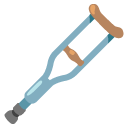


Appearance varies by platform and device. Google Noto, Twemoji, and OpenMoji are open-source.