🦻
The Emoji
Ear With Hearing Aid
U+1F9BB · :ear_with_hearing_aid:
Trend 45
Meaning layers
- interpretation
- Used to signal 'I'm listening' or 'say that again?' but also ironically to mean 'I heard everything and I have receipts.' Sometimes deployed when someone is eavesdropping on drama.
- tiktok usage
- Appears in comment sections when someone drops a hot take or tea, implying 'we're all ears.' Also used in disability advocacy content and hearing aid normalization trends.
- irony level
- 5 / 10
Platform meanings
- meaning
- Symbolizes being tuned in to drama, tea, or important information. Also central to HoH/deaf creator communities normalizing hearing aids.
- trend usage
- Used in deaf TikTok (#DeafTok) community, hearing aid unboxings, audiologist content, and sarcastic 'listening' comment replies on viral videos.
- hashtags
- #DeafTok#HearingAid#HardOfHearing#DeafCommunity#AccessibilityMatters
- virality score
- 52 / 100
Cultural meanings
🇺🇸
Western / Gen-Z
Gen Z in the West uses it both sincerely in disability advocacy content and ironically to say 'I'm listening to the drama' or 'heard that tea loud and clear.'
🇵🇰
Pakistan & India
Used primarily in medical and health contexts, disability awareness campaigns, and by audiologists. Gaining traction among younger users as disability normalization grows on social media.
🌍
Middle East
Mostly used in medical or healthcare contexts; also appears in disability charity posts and government accessibility campaign content across the region.
🌐
Global Neutral
Universally understood as representing hearing assistance and deaf/HoH identity, with growing use in accessibility advocacy worldwide.
🇧🇩
Bangladesh
Primarily recognized in medical contexts related to hearing health and used in NGO campaigns addressing hearing disabilities and audiological care access.
🇱🇰
Sri Lanka
Used in health awareness content and by disability organizations; hearing aid access is a growing topic and this emoji is emerging in related advocacy posts.
🇨🇳
China
Used in health content on WeChat and Weibo, particularly around disability awareness days and hearing health promotion by medical institutions.
🇯🇵
Japan
Appears in accessibility content and disability representation posts; Japan's strong culture of consideration for others gives this emoji a respectful, attentive connotation.
🇰🇷
South Korea
Used in K-health content, audiologist accounts, and by creators normalizing hearing aids as part of a broader destigmatization of visible medical devices.
🇹🇼
Taiwan
Featured in disability rights content, government accessibility announcements, and social media campaigns promoting hearing health awareness.
🇭🇰
Hong Kong
Used in healthcare posts, disability advocacy, and occasionally in ironic contexts among younger users to mean 'I heard that' in a witty sense.
🇵🇭
Philippines
Appears in OFW health content, medical missions for hearing health, and increasingly in social media by deaf Filipino creators building representation.
🇮🇩
Indonesia
Used in disability awareness content, Islamic charity posts about supporting those with hearing loss, and growing deaf-community social media presence.
🇹🇭
Thailand
Featured in health promotion content, government disability inclusion campaigns, and by Thai deaf influencers using social media to build community.
🇻🇳
Vietnam
Primarily used in medical and disability support contexts; hearing health awareness is growing in Vietnamese social media through NGO and government content.
🇲🇾
Malaysia
Used across disability communities, health content, and increasingly in normalization campaigns by Malaysian deaf influencers and audiologists on Instagram and TikTok.
🇸🇦
Saudi Arabia
Appears in government health initiative content, disability rights posts, and charitable campaigns supporting hearing-impaired individuals under Vision 2030 inclusivity goals.
🇦🇪
UAE
Used in inclusive workplace content, Dubai-based accessibility campaigns, and by international disability advocates operating in the UAE's diverse expat community.
🇪🇬
Egypt
Primarily seen in health awareness posts and disability charity content; there is growing use among Egyptian youth for ironic 'I'm listening' expressions online.
🇹🇷
Turkey
Used in health contexts and by disability advocacy organizations; younger Turkish users also adopt it ironically in social media conversations about eavesdropping.
🇮🇷
Iran
Appears mainly in medical and health content on Iranian social media, and in disability support communities on Telegram and Instagram.
🇳🇬
Nigeria
Used in health advocacy posts, NGO disability content, and increasingly by Nigerian deaf creators on TikTok building the #DeafNigeria community.
🇿🇦
South Africa
Featured in disability rights campaigns, sign language promotion content, and used by South African deaf creators to represent their community on digital platforms.
🇬🇧
UK & Ireland
Used extensively in disability pride content, NHS hearing health campaigns, and by British/Irish deaf creators building mainstream visibility on TikTok and Instagram.
🇫🇷
France
Appears in disability rights content, hearing health campaigns, and French deaf community posts; also occasionally ironic use meaning 'j'ai tout entendu' (I heard everything).
🇩🇪
Germany
Used in health communication, disability inclusion workplace posts, and German deaf community content with typically direct and informational framing.
🇪🇸
Spain & Italy
Featured in accessibility campaigns, Mediterranean hearing health content, and by deaf creators in both countries gaining social media followings with authentic storytelling.
🇧🇷
Brazil
Used by Brazilian deaf creators, LIBRAS (Brazilian Sign Language) advocates, and in health campaigns; also adopted humorously in meme culture to indicate eavesdropping.
🇲🇽
Mexico
Appears in disability awareness content, Mexican deaf community posts, and increasingly in youth meme culture to signal 'listening to the chisme (gossip).'
🌎
Latin America
Broadly used across Latin America in disability advocacy, hearing health campaigns, and meme culture around listening in on drama or gossip.
🇦🇺
Australia & NZ
Used in NDIS (disability support) related content, hearing health campaigns, and by Aussie/Kiwi deaf creators on TikTok promoting representation and accessibility.
How its meaning shifted
- 2010
Did not exist as a Unicode emoji. Hearing-related concepts were represented by the plain 👂 ear emoji without any disability-specific representation.
- 2015
Still not available. The deaf and hard-of-hearing community used combinations of 👂 and text, or 🔇, to represent hearing loss in digital communication.
- 2020
Newly introduced (Unicode 12.0, 2019), it saw early adoption primarily in deaf community spaces, audiologist accounts, and accessibility advocacy content on Instagram and Twitter.
- 2026
Widely recognized symbol for hearing health, deaf identity, and disability pride. Used across meme culture, ironic listening contexts, professional accessibility content, and mainstream disability normalization campaigns globally.
See it on every platform
Compare with
Adjacent emojis
- Often confused with
- earcall me handok hand
Share & embed
Frequently asked
01What does the 🦻 Ear With Hearing Aid emoji mean?
An ear with a hearing aid or assistive listening device attached, representing hearing impairment, deaf culture, and accessibility.
02What does 🦻 mean on TikTok?
Symbolizes being tuned in to drama, tea, or important information. Also central to HoH/deaf creator communities normalizing hearing aids.
03What does 🦻 mean on WhatsApp?
Sent to indicate 'I'm listening' or 'go on, tell me more' in a conversation. Also used by people with hearing loss to indicate their condition.
04What does 🦻 mean in Gen-Z slang?
Used to signal 'I'm listening' or 'say that again?' but also ironically to mean 'I heard everything and I have receipts.' Sometimes deployed when someone is eavesdropping on drama.
05Is the 🦻 emoji safe to use?
Represents hearing aids, deaf/hard-of-hearing identity, accessibility, active listening, and disability pride in an inclusive and positive way.
06What does 🦻 mean in texting?
This emoji carries dual psychological weight — it evokes genuine empathy and representation for the deaf and hard-of-hearing community, while also tapping into universal themes of active listening and being heard, which are core human emotional needs.
07What is the shortcode for 🦻?
The shortcode for Ear With Hearing Aid is :ear_with_hearing_aid:
08What does 🦻 mean in dating?
Rarely used flirtatiously, but can appear as 'I'm listening to every word you say' — a subtle sign of deep attention and interest in a crush.
Safety & usage
- Safe meaning
- Represents hearing aids, deaf/hard-of-hearing identity, accessibility, active listening, and disability pride in an inclusive and positive way.
- Caution
- Extremely rare toxic usage; could theoretically be used mockingly toward someone with hearing loss, but this is uncommon due to the emoji's strong association with disability advocacy.
No significant warning flags. Care should be taken not to use this emoji dismissively or sarcastically in conversations with deaf or hard-of-hearing individuals, as it may trivialize their disability. Otherwise considered safe and inclusive.
How it looks across platforms
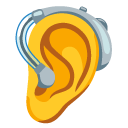


Appearance varies by platform and device. Google Noto, Twemoji, and OpenMoji are open-source.