🐑
The Emoji
Ewe
U+1F411 · :ewe:
Trend 48
Meaning layers
- interpretation
- Used to call someone a follower, conformist, or person who blindly goes along with trends — 'you're such a sheep.' Also used ironically for softness, cuteness, or admitting one's own basic/mainstream tastes.
- tiktok usage
- Appears in 'sheep behavior' videos where someone admits doing something painfully mainstream, or calling out crowd mentality. Also used in soft aesthetic content.
- irony level
- 7 / 10
Platform meanings
- meaning
- Represents conformity, trend-following, or soft/cottagecore aesthetics. Used to call out herd behavior or celebrate cozy simple life.
- trend usage
- Appears in 'exposing sheep behavior' trends, cottagecore aesthetic videos, sleep content (counting sheep), and ironic commentary on viral trends.
- hashtags
- #sheepbehavior#cottagecore#sheeptok#followtheherd#softlife
- virality score
- 52 / 100
Cultural meanings
🇺🇸
Western / Gen-Z
Primarily used as a symbol of conformity or 'sheep behavior' — calling out trend-followers and groupthink. Also embraced in cottagecore aesthetics as a soft, wholesome symbol.
🇵🇰
Pakistan & India
Used relatively literally to represent livestock, Eid al-Adha sacrificial animals (particularly relevant during Eid), or rural farming life. Sheep hold significant cultural and religious symbolism during Qurbani.
🌍
Middle East
Strongly associated with Eid al-Adha and the tradition of Qurbani (sacrifice). Sent in messages around Eid to represent the sacrificial sheep, making it a culturally loaded emoji during Islamic holidays.
🌐
Global Neutral
Universally recognized as a cute farm animal. Safe to use in any agricultural, animal, or nature context without cultural risk globally.
🇧🇩
Bangladesh
Used in contexts of livestock, rural farming culture, and Eid al-Adha celebrations. Also appears in children's content and nursery rhyme references.
🇱🇰
Sri Lanka
Associated with pastoral farming and rural life. Less culturally loaded than in Middle Eastern contexts; used primarily in literal animal or farming discussions.
🇨🇳
China
Sheep (羊) carry positive connotations in Chinese culture — associated with gentleness, kindness, and good fortune. The Year of the Goat/Sheep makes this emoji positively received and lucky.
🇯🇵
Japan
Associated with softness, cuteness (kawaii), and dreamlike innocence. Often used in fluffy/soft aesthetic contexts and appears in sleep-related content ('counting sheep' — 羊を数える).
🇰🇷
South Korea
Used in cute (귀여운) aesthetic contexts and represents gentleness. Sheep characters are popular in Korean sticker culture and LINE Friends-style character branding.
🇹🇼
Taiwan
Positive association with the Chinese zodiac Year of the Sheep/Goat. Used in cute contexts and during Lunar New Year celebrations for people born in sheep years.
🇭🇰
Hong Kong
Similar to broader Chinese cultural associations — lucky and gentle symbol. Also used in Western-influenced ironic 'sheep = follower' discourse among younger internet users.
🇵🇭
Philippines
Used mostly literally for farm animals or in children's content. The conformity meaning is understood among younger, English-speaking internet users influenced by Western meme culture.
🇮🇩
Indonesia
Strongly associated with Eid al-Adha (Idul Adha) and Qurbani traditions, similar to other Muslim-majority countries. Also used in rural farming contexts.
🇹🇭
Thailand
Used primarily in cute/kawaii contexts and literal animal references. Less politically loaded; more commonly found in soft aesthetic content or farm-related posts.
🇻🇳
Vietnam
Associated with farm life and rural culture. Younger users influenced by K-pop and Western internet culture may use it in cottagecore or soft aesthetic contexts.
🇲🇾
Malaysia
Dual usage: literal Eid al-Adha/Qurbani symbolism in Muslim communities and Western-influenced 'sheep = conformist' usage among younger internet users.
🇸🇦
Saudi Arabia
Deeply tied to Eid al-Adha and Qurbani traditions. Widely sent in messaging apps during the Islamic holiday season to represent the sacrificial sheep.
🇦🇪
UAE
Used in Eid al-Adha contexts and also in expat communities with Western interpretations. Cosmopolitan usage means both religious and ironic conformity meanings coexist.
🇪🇬
Egypt
Strong association with Eid al-Adha — families send this emoji when discussing or sharing Qurbani preparations. Also used in folk and rural cultural contexts.
🇹🇷
Turkey
Associated with Kurban Bayramı (Eid al-Adha) and also with pastoral Anatolian culture. Sheep are culturally significant in Turkish rural heritage and holidays.
🇮🇷
Iran
Used in Eid al-Adha (Eid-e Qorban) contexts and also represents pastoral nomadic culture. Sheep herding is historically significant in Iranian heritage.
🇳🇬
Nigeria
Associated with livestock, Eid celebrations in Muslim communities, and rural farming. In urban youth culture, the Western 'sheep = follower' meme is gaining traction.
🇿🇦
South Africa
Used in farming and agricultural contexts (sheep farming is economically significant). Also adopted by younger users in the 'sheep = conformist' internet culture sense.
🇬🇧
UK & Ireland
Strong pastoral associations — rolling hills, countryside, Wales (famous for sheep jokes). Used humorously in Welsh identity memes and in the conformity sense by younger users.
🇫🇷
France
Used in pastoral and rural contexts; France's agricultural heritage makes it a familiar symbol. Younger users also use it in the 'mouton de Panurge' (following blindly) cultural idiom.
🇩🇪
Germany
Associated with rural landscapes and Schäfer (shepherd) cultural traditions. The conformity meaning ('Herdentier' — herd animal) is understood and used by younger digital natives.
🇪🇸
Spain & Italy
Tied to Mediterranean pastoral culture, shepherd traditions, and rural landscapes. Also used in Easter contexts (cordero/agnello — lamb symbolism). Conformity meaning gaining traction with younger users.
🇧🇷
Brazil
Used mostly in literal animal contexts or cute content. The 'ovelha negra' (black sheep) idiom gives the sheep family some cultural weight. Younger users adopt the conformity meme.
🇲🇽
Mexico
Associated with pastoral life and rural culture. 'Borregos' (sheep) are part of everyday rural vocabulary. Younger users influenced by US internet culture use it for conformity commentary.
🌎
Latin America
Broadly used in agricultural and rural contexts across Latin America. The 'oveja negra' (black sheep) cultural idiom is widely understood, and conformity usage spreads through US-influenced internet culture.
🇦🇺
Australia & NZ
Iconic in Australian and especially New Zealand culture — sheep outnumber people in NZ, making this emoji a national symbol of sorts. Used humorously in self-deprecating NZ/Australia humor and seriously in agricultural contexts.
How its meaning shifted
- 2010
Used almost exclusively in its literal sense — representing a sheep, farm animal, or rural/agricultural topics. No significant cultural or ironic connotations.
- 2015
The 'sheeple' and 'sheep = conformist' meme began to take hold in internet culture, particularly in conspiracy and contrarian online communities. The emoji started appearing in these discussions.
- 2020
Firmly established as a symbol of conformity and groupthink, especially in political and social media discourse. Cottagecore aesthetic also adopted it as a soft, wholesome symbol during pandemic-era escapism trends.
- 2026
Dual identity fully established: ironic conformity symbol used in political/social commentary AND core aesthetic emoji in cottagecore, soft-life, and cozy content. Eid al-Adha usage remains strong globally.
See it on every platform
Compare with
Emoji combinations
Adjacent emojis
Share & embed
Frequently asked
01What does the 🐑 Ewe emoji mean?
A female sheep (ewe), depicted as a white or light-colored woolly animal, often shown in profile. Used to represent sheep, wool, farming, pastoral life, or gentle animals.
02What does 🐑 mean on TikTok?
Represents conformity, trend-following, or soft/cottagecore aesthetics. Used to call out herd behavior or celebrate cozy simple life.
03What does 🐑 mean on WhatsApp?
Calling someone a follower or conformist in group chats. Also used innocuously when discussing farming, animals, or New Zealand jokes.
04What does 🐑 mean in Gen-Z slang?
Used to call someone a follower, conformist, or person who blindly goes along with trends — 'you're such a sheep.' Also used ironically for softness, cuteness, or admitting one's own basic/mainstream tastes.
05Is the 🐑 emoji safe to use?
A cute, innocent farm animal. Used in agricultural, cottagecore, sleep (counting sheep), Easter, and animal appreciation contexts.
06What does 🐑 mean in texting?
The sheep evokes associations with vulnerability, docility, and herd mentality in psychology. It can symbolize comfort (counting sheep for sleep) but also a lack of individual agency.
07What is the shortcode for 🐑?
The shortcode for Ewe is :ewe:
08What does 🐑 mean in dating?
Rarely used flirtatiously; occasionally used in a cute/soft way to call someone cuddly or gentle. 'You're my little 🐑' as a term of endearment.
Safety & usage
- Safe meaning
- A cute, innocent farm animal. Used in agricultural, cottagecore, sleep (counting sheep), Easter, and animal appreciation contexts.
- Caution
- Used as a political insult implying someone is a mindless follower, 'sheeple,' or part of groupthink. Can be condescending and dismissive in political arguments.
Not inherently toxic, but the 'sheeple' usage can escalate into dismissive or dehumanizing political rhetoric. In Eid contexts, be mindful that it represents a sacrificial animal, which may be sensitive to some non-Muslim audiences if used without context.
How it looks across platforms
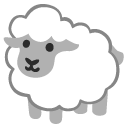


Appearance varies by platform and device. Google Noto, Twemoji, and OpenMoji are open-source.