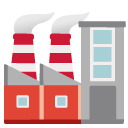
🏭
The Emoji
Factory
U+1F3ED · :factory:
Trend 45
Meaning layers
- interpretation
- Used ironically to describe repetitive, soul-crushing routines or environments — 'the factory' being any school, workplace, or system that treats people as interchangeable units.
- tiktok usage
- Appears in videos about corporate grind culture, school-to-work pipeline criticism, and dystopian humor about modern life.
- irony level
- 8 / 10
Platform meanings
- meaning
- Represents the grind, systemic monotony, or content-farming culture; used in anti-work and anti-capitalist commentary videos.
- trend usage
- Appears in 'POV: you're a product of the system 🏭' videos and dark comedy skits about school and corporate life.
- hashtags
- #FactoryLife#CogInTheMachine#AntiWork#GrindCulture#NPC
- virality score
- 52 / 100
Cultural meanings
🇺🇸
Western / Gen-Z
Deeply ironic symbol of the capitalist machine and the school-to-work pipeline; often used to mock hustle culture and systemic dehumanization.
🇵🇰
Pakistan & India
Used to represent industrial development, manufacturing jobs, and economic progress, but also to discuss poor labor conditions in textile and garment factories.
🌍
Middle East
Associated with oil refineries, industrial zones, and economic development projects; carries a sense of national development pride in many Gulf contexts.
🌐
Global Neutral
Universally understood as representing industry, manufacturing, and production; largely neutral and descriptive in most global contexts.
🇧🇩
Bangladesh
Strongly associated with the garment industry and RMG sector; evokes both economic livelihood and the sobering legacy of labor tragedies like Rana Plaza.
🇱🇰
Sri Lanka
Linked to free trade zones and export manufacturing; used in discussions about garment workers' rights and industrial development.
🇨🇳
China
Symbol of industrial strength and economic might; used with pride in contexts referencing China's manufacturing dominance and 'Made in China' identity.
🇯🇵
Japan
Associated with precision manufacturing and industrial heritage; used in discussions of automotive, electronics, and the famous monozukuri (craftsmanship) culture.
🇰🇷
South Korea
Linked to chaebol industrial conglomerates like Samsung and Hyundai; represents economic transformation from poverty to industrial powerhouse.
🇹🇼
Taiwan
Represents semiconductor and electronics manufacturing; used in contexts about Taiwan's critical role in global chip production.
🇭🇰
Hong Kong
Historically tied to the city's manufacturing past before its shift to finance; sometimes nostalgic, representing a lost industrial era.
🇵🇭
Philippines
Associated with economic zones, OFW-supporting industries, and call center culture; sometimes used ironically to describe the BPO industry as a 'content factory.'
🇮🇩
Indonesia
Linked to large-scale manufacturing, palm oil processing, and growing industrial sectors; used in labor rights and economic development discussions.
🇹🇭
Thailand
Associated with automotive manufacturing hubs and electronics production; represents Thailand's role as a key Southeast Asian industrial center.
🇻🇳
Vietnam
Strongly tied to Vietnam's rapid manufacturing growth; used in discussions about the shift of global production from China to Vietnam.
🇲🇾
Malaysia
Represents Penang's electronics manufacturing hub and broader industrial development; used in contexts about skilled industrial workforce.
🇸🇦
Saudi Arabia
Associated with NEOM megaprojects and Vision 2030 industrialization efforts; represents the kingdom's ambition to diversify beyond oil.
🇦🇪
UAE
Linked to industrial free zones like Jebel Ali and Dubai Industrial City; used in business contexts about manufacturing and logistics.
🇪🇬
Egypt
Associated with state-owned industries and the push for local manufacturing; used in discussions about Egypt's industrial development challenges.
🇹🇷
Turkey
Represents Turkey's significant manufacturing sector, especially textiles and automotive; used with pride and also in labor rights conversations.
🇮🇷
Iran
Associated with state industries and sanctions-era self-sufficiency manufacturing; can carry political undertones about economic resistance.
🇳🇬
Nigeria
Linked to aspirational industrialization goals and critiques of over-reliance on oil; used in discussions about building local manufacturing capacity.
🇿🇦
South Africa
Associated with mining and industrial complexes; used in discussions about labor unions, mining conditions, and post-apartheid industrial policy.
🇬🇧
UK & Ireland
Carries strong nostalgic weight tied to the Industrial Revolution heritage; also used ironically in post-industrial decline narratives about former manufacturing towns.
🇫🇷
France
Connected to French industrial heritage and ongoing debates about reindustrializing the economy; used in discussions about outsourcing and economic sovereignty.
🇩🇪
Germany
Symbol of national pride — 'Made in Germany' engineering excellence; used in contexts about Mittelstand manufacturing companies and industrial precision.
🇪🇸
Spain & Italy
Associated with artisan manufacturing, automotive industry, and regional industrial heartlands; Italy's emoji use often ties to fashion and design manufacturing.
🇧🇷
Brazil
Linked to São Paulo's industrial belt and debates about deindustrialization; used in labor rights discussions and economic policy debates.
🇲🇽
Mexico
Strongly associated with maquiladora culture and NAFTA/USMCA manufacturing; evokes both economic opportunity and labor exploitation concerns.
🌎
Latin America
Generally represents industrialization aspirations and economic development discourse; used in political contexts about dependency on foreign manufacturing.
🇦🇺
Australia & NZ
Rarely associated with local manufacturing given small industrial base; more often used in discussions about importing goods or the decline of Australian manufacturing.
How its meaning shifted
- 2010
Used almost exclusively in a literal sense to represent factories, industrial facilities, and manufacturing in early emoji communication.
- 2015
Began appearing in environmental discussions about pollution and climate change, alongside smokestacks imagery.
- 2020
Adopted heavily in anti-capitalist and anti-work online spaces during COVID-era labor reckonings; ironic use surged alongside memes about 'content factories.'
- 2026
Firmly established as a dual-use emoji — literal industrial meaning in professional contexts, deeply ironic symbol of dehumanization in Gen Z digital culture; core to factory-sim gaming communities.
See it on every platform
Emoji combinations
Adjacent emojis
- Opposite
- seedlingcampingnational park
- Often confused with
- classical buildingconvenience storedepartment store
- Can replace
- gearhammer and wrenchconstruction worker
Share & embed
Frequently asked
01What does the 🏭 Factory emoji mean?
A factory or industrial building with smokestacks, representing manufacturing, industry, and production facilities.
02What does 🏭 mean on TikTok?
Represents the grind, systemic monotony, or content-farming culture; used in anti-work and anti-capitalist commentary videos.
03What does 🏭 mean on WhatsApp?
Describes a boring or repetitive job or place; used when complaining about work or school to friends.
04What does 🏭 mean in Gen-Z slang?
Used ironically to describe repetitive, soul-crushing routines or environments — 'the factory' being any school, workplace, or system that treats people as interchangeable units.
05Is the 🏭 emoji safe to use?
Represents manufacturing, industry, production facilities, and economic development — entirely appropriate in most contexts.
06What does 🏭 mean in texting?
Psychologically evokes feelings of dehumanization and systemic oppression; taps into anxieties about loss of individuality within capitalist structures.
07What is the shortcode for 🏭?
The shortcode for Factory is :factory:
08What does 🏭 mean in dating?
Rarely used flirtatiously; might appear jokingly as 'running a baby factory 🏭' in crude humor or ironic banter.
Safety & usage
- Safe meaning
- Represents manufacturing, industry, production facilities, and economic development — entirely appropriate in most contexts.
- Caution
- Occasionally used in extremist or anti-globalization contexts to dehumanize workers or mock developing-world labor conditions.
May be used insensitively in discussions about labor exploitation or factory disasters; low risk but cultural context should be considered when referencing specific industrial tragedies.
How it looks across platforms


Appearance varies by platform and device. Google Noto, Twemoji, and OpenMoji are open-source.