👷
The Emoji
Construction Worker
U+1F477 · :construction_worker:
Trend 48
Meaning layers
- interpretation
- Used ironically to signal someone doing 'the work' — either literal hustle, emotional labor, or grinding on a project. Also used humorously when someone is 'building' their glow-up, brand, or relationship.
- tiktok usage
- Appears in productivity content, side-hustle videos, and ironic 'I'm so busy' storytelling. Sometimes used to joke about being a 'worker bee' or feeling underappreciated.
- irony level
- 6 / 10
Platform meanings
- meaning
- Represents hustle culture, grinding mentality, and DIY projects. Often used in productivity and 'building my empire' content.
- trend usage
- Appears in day-in-the-life construction worker videos, blue-collar pride content, and ironic boss-babe parody videos.
- hashtags
- #constructionworker#buildinmydreams#hardhatlife#bluecollar#underconstruction
- virality score
- 52 / 100
Cultural meanings
🇺🇸
Western / Gen-Z
Used ironically and literally — either to signal hustle culture, mock toxic productivity, or genuinely celebrate blue-collar work as a counter-narrative to white-collar obsession.
🇵🇰
Pakistan & India
Represents the dignity of daily wage workers (mazdoor) and construction laborers, a massive workforce segment. Used sincerely to depict laborers or with respect for physical toil.
🌍
Middle East
Symbolizes the vast migrant construction workforce that builds Gulf cities. Can carry complex socioeconomic undertones related to labor migration and infrastructure pride.
🌐
Global Neutral
Universally recognized as a construction worker or builder. Used to represent manual labor, physical work, and the construction industry across all contexts.
🇧🇩
Bangladesh
Deeply resonant as construction work abroad, particularly in the Gulf, is a major source of remittances. Represents sacrifice, hard work, and family provision.
🇱🇰
Sri Lanka
Associated with overseas contract labor and domestic construction industry. Used to represent hardworking migrant workers who support families back home.
🇨🇳
China
Represents the massive infrastructure workforce central to China's development story. Often used with pride in the context of nation-building and rapid development projects.
🇯🇵
Japan
Associated with the 'shokunin' (craftsperson) spirit — used respectfully for skilled tradespeople. Hard hat workers are seen with high social respect for precision and dedication.
🇰🇷
South Korea
Represents blue-collar workers in a society that historically prioritized white-collar careers. Increasingly used with pride as trades gain respect and fair wages.
🇹🇼
Taiwan
Used to represent construction and infrastructure workers, a key part of Taiwan's development. Treated with respectful acknowledgment in everyday conversation.
🇭🇰
Hong Kong
Reflects the visible construction workforce maintaining Hong Kong's dense urban landscape. Used matter-of-factly to represent labor workers or ongoing city development.
🇵🇭
Philippines
OFW (Overseas Filipino Worker) culture makes this emoji resonate deeply — many Filipinos work construction jobs abroad. Used with pride and sometimes melancholy for family sacrifice.
🇮🇩
Indonesia
Represents the large construction and infrastructure sector. Used positively in contexts of national development, particularly as Indonesia builds new capital cities and infrastructure.
🇹🇭
Thailand
Associated with construction boom and migrant workers from neighboring countries. Used in contexts of urban development, infrastructure projects, and physical labor pride.
🇻🇳
Vietnam
Reflects Vietnam's rapid urbanization and construction boom. Used with a sense of national pride in development and hard work as a core cultural value.
🇲🇾
Malaysia
Tied to Malaysia's infrastructure development and large construction migrant workforce. Used to represent laborers and the building industry in everyday communication.
🇸🇦
Saudi Arabia
Deeply connected to massive Vision 2030 construction projects and the large migrant workforce building them. Used in contexts of development pride and labor acknowledgment.
🇦🇪
UAE
Symbolizes the extraordinary construction achievements in Dubai and Abu Dhabi, built largely by migrant labor. Complex — used with pride for achievement but also raises labor rights discussions.
🇪🇬
Egypt
Represents construction workers involved in mega-projects like the New Administrative Capital. Used with national development pride and respect for physical laborers.
🇹🇷
Turkey
Associated with Turkey's construction industry, one of the country's major export sectors globally. Used to represent builders, contractors, and urban development workers.
🇮🇷
Iran
Represents construction laborers in the context of domestic infrastructure projects. Used simply and respectfully to denote physical workers and building trades.
🇳🇬
Nigeria
Reflects Nigeria's growing construction sector and infrastructure investment. Used with aspirational energy tied to urban development and economic growth narratives.
🇿🇦
South Africa
Associated with construction labor in a country with significant infrastructure challenges. Used in contexts of development projects and sometimes in labor rights discussions.
🇬🇧
UK & Ireland
Used for builders, tradespeople, and construction workers in a culture where 'the lads on site' is a recognized social archetype. Often used with humor and working-class pride.
🇫🇷
France
Represents construction workers (ouvriers du BTP) with cultural associations to strong trade unions and workers' rights. Used respectfully in labor and infrastructure discussions.
🇩🇪
Germany
Associated with the highly skilled German construction trade (Handwerk), which carries significant cultural prestige. Used to denote professionalism, precision, and Meister-level craftsmanship.
🇪🇸
Spain & Italy
Reflects strong traditions of construction craftsmanship in both countries. Used in contexts of architecture, restoration work, and the building trades with professional pride.
🇧🇷
Brazil
Represents the large and essential construction workforce (peões da construção). Used with a mix of pride for hard work and acknowledgment of difficult labor conditions.
🇲🇽
Mexico
Associated with skilled construction workers and masonry traditions. Used with cultural pride especially in the context of family members who work in construction in the US or locally.
🌎
Latin America
Broadly represents the essential construction workforce across Latin America. Used with respect for physical labor and in contexts of infrastructure development and urban growth.
🇦🇺
Australia & NZ
The 'tradie' (tradesperson) culture makes this emoji highly relatable. Used with pride and humor for builders, contractors, and anyone in the skilled trades sector.
How its meaning shifted
- 2010
Used almost exclusively literally to represent construction workers, safety officers, or people working on building sites. Minimal metaphorical usage.
- 2015
Began appearing in broader 'work' contexts as emoji usage expanded. Still primarily literal but starting to be used humorously for 'hard at work' sentiments.
- 2020
Adopted into hustle culture vocabulary, used alongside grind content. Also gained visibility in blue-collar pride movements and trades recruitment campaigns.
- 2026
Multifaceted usage spanning literal construction, ironic productivity commentary, Gen Z blue-collar pride content, and metaphorical 'building' narratives in personal growth contexts.
See it on every platform
Compare with
Emoji combinations
Adjacent emojis
- Opposite
- laptopgraduation capbriefcase
- Often confused with
- police officerguardperson wearing turban
Share & embed
Frequently asked
01What does the 👷 Construction Worker emoji mean?
A person wearing a hard hat, typically yellow or orange, representing a construction worker or someone working in a labor-intensive trade industry.
02What does 👷 mean on TikTok?
Represents hustle culture, grinding mentality, and DIY projects. Often used in productivity and 'building my empire' content.
03What does 👷 mean on WhatsApp?
Typically used literally to reference a construction worker, building project, or renovation. Also used to say 'I'm working hard.'
04What does 👷 mean in Gen-Z slang?
Used ironically to signal someone doing 'the work' — either literal hustle, emotional labor, or grinding on a project. Also used humorously when someone is 'building' their glow-up, brand, or relationship.
05Is the 👷 emoji safe to use?
Represents construction workers, builders, tradespeople, and manual labor professionals. Entirely benign in standard usage.
06What does 👷 mean in texting?
Evokes feelings tied to work ethic and dignity of labor. In modern usage, it can also reflect burnout culture when used sarcastically, tapping into anxieties about overworking.
07What is the shortcode for 👷?
The shortcode for Construction Worker is :construction_worker:
08What does 👷 mean in dating?
Sometimes used to imply someone is 'building something real' in a relationship or putting in effort. Occasionally used as a flirty nod to someone who works with their hands.
Safety & usage
- Safe meaning
- Represents construction workers, builders, tradespeople, and manual labor professionals. Entirely benign in standard usage.
- Caution
- Occasionally used in condescending contexts to demean blue-collar workers or stereotype certain immigrant communities as only capable of labor work.
Generally very safe. Minor risk of being used in classist or xenophobic contexts when paired with derogatory language about labor migrants or working-class people. No inherent NSFW connotation.
How it looks across platforms
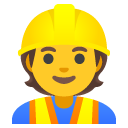


Appearance varies by platform and device. Google Noto, Twemoji, and OpenMoji are open-source.