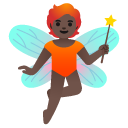
🧚🏿
The Emoji
Fairy: Dark Skin Tone
U+1F9DA U+1F3FF · :fairy_dark_skin_tone:
Trend 58
Meaning layers
- interpretation
- Used to express magical, whimsical, or ethereal energy; often signals someone who is unbothered, living in their own fantasy world, or radiating soft mystical vibes. Also used by Black Gen Z creators to celebrate magical identity and representation.
- tiktok usage
- Appears in captions about main character energy, self-care rituals, or cottagecore/dark fantasy aesthetics. Black creators use it as a proud symbol of dark-skin fairy representation.
- irony level
- 3 / 10
Platform meanings
- meaning
- Signals magical, ethereal, or cottagecore content. Heavily used by Black creators in representation and self-love content.
- trend usage
- Used in 'main character' trends, dark fantasy aesthetics, manifestation rituals, and 'that girl' routines with a magical twist.
- hashtags
- #FairyVibes#DarkSkinMagic#FairyTok#BlackGirlMagic#MainCharacterEnergy
- virality score
- 62 / 100
Cultural meanings
🇺🇸
Western / Gen-Z
A powerful symbol of magical self-identity and dark-skin representation in fantasy spaces; widely used by Black Gen Z to reclaim fairy imagery for diverse bodies.
🇵🇰
Pakistan & India
Occasionally used in fantasy or creative contexts, though fairy mythology is less culturally central; appreciated for its whimsical aesthetic without strong cultural specificity.
🌍
Middle East
Used in creative and fantasy contexts; fairies have parallels with jinn in regional mythology, lending a slight cultural resonance, though skin tone specificity is less emphasized.
🌐
Global Neutral
Universally understood as a magical fairy figure with a dark skin tone; generally interpreted as whimsical or fantasy-themed with an inclusive representation message.
🇧🇩
Bangladesh
Primarily used for its fantasy/magical meaning in creative communities; the skin tone aspect resonates with younger, globally connected users who value diverse representation.
🇱🇰
Sri Lanka
Seen as a cute fantasy character; fairy folklore has limited local roots, so it's mostly used aesthetically or in global pop culture contexts.
🇨🇳
China
Used in fantasy and gaming contexts where fairy-like beings (仙女 xiānnǚ) are culturally familiar; the dark skin tone is noted but the magical meaning is primary.
🇯🇵
Japan
Interpreted through the lens of fantasy RPG and anime culture where fairy characters are common; the dark skin tone (浅黒い) adds a unique representation dimension appreciated in inclusive creative spaces.
🇰🇷
South Korea
Used in K-fantasy content, webtoon communities, and gaming spaces; the dark skin tone is noted as representing global diversity in an increasingly representation-conscious media landscape.
🇹🇼
Taiwan
Popular in fantasy art and gaming communities; appreciated as a symbol of diverse magical representation, especially among younger Taiwanese who follow global aesthetics.
🇭🇰
Hong Kong
Used in fantasy, gaming, and creative communities; carries a cosmopolitan appreciation for diverse representation alongside its classic magical fairy meaning.
🇵🇭
Philippines
Strongly resonates due to rich local fairy folklore (engkanto, diwata); the dark skin tone connects to indigenous Filipino skin tones, making this emoji particularly meaningful for local identity.
🇮🇩
Indonesia
Fairy mythology (peri) exists in local culture; the dark skin tone resonates with the diverse indigenous skin tones of the archipelago, blending local and global magical symbolism.
🇹🇭
Thailand
Used in fantasy and K-pop influenced creative spaces; fairies (นางฟ้า) are familiar in Thai culture, and the darker skin tone is appreciated in contexts celebrating Southeast Asian beauty.
🇻🇳
Vietnam
Mostly used for its general magical/whimsical meaning in creative and social media contexts; fairy imagery (tiên nữ) has cultural roots that make this emoji broadly appealing.
🇲🇾
Malaysia
Resonates in a multicultural context where diverse skin tones are celebrated; used in fantasy and creative communities with appreciation for inclusive representation.
🇸🇦
Saudi Arabia
Used cautiously in creative and entertainment contexts; the fairy concept is more fantasy than culturally specific, and the emoji is seen as a harmless whimsical character.
🇦🇪
UAE
Used in cosmopolitan creative and social media circles; the diverse population of the UAE means the dark skin tone representation is broadly appreciated.
🇪🇬
Egypt
Used in fantasy and creative contexts; fairies have minimal cultural roots in Egyptian mythology, but the emoji is appreciated aesthetically and for its representation of darker skin tones.
🇹🇷
Turkey
Used in fantasy, gaming, and social media aesthetics; peri (fairy) figures exist in Turkish folklore, making the emoji culturally legible while the dark skin tone adds a global inclusivity message.
🇮🇷
Iran
Peri (پری) is a deeply rooted concept in Persian mythology, making the fairy emoji highly culturally resonant; the dark skin tone variant is appreciated in progressive and creative communities.
🇳🇬
Nigeria
Strongly embraced as a symbol of Black magical identity; in a country where darker skin tones are the norm, this emoji is used with pride in creative, self-love, and entertainment contexts.
🇿🇦
South Africa
Used powerfully in Black creative and social media spaces; the dark skin fairy resonates with the African Renaissance aesthetic and celebrates melanin-rich magical identity.
🇬🇧
UK & Ireland
Fairies are deeply embedded in British and Irish folklore (Celtic fairy traditions); the dark skin tone variant is embraced by Black British and Irish communities as a representation of diverse magical heritage.
🇫🇷
France
Used in artistic, fashion, and creative communities; France's diverse population means the dark skin tone fairy is appreciated as both aesthetically beautiful and representationally significant.
🇩🇪
Germany
Used in fantasy, gaming, and diversity-advocacy communities; fairy imagery is tied to Grimm fairy tale culture, and the dark skin variant signals inclusive retelling of those traditions.
🇪🇸
Spain & Italy
Used in creative, fashion, and social media contexts; fairies (hadas/fate) are part of regional folklore, and the dark skin tone emoji is embraced in inclusive and multicultural communities.
🇧🇷
Brazil
Enthusiastically used given Brazil's celebration of Afro-Brazilian beauty; the dark skin fairy connects to themes of Black magic, Candomblé spiritual energy, and afrofuturist aesthetics.
🇲🇽
Mexico
Used in creative and fantasy contexts; the dark skin tone resonates with indigenous and Afro-Mexican communities reclaiming magical identity in popular culture.
🌎
Latin America
Broadly used across Latin America to celebrate Afro-Latinx and indigenous magical identities; appreciated in creative spaces as a symbol of diverse enchantment.
🇦🇺
Australia & NZ
Used in fantasy, gaming, and diversity communities; Indigenous Australian and Māori communities may find particular resonance in a dark-skinned magical figure that diverges from Eurocentric fairy imagery.
How its meaning shifted
- 2010
Fairy emojis did not yet exist; the concept of skin tone modifiers was years away from Unicode adoption, and fairy imagery online was limited to text emoticons or image macros.
- 2015
The base fairy emoji was not yet introduced; skin tone modifiers had just been added to some human emojis, beginning the conversation about diverse emoji representation.
- 2020
The 🧚🏿 emoji was well-established post-Unicode 11.0 (2018); gained traction during the global racial justice movements as a symbol of Black magical identity and representation in fantasy spaces.
- 2026
Firmly embedded in Black Gen Z digital culture, Afrofuturism aesthetics, and dark fantasy communities; used routinely in representation discourse, self-love content, and magical aesthetic branding.
See it on every platform
Adjacent emojis
- Often confused with
- woman mage dark skin toneelf dark skin toneangel dark skin tone
- Can replace
- sparkleswoman mage dark skin tonedizzy
Share & embed
Frequently asked
01What does the 🧚🏿 Fairy: Dark Skin Tone emoji mean?
A fairy with dark skin tone, depicted as a small magical humanoid figure with wings, representing mythical fairy creatures from folklore and fantasy.
02What does 🧚🏿 mean on TikTok?
Signals magical, ethereal, or cottagecore content. Heavily used by Black creators in representation and self-love content.
03What does 🧚🏿 mean on WhatsApp?
Sent to someone to say they are magical or otherworldly; also used to express a dreamy, carefree mood.
04What does 🧚🏿 mean in Gen-Z slang?
Used to express magical, whimsical, or ethereal energy; often signals someone who is unbothered, living in their own fantasy world, or radiating soft mystical vibes. Also used by Black Gen Z creators to celebrate magical identity and representation.
05Is the 🧚🏿 emoji safe to use?
A whimsical, magical fairy with dark skin tone used to express fantasy, enchantment, self-love, and cultural representation.
06What does 🧚🏿 mean in texting?
Evokes a sense of escapism and magical self-identity. For darker-skinned users, it can carry deeper emotional resonance as a form of representation and affirmation that magic and beauty exist across all skin tones.
07What is the shortcode for 🧚🏿?
The shortcode for Fairy: Dark Skin Tone is :fairy_dark_skin_tone:
08What does 🧚🏿 mean in dating?
Used to signal a playful, mysterious, or enchanting personality — 'I'm magical and you know it.' Can be a subtle flirtatious wink suggesting the sender is otherworldly attractive.
Safety & usage
- Safe meaning
- A whimsical, magical fairy with dark skin tone used to express fantasy, enchantment, self-love, and cultural representation.
- Caution
- Rarely used toxically; in some contexts could be used condescendingly to imply someone is 'living in a fantasy' or being unrealistic.
Generally very safe. Minimal risk of misuse. Could theoretically be used in microaggressive contexts implying someone is 'exotic' or 'otherworldly' in a fetishizing way, but this is uncommon.
How it looks across platforms


Appearance varies by platform and device. Google Noto, Twemoji, and OpenMoji are open-source.