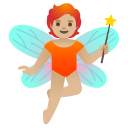
🧚🏼
The Emoji
Fairy: Medium-light Skin Tone
U+1F9DA U+1F3FC · :fairy_mediumlight_skin_tone:
Trend 68
Meaning layers
- interpretation
- Used to convey whimsy, magic, chaotic energy, or a 'not my problem' attitude — often paired with a sense of carefree unbothered-ness or mischief. Also used to describe someone acting ethereal, delusional in a fun way, or living in their own magical world.
- tiktok usage
- Frequently dropped in comment sections to call someone ethereal or to signal agreement with chaotic, unhinged, or dreamy content. Also used sarcastically like 'bestie said fairy behavior 🧚🏼'.
- irony level
- 6 / 10
Platform meanings
- meaning
- Signals whimsy, chaos, ethereal vibes, or unbothered energy in videos and comments.
- trend usage
- Used in comment sections to praise ethereal or chaotic creators, and in video captions for cottagecore, fantasy, or 'that girl' aesthetic content.
- hashtags
- #fairyvibes#fairymode#cottagecoreaesthetic#fairycore#etherealgirl
- virality score
- 72 / 100
Cultural meanings
🇺🇸
Western / Gen-Z
A core emoji in the fairycore and cottagecore aesthetic movements; used to signal whimsy, carefree chaos, and a 'not my problem' attitude with ironic undertones.
🇵🇰
Pakistan & India
Primarily interpreted literally as a fairy from Bollywood fantasy films or children's stories; occasionally used by younger urban users in aesthetic social media contexts.
🌍
Middle East
Generally used in a literal, childlike sense to reference magical fairy characters from stories and animation; less ironic usage compared to Western Gen Z.
🌐
Global Neutral
Universally understood as representing a magical fairy creature; safe for cute, whimsical, or fantasy-related communication across cultures.
🇧🇩
Bangladesh
Mostly used in a literal sense referencing fairy tales and children's content; occasionally adopted by younger users in aesthetic Instagram and TikTok content.
🇱🇰
Sri Lanka
Interpreted as a cute, magical figure from fairy tales; used in children's content and occasionally in aesthetic social media by younger demographics.
🇨🇳
China
Associated with Western fairy tale characters and anime-style magical girl (mahou shoujo) aesthetics; popular in fantasy fan communities and on Weibo aesthetic accounts.
🇯🇵
Japan
Connected to magical girl (mahou shoujo) anime culture and fantasy game characters like fairies in RPGs; widely used in kawaii and fantasy aesthetic content.
🇰🇷
South Korea
Used in fantasy webtoon, K-drama fantasy genre fandom, and soft aesthetic communities; associated with ethereal, otherworldly beauty ideals.
🇹🇼
Taiwan
Popular in fantasy game and webtoon communities; used in aesthetic social media to signal a soft, magical personal brand.
🇭🇰
Hong Kong
Used in similar contexts to Taiwan — fantasy media fandom and aesthetic social media — with some Western Gen Z ironic usage adopted via TikTok.
🇵🇭
Philippines
Tied to local mythology around fairies (diwata and engkanto); can carry slightly more spiritual or folklore-related weight alongside playful modern social media use.
🇮🇩
Indonesia
Used in fantasy fandom communities and aesthetic Instagram content; some users associate it with local folklore spirits, giving it a nuanced cultural dimension.
🇹🇭
Thailand
Associated with fantasy anime and game characters; popular in aesthetic and cosplay communities, especially around magical girl and elf-fairy aesthetics.
🇻🇳
Vietnam
Primarily used in fantasy fandom and aesthetic content among younger users; associated with magical characters in anime and games.
🇲🇾
Malaysia
Used in fantasy media fandom and aesthetic social media; occasionally connected to local folklore beliefs about magical beings in rural communities.
🇸🇦
Saudi Arabia
Mainly used by younger users in aesthetic and fantasy content; interpreted as a Western fairy tale character with no significant local folkloric overlap.
🇦🇪
UAE
Adopted by younger, cosmopolitan social media users for aesthetic and fantasy content; interpreted in line with Western Gen Z usage given the multicultural social media landscape.
🇪🇬
Egypt
Used primarily for cute and fantasy-related content among younger social media users; no strong local folkloric association, interpreted as a Western fairy character.
🇹🇷
Turkey
Used in fantasy fandom communities and aesthetic social media; associated with fairy tale characters from both Western and local storytelling traditions.
🇮🇷
Iran
Primarily used in fantasy and aesthetic content among younger users; associated with peri (پری), the Persian word for fairy, giving it a rich local cultural resonance.
🇳🇬
Nigeria
Used by younger, digitally connected users in aesthetic and fantasy content; interpreted mainly as a Western fairy tale character without strong local folkloric ties.
🇿🇦
South Africa
Used similarly to Western Gen Z usage in urban contexts — aesthetic content, whimsy, and ironic 'fairy behavior' memes circulate among younger users.
🇬🇧
UK & Ireland
Strong cultural resonance given the rich Celtic and British fairy folklore tradition; used both in literal fairy folklore contexts and the full range of Gen Z ironic and aesthetic uses.
🇫🇷
France
Used in aesthetic and fantasy content; the fairy (fée) is a common figure in French folklore, giving the emoji a cultural layer beyond pure Gen Z irony.
🇩🇪
Germany
Used in fantasy fandom, fairytale (Märchen) fan communities, and aesthetic social media; Germany's strong fairy tale heritage gives the emoji added cultural weight.
🇪🇸
Spain & Italy
Used in aesthetic and fantasy content; associated with fantastical folklore characters and widely used in cottagecore and fairycore aesthetic communities by younger users.
🇧🇷
Brazil
Popular in fantasy fan communities and aesthetic social media; adopted the Western Gen Z 'fairy behavior' usage alongside local fantasy media fandom.
🇲🇽
Mexico
Used in fantasy and aesthetic content; occasionally connected to magical realism culture and local folklore about magical beings, giving it a subtle cultural depth.
🌎
Latin America
Generally used in fantasy media fandom and aesthetic social media across Latin America; urban Gen Z users have adopted the ironic 'fairy behavior' usage from TikTok.
🇦🇺
Australia & NZ
Used in line with Western Gen Z trends — aesthetic content, cottagecore, and ironic 'not my problem' fairy emoji usage are all common among younger users.
How its meaning shifted
- 2010
The fairy emoji did not yet exist; fairy concepts were represented through text emoticons or generic sparkle/star characters in early social media.
- 2015
Still pre-release; fairy references on social media relied on the sparkles emoji or pixie-adjacent characters; no standardized fairy emoji existed.
- 2020
Newly adopted after its 2018 Unicode release; used primarily in literal fantasy and aesthetic contexts; cottagecore and fairycore aesthetics were rising and the emoji became central to both.
- 2026
Firmly embedded in Gen Z internet culture as both a sincere aesthetic marker and an ironic 'chaotic fairy behavior' meme tool; skin tone variants including medium-light are used intentionally for personal expression.
See it on every platform
Compare with
Adjacent emojis
- Opposite
- robot faceskullanger symbol
- Often confused with
- angelmagewoman with wings
- Can replace
- sparklesdizzyfour leaf clover
Share & embed
Frequently asked
01What does the 🧚🏼 Fairy: Medium-light Skin Tone emoji mean?
A fairy with medium-light skin tone, depicted as a small magical humanoid figure with wings, representing mythical fairy creatures from folklore and fantasy.
02What does 🧚🏼 mean on TikTok?
Signals whimsy, chaos, ethereal vibes, or unbothered energy in videos and comments.
03What does 🧚🏼 mean on WhatsApp?
Sent to call someone magical, cute, or whimsical in casual conversation.
04What does 🧚🏼 mean in Gen-Z slang?
Used to convey whimsy, magic, chaotic energy, or a 'not my problem' attitude — often paired with a sense of carefree unbothered-ness or mischief. Also used to describe someone acting ethereal, delusional in a fun way, or living in their own magical world.
05Is the 🧚🏼 emoji safe to use?
Represents magical fairies, whimsy, dreamy aesthetics, and carefree energy — entirely safe and positive in mainstream usage.
06What does 🧚🏼 mean in texting?
The fairy emoji taps into escapism and fantasy — psychologically it signals a desire to detach from reality's weight, embrace imagination, or present oneself as carefree and untouchable. It can also mask passive-aggressive sentiment under a veneer of magic.
07What is the shortcode for 🧚🏼?
The shortcode for Fairy: Medium-light Skin Tone is :fairy_mediumlight_skin_tone:
08What does 🧚🏼 mean in dating?
Used flirtatiously to suggest someone is magical, otherworldly, or enchanting — 'you're literally a fairy 🧚🏼'. Can also be used to seem mysterious or whimsically unattainable.
Safety & usage
- Safe meaning
- Represents magical fairies, whimsy, dreamy aesthetics, and carefree energy — entirely safe and positive in mainstream usage.
- Caution
- Occasionally used passive-aggressively to dismiss people or situations with theatrical unbothered-ness, but rarely genuinely harmful.
No significant toxic or NSFW associations. The emoji is occasionally weaponized in passive-aggressive online communication but poses no real safety concerns.
How it looks across platforms


Appearance varies by platform and device. Google Noto, Twemoji, and OpenMoji are open-source.