🧑🏿🚒
The Emoji
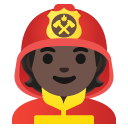
Firefighter: Dark Skin Tone
U+1F9D1 U+1F3FF U+200D U+1F692 · :firefighter_dark_skin_tone:
Trend 48
Meaning layers
- interpretation
- Used to express admiration for someone who is brave, heroic, or who 'saves the day.' Also used ironically to describe someone putting out drama or calming chaotic situations. Can represent Black excellence in traditionally underrepresented professions.
- tiktok usage
- Appears in videos celebrating Black heroes, first responders, or anyone who steps up in a crisis. Also used in 'day in the life' content featuring actual firefighters.
- irony level
- 3 / 10
Platform meanings
- meaning
- Symbol of bravery, heroism, and first responder appreciation. Used to celebrate real firefighters or anyone who shows up in a tough moment.
- trend usage
- Common in 'appreciation posts' for first responders, Black excellence content, career day videos, and fire safety awareness trends.
- hashtags
- #BlackExcellence#FirstResponders#HeroesAmongUs#FirefighterLife#Representation
- virality score
- 52 / 100
Cultural meanings
🇺🇸
Western / Gen-Z
Celebrated as a symbol of Black excellence and representation in heroic roles. Frequently used alongside diversity and inclusion narratives.
🇵🇰
Pakistan & India
Understood primarily as a firefighter symbol. The dark skin tone is culturally relevant as it reflects South Asian skin tones, making it more personally relatable for users in the region.
🌍
Middle East
Recognized as a firefighter emoji. Dark skin tone is associated with South Asian or African workers in the Gulf region, giving it a working-class or service-industry connotation in some contexts.
🌐
Global Neutral
Universally understood as representing a firefighter. The skin tone modifier adds specificity but the professional meaning remains clear across cultures.
🇧🇩
Bangladesh
Understood as a firefighter symbol. The dark skin tone aligns with the majority skin tone in Bangladesh, making it feel naturally representative and relatable.
🇱🇰
Sri Lanka
Recognized as a firefighter and used proudly by Sri Lankan users who see the dark skin tone as representative of their own complexion.
🇨🇳
China
Interpreted straightforwardly as a firefighter (消防员). Skin tone diversity in emoji is less culturally emphasized, but the professional symbolism is clearly understood.
🇯🇵
Japan
Recognized as a firefighter (消防士). Japan has a strong cultural respect for first responders; the dark skin tone is noted but the profession is the primary focus.
🇰🇷
South Korea
Understood as a firefighter (소방관). Used in content about public safety. The skin tone diversity aspect is noted by younger, globally-aware users.
🇹🇼
Taiwan
Interpreted as a firefighter with appreciation for the profession. Young Taiwanese users are aware of and supportive of diverse emoji representation.
🇭🇰
Hong Kong
Recognized as a firefighter. In a city with a complicated relationship with public safety workers, context matters — can be celebratory or neutral depending on the poster.
🇵🇭
Philippines
Widely understood as a firefighter. Filipino users relate to the dark skin tone as closely matching their own, making it a preferred skin tone variant for profession emojis.
🇮🇩
Indonesia
Used to represent firefighters and public service heroes. The dark skin tone is seen as representative of many Indonesians' complexions.
🇹🇭
Thailand
Understood as a firefighter. The skin tone emoji movement has gained traction among progressive Thai youth, who appreciate diverse representation.
🇻🇳
Vietnam
Recognized as a firefighter. Skin tone modifiers are increasingly used by younger Vietnamese users who value digital inclusion and representation.
🇲🇾
Malaysia
Understood as a firefighter emoji. Malaysia's multiracial society makes skin tone representation particularly meaningful, especially for Malay and Indian Malaysian users.
🇸🇦
Saudi Arabia
Recognized as a firefighter. In Saudi Arabia, dark skin tones in emoji can sometimes be associated with migrant workers, though the professional framing recontextualizes this positively.
🇦🇪
UAE
Understood as a firefighter. The UAE's diverse workforce includes many dark-skinned professionals in public safety roles, making this emoji culturally resonant.
🇪🇬
Egypt
Recognized as a firefighter. Egyptian users with darker complexions may use this as a relatable professional emoji. Generally carries positive heroic connotations.
🇹🇷
Turkey
Understood as a firefighter (itfaiyeci). The dark skin tone is recognized but the professional identity takes precedence in Turkish digital communication.
🇮🇷
Iran
Recognized as a firefighter. Emoji usage in Iran is widespread; the skin tone modifier is understood in the context of global diversity representation.
🇳🇬
Nigeria
Highly resonant and celebrated. Nigerians and the wider West African diaspora embrace this emoji as an authentic representation of Black professionals in heroic roles.
🇿🇦
South Africa
Powerfully meaningful as a symbol of Black excellence in public service. Used proudly in the context of South Africa's majority Black population taking on skilled professional roles.
🇬🇧
UK & Ireland
Used to celebrate diversity in the fire service, which has historically been predominantly white. Appreciated in the context of inclusion campaigns and Black History Month.
🇫🇷
France
Used in the context of diversity and laïcité debates. Appreciated by the Afro-French community as a symbol of representation in civic service roles.
🇩🇪
Germany
Understood as a firefighter emoji. Used in diversity and inclusion discussions, particularly in the context of welcoming immigrant and African-heritage communities into public service.
🇪🇸
Spain & Italy
Recognized as a firefighter. Increasingly meaningful in countries grappling with representation in public safety, particularly among African diaspora communities.
🇧🇷
Brazil
Deeply resonant in Brazil's diverse society. The dark skin tone firefighter is celebrated as a representation of Afro-Brazilian excellence and heroism in a country where racial identity is complex.
🇲🇽
Mexico
Understood as a firefighter with the dark skin tone representing Indigenous or Afro-Mexican communities. Used in contexts of professional pride and diversity.
🌎
Latin America
Broadly understood across Latin America as a firefighter. The dark skin tone speaks to Afro-Latino communities who have historically been underrepresented in heroic media imagery.
🇦🇺
Australia & NZ
Used to represent diverse first responders and to celebrate Aboriginal and Torres Strait Islander or Pacific Islander communities in public service roles.
How its meaning shifted
- 2010
This specific emoji did not exist in 2010. Firefighter emojis were basic and skin tone modifiers had not yet been introduced to Unicode.
- 2015
Skin tone modifiers were introduced in 2015 (Unicode 8.0), but the firefighter ZWJ sequence with dark skin tone came later. General firefighter emojis began gaining traction.
- 2020
By 2020 this emoji was in active use, particularly in the context of Black Lives Matter, diversity in public safety discussions, and first responder appreciation during COVID-19.
- 2026
Used regularly to celebrate Black professionals in emergency services, in diversity and inclusion content, and as a general symbol of heroism with cultural identity pride. Stable and well-recognized across platforms.
See it on every platform
Adjacent emojis
Share & embed
Frequently asked
01What does the 🧑🏿🚒 Firefighter: Dark Skin Tone emoji mean?
A firefighter with dark skin tone, depicted wearing a firefighter helmet and protective gear. Represents emergency responders, fire services, and public safety workers.
02What does 🧑🏿🚒 mean on TikTok?
Symbol of bravery, heroism, and first responder appreciation. Used to celebrate real firefighters or anyone who shows up in a tough moment.
03What does 🧑🏿🚒 mean on WhatsApp?
Sent to praise someone for being brave or coming to the rescue in a tough situation.
04What does 🧑🏿🚒 mean in Gen-Z slang?
Used to express admiration for someone who is brave, heroic, or who 'saves the day.' Also used ironically to describe someone putting out drama or calming chaotic situations. Can represent Black excellence in traditionally underrepresented professions.
05Is the 🧑🏿🚒 emoji safe to use?
A positive, professional emoji representing a firefighter with dark skin tone. Celebrates diversity in public safety and heroism.
06What does 🧑🏿🚒 mean in texting?
Evokes feelings of safety, protection, and respect. The dark skin tone modifier adds a layer of cultural pride and representation, making it emotionally resonant for communities historically underrepresented in media depictions of heroism.
07What is the shortcode for 🧑🏿🚒?
The shortcode for Firefighter: Dark Skin Tone is :firefighter_dark_skin_tone:
08What does 🧑🏿🚒 mean in dating?
Used to call someone 'hot' or to suggest they are fiery and exciting. Can be a playful compliment implying someone is both brave and attractive.
Safety & usage
- Safe meaning
- A positive, professional emoji representing a firefighter with dark skin tone. Celebrates diversity in public safety and heroism.
- Caution
- Rarely used negatively. In extreme cases could be weaponized in racist mocking contexts online, though this is uncommon.
Generally safe for all audiences. As with any skin tone emoji, be mindful of context to avoid performative or appropriative use.
How it looks across platforms


Appearance varies by platform and device. Google Noto, Twemoji, and OpenMoji are open-source.