👷🏿
The Emoji
Construction Worker: Dark Skin Tone
U+1F477 U+1F3FF · :construction_worker_dark_skin_tone:
Trend 48
Meaning layers
- interpretation
- Used to represent hustle culture, working-class pride, or someone doing the 'real work' while others sit back. Also used ironically when someone is 'building' something (a career, a relationship, a plan).
- tiktok usage
- Appears in 'I'm built different' videos, hardworking aesthetic content, and motivational clips about grinding. Also used in DIY and home renovation content.
- irony level
- 3 / 10
Platform meanings
- meaning
- Represents hard work, hustle, blue-collar pride, or someone literally in construction/trades. Often paired with motivational audio.
- trend usage
- Used in #BlueCollarTok, trade school promotion videos, and 'day in my life' content from construction workers. Also in representation content celebrating dark-skinned workers.
- hashtags
- #BlueCollarTok#ConstructionLife#HardWork#BuildDifferent#TradesLife
- virality score
- 52 / 100
Cultural meanings
🇺🇸
Western / Gen-Z
Used to celebrate blue-collar hustle and working-class pride in a generation increasingly drawn to trades over college. Often paired with ironic comments about 'building' futures or elaborate plans.
🇵🇰
Pakistan & India
Represents the large construction and labor workforce; used with respect for mazdoor (laborers) culture. May also be used to discuss migrant workers or infrastructure development pride.
🌍
Middle East
Strongly associated with the massive construction industries in Gulf states; carries connotations of large-scale development projects and migrant labor, sometimes in activist contexts about worker rights.
🌐
Global Neutral
Universally understood as representing a construction worker. Used straightforwardly across cultures to indicate building, manual labor, or infrastructure work.
🇧🇩
Bangladesh
Resonates strongly given the significant Bangladeshi labor diaspora in construction worldwide; used with pride for workers or in discussions about labor rights and overseas workers.
🇱🇰
Sri Lanka
Connected to construction sector growth in Sri Lanka and the significant number of Sri Lankan migrant workers in construction abroad. Used in discussions about labor and development.
🇨🇳
China
Associated with China's massive construction industry and rapid infrastructure development. Evokes national pride in building achievements and the honored role of construction workers in socialist imagery.
🇯🇵
Japan
Used respectfully to represent skilled craftsmen and construction professionals. Japanese culture's high regard for trade mastery means this emoji carries connotations of precision and dedication.
🇰🇷
South Korea
Represents the 건설 (construction) sector and is often used in discussions about Korea's infrastructure boom. Also appears in content about trade worker shortages and calls to respect manual labor.
🇹🇼
Taiwan
Used in contexts related to Taiwan's construction industry and urban development. Associated with skilled tradespeople and increasing appreciation for blue-collar careers.
🇭🇰
Hong Kong
Carries associations with Hong Kong's dense construction environment and the visible presence of construction workers in the city's constant urban renewal.
🇵🇭
Philippines
Strongly associated with OFW (Overseas Filipino Workers) in construction, particularly in the Middle East. Used with pride and often in emotional contexts about family sacrifice and hard work abroad.
🇮🇩
Indonesia
Represents the large construction workforce driving Indonesia's infrastructure expansion. Used in discussions about economic development and appreciation for manual workers.
🇹🇭
Thailand
Associated with Thailand's growing construction sector and migrant workers from neighboring countries. Used in discussions about labor rights and urban development.
🇻🇳
Vietnam
Represents Vietnam's booming construction industry and the pride in infrastructure development. Also associated with Vietnamese workers abroad in construction roles.
🇲🇾
Malaysia
Connected to Malaysia's significant construction sector and the large migrant workforce it employs. Used in discussions about labor policy and construction industry growth.
🇸🇦
Saudi Arabia
Deeply significant given Saudi Arabia's enormous construction projects (NEOM, Vision 2030). Often evokes discussions about migrant labor conditions and large-scale development ambitions.
🇦🇪
UAE
Associated with Dubai and Abu Dhabi's iconic skylines built by a massive international construction workforce. Carries complex connotations of ambition and migrant labor simultaneously.
🇪🇬
Egypt
Represents Egypt's growing construction sector and historic tradition of building. Used in discussions about infrastructure projects and the many Egyptians employed in Gulf construction.
🇹🇷
Turkey
Associated with Turkey's booming construction industry, one of the country's signature export sectors globally. Used with national pride in construction achievements.
🇮🇷
Iran
Represents the construction sector and the working class. Used in discussions about labor conditions and infrastructure development within the context of economic pressures.
🇳🇬
Nigeria
Represents the growing construction sector in Nigeria's largest economy. Used to celebrate tradespeople and in discussions about infrastructure investment needs.
🇿🇦
South Africa
Connected to construction as a major employment sector. Used in discussions about building trades, economic development, and the representation of Black workers in skilled construction roles.
🇬🇧
UK & Ireland
Associated with the large construction workforce including significant Irish and Eastern European labor. Used colloquially in reference to trades workers and in friendly banter about construction culture.
🇫🇷
France
Used to represent construction workers (ouvriers du bâtiment). Associated with labor union culture and worker dignity in a country with strong traditions of blue-collar worker advocacy.
🇩🇪
Germany
Represents the highly skilled and respected Handwerker (craftsman) culture. German users often use it to signal precision, reliability, and the honored status of skilled trades.
🇪🇸
Spain & Italy
Associated with construction industries central to both economies, though also carrying post-2008 connotations of the construction bubble. Used in both celebratory and cautionary contexts about trades work.
🇧🇷
Brazil
Represents the massive peão de obra (construction worker) workforce fundamental to Brazil's economy. Used with working-class pride and often in labor rights advocacy contexts.
🇲🇽
Mexico
Closely associated with Mexican construction workers, including those working in the US. Used with pride for the albañil (mason/construction worker) as a symbol of hard work and family support.
🌎
Latin America
Broadly represents the construction workforce across Latin America, often used in discussions about labor conditions, remittances, and the dignity of physical work.
🇦🇺
Australia & NZ
Associated with the highly valued 'tradie' culture in both countries. Used with significant pride and respect as tradespeople are well-compensated and socially valued in these economies.
How its meaning shifted
- 2010
Skin tone modifiers did not yet exist; the base construction worker emoji was not yet standardized. Pre-Unicode skin tone diversity, construction workers were represented by a single generic yellow figure.
- 2015
The dark skin tone modifier was introduced in Unicode 8.0 (2015), making this specific variant newly available. Early usage was primarily literal and celebratory of the new inclusive representation.
- 2020
Usage expanded significantly during conversations about essential workers during COVID-19. The emoji gained traction in representation discussions and blue-collar appreciation content during the pandemic.
- 2026
Now commonly used in trades recruitment content, diversity-in-construction campaigns, and working-class pride movements. Appears frequently in TikTok's thriving BlueCollarTok community and across labor advocacy spaces.
See it on every platform
Compare with
Adjacent emojis
Share & embed
Frequently asked
01What does the 👷🏿 Construction Worker: Dark Skin Tone emoji mean?
A construction worker wearing a hard hat, depicted with dark skin tone. Represents manual labor, construction, building trades, and infrastructure work.
02What does 👷🏿 mean on TikTok?
Represents hard work, hustle, blue-collar pride, or someone literally in construction/trades. Often paired with motivational audio.
03What does 👷🏿 mean on WhatsApp?
Sent to indicate someone is at work on a construction site or doing manual labor. Also used casually to say 'I'm working hard right now.'
04What does 👷🏿 mean in Gen-Z slang?
Used to represent hustle culture, working-class pride, or someone doing the 'real work' while others sit back. Also used ironically when someone is 'building' something (a career, a relationship, a plan).
05Is the 👷🏿 emoji safe to use?
Representation of construction and trade workers, celebration of labor, blue-collar pride, and workforce diversity.
06What does 👷🏿 mean in texting?
Evokes a sense of dignity in labor and working-class identity. Can trigger feelings of respect for manual work or nostalgia for family members in trades. The dark skin tone adds a layer of cultural identity and representation.
07What is the shortcode for 👷🏿?
The shortcode for Construction Worker: Dark Skin Tone is :construction_worker_dark_skin_tone:
08What does 👷🏿 mean in dating?
Rarely used flirtatiously, but occasionally sent to signal admiration for someone who is hard-working or physically capable. Could be used to say 'I see you putting in the work.'
Safety & usage
- Safe meaning
- Representation of construction and trade workers, celebration of labor, blue-collar pride, and workforce diversity.
- Caution
- In rare cases, could be used in derogatory contexts to stereotype individuals by profession or ethnicity, though this is uncommon.
Generally safe to use. The skin tone specificity means users should be mindful not to use dark-skin-toned profession emojis in ways that implicitly assign manual labor exclusively to darker-skinned people, which could reinforce stereotypes.
How it looks across platforms
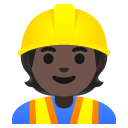


Appearance varies by platform and device. Google Noto, Twemoji, and OpenMoji are open-source.