🦶🏾
The Emoji
Foot: Medium-dark Skin Tone
U+1F9B6 U+1F3FE · :foot_mediumdark_skin_tone:
Trend 38
Meaning layers
- interpretation
- Used humorously to indicate someone is 'putting their foot down,' walking away from a situation, or as a quirky reaction to something cringe or unexpected. Also casually dropped in foot-reveal culture or as a random absurdist emoji.
- tiktok usage
- Appears in comments when someone 'steps on' a controversial opinion, or in foot-reveal trend videos. Also used ironically in 'ratio' chains.
- irony level
- 6 / 10
Platform meanings
- meaning
- Represents stepping on someone's argument, foot reveal jokes, or hiking/fitness content with diversity representation.
- trend usage
- Used in duet chains and comment sections when someone metaphorically 'stomps' on a bad take. Part of skin-tone inclusive body emoji trends.
- hashtags
- #footreveal#footcheck#steppedon#darkskin#bodypositivity
- virality score
- 42 / 100
Cultural meanings
🇺🇸
Western / Gen-Z
Used ironically as a meme emoji and in foot-reveal culture jokes; also embraced in body positivity and skin tone diversity conversations online.
🇵🇰
Pakistan & India
Primarily interpreted literally; feet hold cultural significance in South Asian tradition (touching elders' feet for blessings), so this emoji can carry a respectful or reverent connotation.
🌍
Middle East
Feet carry mixed cultural meaning — showing the sole of the foot is considered rude in some contexts, so this emoji may be used cautiously or avoided in formal communication.
🌐
Global Neutral
Universally understood as a representation of the human foot; used across fitness, health, and casual communication contexts without strong cultural loading.
🇧🇩
Bangladesh
Largely literal usage; similar to South Asian traditions, feet are respected and associated with bowing to elders, giving the emoji a subtly reverent undertone.
🇱🇰
Sri Lanka
Interpreted literally and in cultural contexts tied to religious practices where feet carry spiritual significance in Buddhist and Hindu traditions.
🇨🇳
China
Foot emoji usage is primarily literal — tied to foot massage culture (足疗 zúliáo) which is extremely popular; may appear in wellness and spa-related chats.
🇯🇵
Japan
Used in reflexology, foot care (足湯 ashiyu — foot baths), and health content. Feet are generally private body parts, so usage can feel slightly intimate in social contexts.
🇰🇷
South Korea
Associated with K-beauty foot care routines, pedicure culture, and fitness content. Skin tone diversity emoji use is growing as inclusivity awareness increases.
🇹🇼
Taiwan
Similar to broader East Asian usage; primarily practical in foot care, reflexology, and wellness contexts with emerging use in diverse representation conversations.
🇭🇰
Hong Kong
Linked to foot massage parlor culture and reflexology; practical usage dominates with occasional humor in local meme communities.
🇵🇭
Philippines
Interpreted literally; feet have traditional significance in mano po (blessing ritual involving hands/feet), giving foot emojis a respectful cultural layer.
🇮🇩
Indonesia
Used casually in fitness and wellness content; showing the sole of the foot can be considered disrespectful in formal contexts, so meme use is approached with some care.
🇹🇭
Thailand
Feet are considered the lowest and least sacred part of the body in Thai culture, so this emoji is used very carefully — primarily in literal health or massage contexts.
🇻🇳
Vietnam
Mostly literal usage in health, walking, and sports contexts; foot-pointing etiquette sensitivity means the emoji is avoided in formal digital communication.
🇲🇾
Malaysia
Used in wellness, reflexology, and fitness contexts; cultural norms around feet (similar to broader Southeast Asia) make its use more reserved in formal settings.
🇸🇦
Saudi Arabia
Feet carry cultural sensitivity — pointing feet at someone is considered disrespectful — so this emoji appears mainly in health or medical contexts rather than casual chat.
🇦🇪
UAE
Used in wellness, spa, and health content; the multicultural digital landscape in UAE means it's encountered in both literal and Western meme contexts.
🇪🇬
Egypt
Primarily literal usage in health discussions; foot-related gestures carry cultural weight, making casual use of this emoji relatively conservative.
🇹🇷
Turkey
Used in reflexology, health, and fitness contexts; also appears in humor when referencing 'putting your foot in your mouth' equivalent phrases in Turkish culture.
🇮🇷
Iran
Conservative usage; primarily in health and medical contexts. Foot symbolism in Persian poetry is rich but this digital emoji mostly serves practical communication.
🇳🇬
Nigeria
Used casually in fitness, dance, and lifestyle content; the medium-dark skin tone is positively embraced as representative of African users and celebrated in body positivity spaces.
🇿🇦
South Africa
Embraced for its skin tone representation; used in running, fitness, and outdoor lifestyle content which are hugely popular cultural activities in South Africa.
🇬🇧
UK & Ireland
Used in casual banter — often in the 'shot yourself in the foot' sarcasm context, aligned with British self-deprecating humor culture.
🇫🇷
France
Appears in wellness and pedicure content; French digital culture sometimes uses it in ironic commentary about social blunders.
🇩🇪
Germany
Mostly practical usage in sports, hiking, and health contexts; Germans tend toward literal emoji interpretation with less ironic layering.
🇪🇸
Spain & Italy
Used in football (soccer) contexts as a pun on foot/kick; also appears in beach and lifestyle content celebrating Mediterranean barefoot living.
🇧🇷
Brazil
Frequently used in capoeira, dance, and football content; the medium-dark skin tone resonates strongly with Brazil's diverse population and is celebrated.
🇲🇽
Mexico
Used in casual fitness, sports, and humor contexts; foot-related idioms in Mexican Spanish give it playful comedic potential in local meme culture.
🌎
Latin America
Broadly used in football, dance, and fitness content across Latin America; the medium-dark skin tone is well-represented and relatable across the region's diverse demographics.
🇦🇺
Australia & NZ
Used in outdoor, beach, and fitness contexts; casual Australian humor sometimes deploys it in 'own goal' or self-sabotage jokes consistent with local comedy style.
How its meaning shifted
- 2010
Foot emoji did not yet exist; feet were referenced with text descriptors or generic yellow emojis introduced only in later Unicode versions.
- 2015
The base foot emoji and skin tone modifiers began appearing; usage was almost entirely literal — referencing physical feet in health, sports, or casual conversation.
- 2020
Exploded in meme usage tied to 'foot reveal' internet culture and 'shooting yourself in the foot' irony; skin tone variants gained traction in diversity and representation advocacy.
- 2026
Firmly embedded in ironic and sarcastic digital vocabulary; used in Gen Z absurdist humor, body diversity content, and as a shorthand reaction emoji for self-defeating behavior online.
See it on every platform
Compare with
Adjacent emojis
- Opposite
- raised handbraineyes
- Often confused with
- legbaby angelman kneeling
- Can replace
- legsneakerfootprints
Share & embed
Frequently asked
01What does the 🦶🏾 Foot: Medium-dark Skin Tone emoji mean?
A human foot depicted with medium-dark skin tone modifier, showing the sole or bottom of a foot with toes.
02What does 🦶🏾 mean on TikTok?
Represents stepping on someone's argument, foot reveal jokes, or hiking/fitness content with diversity representation.
03What does 🦶🏾 mean on WhatsApp?
Literally used to reference feet, walking plans, or kicking something. May signal foot-related pain or wellness topics.
04What does 🦶🏾 mean in Gen-Z slang?
Used humorously to indicate someone is 'putting their foot down,' walking away from a situation, or as a quirky reaction to something cringe or unexpected. Also casually dropped in foot-reveal culture or as a random absurdist emoji.
05Is the 🦶🏾 emoji safe to use?
Represents the human foot in health, fitness, running, dance, pedicure, and wellness contexts. Widely used as an inclusive diversity-representative body emoji.
06What does 🦶🏾 mean in texting?
The foot emoji carries low emotional charge on its own but gains meaning through context. Psychologically it can signal grounding, stability, or movement — metaphors for action or decisiveness.
07What is the shortcode for 🦶🏾?
The shortcode for Foot: Medium-dark Skin Tone is :foot_mediumdark_skin_tone:
08What does 🦶🏾 mean in dating?
Sometimes used flirtatiously in the context of foot fetish culture, hinting at attraction to feet. Can be a subtle signal when sent unexpectedly in DMs.
Safety & usage
- Safe meaning
- Represents the human foot in health, fitness, running, dance, pedicure, and wellness contexts. Widely used as an inclusive diversity-representative body emoji.
- Caution
- Commonly used as a solicitation signal for foot fetish content in DMs and certain online communities; can be part of unsolicited sexual messaging.
- NSFW
- Not safe for work — use with care.
Unsolicited use in DMs — especially on dating apps or Instagram — is frequently associated with foot fetish solicitation. Platforms should flag patterns of this emoji in unsolicited private messages. Context is critical.
How it looks across platforms
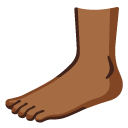


Appearance varies by platform and device. Google Noto, Twemoji, and OpenMoji are open-source.