🦒
The Emoji
Giraffe
U+1F992 · :giraffe:
Trend 45
Meaning layers
- interpretation
- Used to describe someone who is nosy, stretching their neck into other people's business, or someone tall and lanky. Also used as a playful compliment for being uniquely quirky or standing out from the crowd.
- tiktok usage
- Appears in videos about being tall, awkward situations, or 'sticking your neck out.' Often paired with 'this is you' captions aimed at nosy friends or overly curious people.
- irony level
- 5 / 10
Platform meanings
- meaning
- Represents tall people, nosy behavior, or being uniquely weird and proud of it. Used in 'POV: you're the tall friend' content.
- trend usage
- Appears in #tallgirlproblems content, zoo vlogs, Africa travel content, and ironic 'main character' videos where someone is dramatically standing out.
- hashtags
- #tallgirlproblems#giraffeneck#zoovlog#africanwildlife#giraffechallenge
- virality score
- 52 / 100
Cultural meanings
🇺🇸
Western / Gen-Z
Primarily used as the 'you're being nosy' or 'that's a reach' emoji, inherited from internet meme culture. Also affectionately used among tall people as a self-identifier.
🇵🇰
Pakistan & India
Used mostly in literal wildlife contexts — zoo visits, safari vlogs, and animal-related educational content. Occasionally used to tease someone for being overly curious or tall.
🌍
Middle East
Associated with zoo culture and wildlife parks popular in the Gulf region. Used in family content and children's posts without significant secondary meanings.
🌐
Global Neutral
Universally recognized as a giraffe and used in straightforward wildlife, nature, travel, and animal appreciation contexts across all platforms.
🇧🇩
Bangladesh
Primarily used in educational and nature content; giraffes are exotic and rare in local experience so the emoji carries a sense of wonder and fascination.
🇱🇰
Sri Lanka
Used in zoo and nature contexts; occasionally used to describe someone who is very tall compared to local averages, in a playful teasing tone.
🇨🇳
China
Associated with wildlife parks and zoo culture; giraffes (长颈鹿 chángjǐnglù) are popular zoo animals in China, and the emoji is used in family outings and children's content. No strong secondary meanings.
🇯🇵
Japan
Used in cute (kawaii) animal content contexts; giraffes are beloved zoo animals in Japan and the emoji appears in animal-themed merchandise discussions and zoo trip posts.
🇰🇷
South Korea
Appears in zoo content and travel posts; also occasionally used in K-pop fan communities to describe a tall, leggy idol in an adoring way.
🇹🇼
Taiwan
Used similarly to mainland China and Japan — primarily in zoo, nature, and family contexts. Occasionally used to describe something unusually tall or out of place.
🇭🇰
Hong Kong
Used in zoo and safari park content; the emoji carries lighthearted, child-friendly energy with no significant culturally specific alternate meanings.
🇵🇭
Philippines
Associated with zoo trips and wildlife content; also used humorously to describe someone who is tall for Filipino standards, since height is a frequent topic of playful commentary.
🇮🇩
Indonesia
Used in wildlife and zoo contexts; also found in educational content about African animals. No major secondary cultural meanings beyond playful tall-person jokes.
🇹🇭
Thailand
Appears in zoo content and travel vlogging; Thai users sometimes use it to signal a quirky or elegant personality, aligning with the giraffe's graceful appearance.
🇻🇳
Vietnam
Primarily used in educational and nature content for children; also appears in zoo posts and is sometimes used to describe someone unusually tall in a gentle teasing way.
🇲🇾
Malaysia
Used in zoo and safari content; Malaysian users also use it in the context of the famous Johor Zoo and Melaka Zoo visits shared on social media.
🇸🇦
Saudi Arabia
Common in family zoo trip content, especially referencing popular wildlife parks. The emoji is child-friendly and well-recognized without controversial secondary uses.
🇦🇪
UAE
Associated with the many wildlife parks and safari experiences in the region, such as Dubai Safari Park. Used in family, tourism, and lifestyle content.
🇪🇬
Egypt
Used in zoo and nature contexts; Egypt's Giza Zoo features giraffes, making the emoji relevant in local family outing content and school trip posts.
🇹🇷
Turkey
Used in wildlife and zoo content; occasionally found in Turkish meme culture to indicate someone who is sticking their nose into something — 'boyun uzatma' (don't stretch your neck) is a cultural phrase that maps well.
🇮🇷
Iran
Used primarily in educational and nature contexts for children's content; also appears in Tehran Zoo-related social media posts.
🇳🇬
Nigeria
As a pan-African symbol, the giraffe emoji carries pride and cultural relevance in Nigeria; used in wildlife, tourism, and 'beautiful Africa' content alongside genuine affection for the animal.
🇿🇦
South Africa
Highly relevant due to South Africa's safari tourism culture; used frequently in game reserve posts, wildlife photography, and conservation advocacy content.
🇬🇧
UK & Ireland
Used in zoo content and safari holiday posts; also adopted into British internet humor for the 'nosy' or 'stretching' connotation, consistent with dry British wit.
🇫🇷
France
Used in wildlife and zoo contexts, including content about the Vincennes Zoo. The giraffe is culturally notable in France as the first giraffe in Europe (Zarafa, 1827) was gifted to France.
🇩🇪
Germany
Used in zoo and wildlife content; Germans often use it in educational and eco-conscious contexts tied to wildlife conservation and biodiversity discussions.
🇪🇸
Spain & Italy
Used in zoo, safari, and family travel content; occasionally used humorously to describe someone tall and graceful, with a Mediterranean flair for aesthetic appreciation.
🇧🇷
Brazil
Used in zoo and wildlife content; also appears in meme culture to tease someone for being nosy or overly tall. The playful, tropical tone of Brazilian internet culture makes it a lighthearted emoji.
🇲🇽
Mexico
Used in zoo trips and children's content; also found in Mexican meme culture where the 'nosy person' interpretation resonates well with humor around 'metiche' (meddlesome) behavior.
🌎
Latin America
Across Latin America, the giraffe emoji is used in zoo content, travel posts, and playfully to tease tall or nosy people, consistent with the region's expressive and humor-forward emoji culture.
🇦🇺
Australia & NZ
Used in zoo content, wildlife appreciation, and safari travel posts; also adopted into Australian meme humor for calling out 'tall poppy syndrome' — ironically, someone who is standing out too much.
How its meaning shifted
- 2010
The giraffe emoji did not exist in Unicode before 2017; in 2010 users represented giraffes with text emoticons or descriptions, and the animal was referenced primarily in children's content.
- 2015
Still pre-emoji, but the 2013 Facebook Giraffe Riddle challenge had already cemented the giraffe as an internet cultural icon. Users referenced giraffes in meme contexts using image macros.
- 2020
After Unicode 10.0 (2017) introduced 🦒, usage grew steadily. By 2020 it was established in wildlife content, zoo posts, and meme culture for 'nosy' or 'stretching' jokes, largely on TikTok and Instagram.
- 2026
The emoji has stabilized as a multi-layered symbol: literal wildlife use, tall-person humor, nosiness callouts, and ironic 'that's a reach' commentary. It enjoys consistent low-to-medium virality with periodic spikes around wildlife news.
See it on every platform
Compare with
Emoji combinations
Share & embed
Frequently asked
01What does the 🦒 Giraffe emoji mean?
A giraffe, the world's tallest living terrestrial animal, depicted with its distinctive long neck, spotted coat, and ossicones (horn-like protrusions). The emoji shows a stylized side or front-facing giraffe in yellow-orange with brown patches.
02What does 🦒 mean on TikTok?
Represents tall people, nosy behavior, or being uniquely weird and proud of it. Used in 'POV: you're the tall friend' content.
03What does 🦒 mean on WhatsApp?
Sent playfully when teasing a friend for being nosy or overly curious. Also used to say 'you're so tall' or when sharing zoo/safari photos.
04What does 🦒 mean in Gen-Z slang?
Used to describe someone who is nosy, stretching their neck into other people's business, or someone tall and lanky. Also used as a playful compliment for being uniquely quirky or standing out from the crowd.
05Is the 🦒 emoji safe to use?
A completely safe and family-friendly animal emoji used in wildlife, nature, zoo, travel, and playful humor contexts.
06What does 🦒 mean in texting?
The giraffe emoji evokes a sense of whimsy and gentle humor. Its association with an unusually tall, elegant animal triggers feelings of uniqueness and standing out, often used when someone wants to express individuality or harmless nosiness without aggression.
07What is the shortcode for 🦒?
The shortcode for Giraffe is :giraffe:
08What does 🦒 mean in dating?
Can be used flirtatiously to compliment someone on being tall ('you must be a 🦒'). Occasionally used to subtly tease a partner about being nosy or sticking their nose in things.
Safety & usage
- Safe meaning
- A completely safe and family-friendly animal emoji used in wildlife, nature, zoo, travel, and playful humor contexts.
- Caution
- No documented toxic or harmful uses. In rare cases it may be used as a passive-aggressive 'you're being nosy' signal, but this is mild and non-threatening.
No content warnings required. This emoji has no known association with hate speech, NSFW content, or harmful communities.
How it looks across platforms
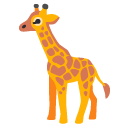


Appearance varies by platform and device. Google Noto, Twemoji, and OpenMoji are open-source.